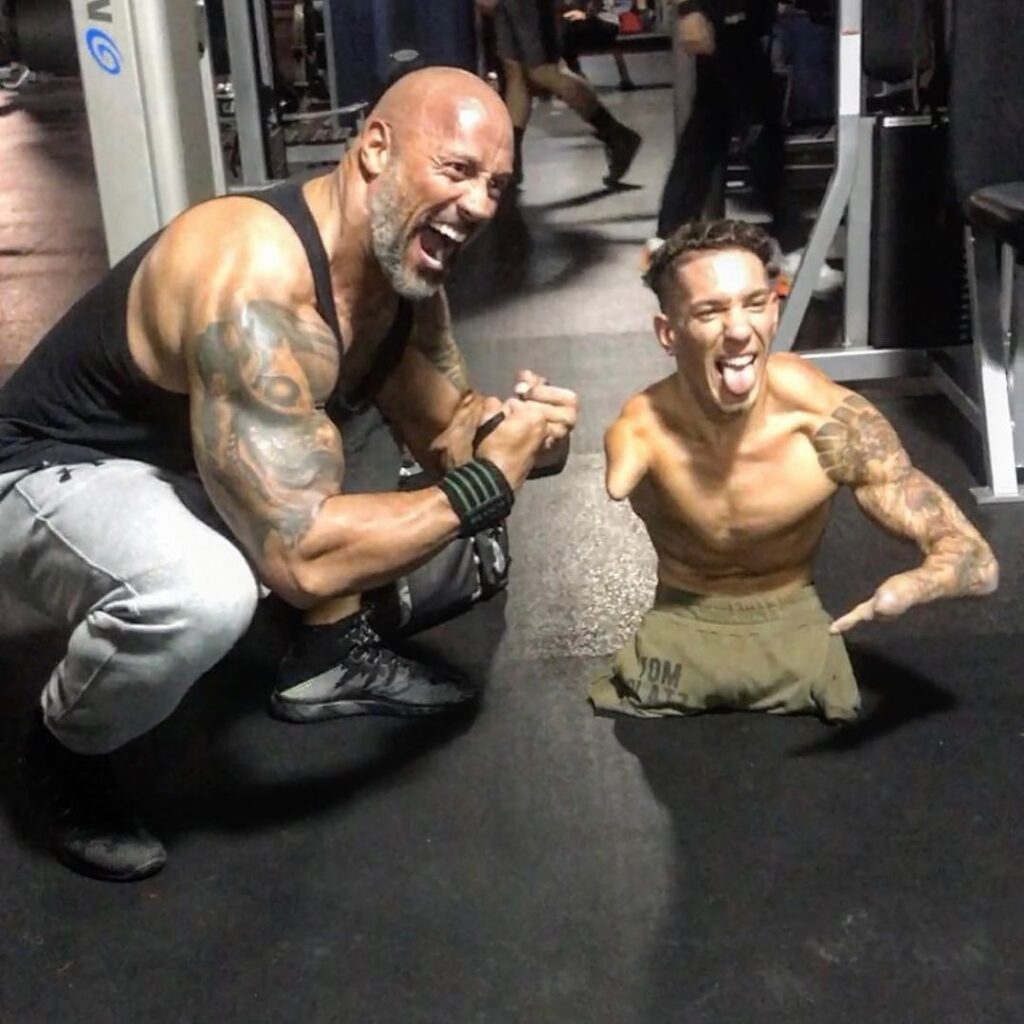
ArchivesChrisVanVliet.com

Fandango On His WWE Release After 15 Years, NWA, Debuting At WrestleMania, Beating Chris Jericho

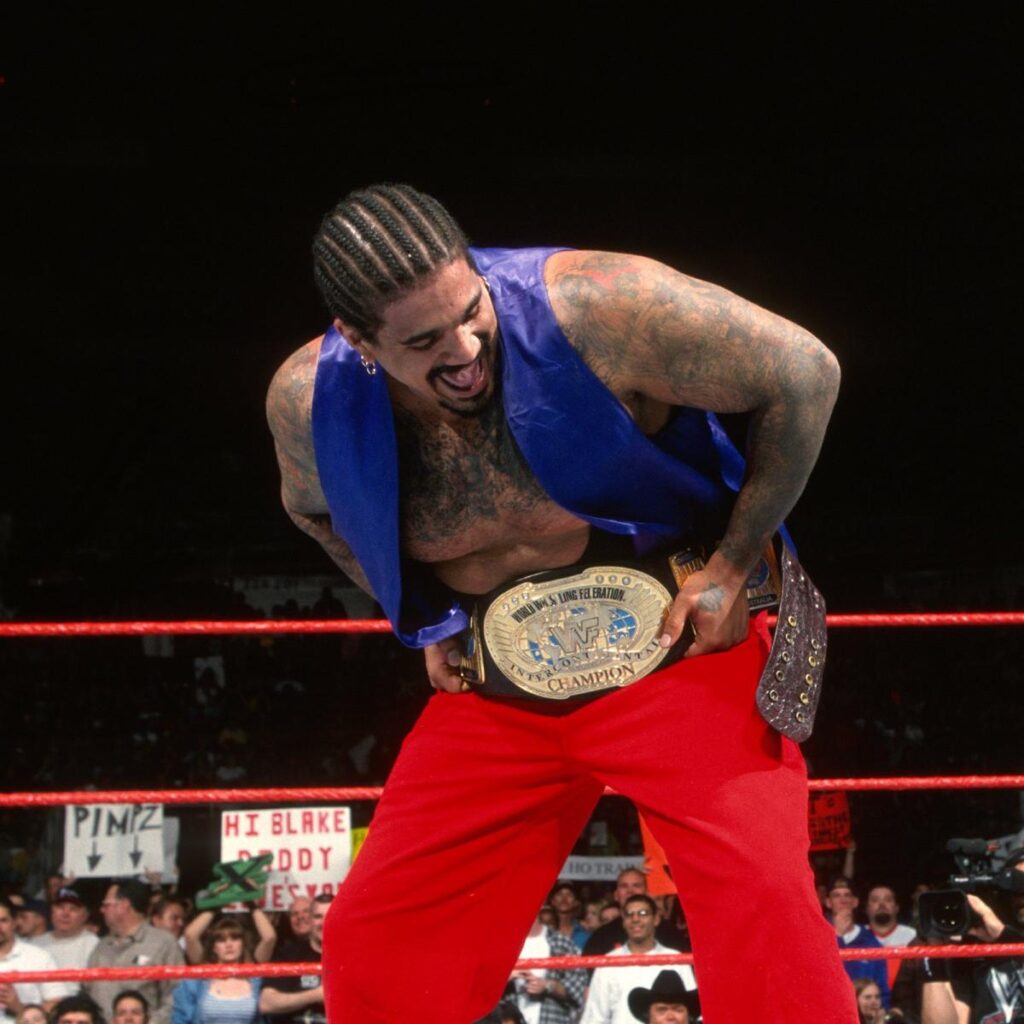
Curtis Hussey is a professional wrestler best known for his time as Fandango in WWE. He talks to Chris Van Vliet to talk about how he went from sitting in catering every week to becoming Fandango, including his debut match against Chris Jericho at WrestleMania and his catchy entrance music. He also talks about what it is like playing a comedic role in WWE, how Drew McIntyre helped him get a foot in the door in NWA, what’s next for him and more!

I’m glad that we delayed this interview, because now we can talk about NWA. I was sat there watching it, you show up and it’s like oh my God! Curtis is on NWA!

“Yeah I was at Drew McIntyre’s wedding a couple of years ago, Drew and I are really close. Billy [Corgan] was there too. When I got released, and when you get released you find out who your real friends are. People who you think you will hear from, you don’t, and the people you don’t expect reach out to you. But understandably it’s weird, when someone gets released that you are not really close with, it’s like you know they are getting a thousand text messages, it’s a weird situation. But Drew reached out to me and he goes ‘If you ever want to try and get in there with Billy, here’s his contact.’ So I gave Billy a call and he said that they are doing some tapings in December. I actually just flew back today, we just did 3 or 4 days in Atlanta. They were long days of filming, but it was like a family reunion down there. All my old buddies, Mike Knox, Sam Adonis, a bunch of guys from Deep South Wrestling. There’s just that cliche saying of you have to be nice to everybody on your way up. I’m not saying that the NWA is on the way down but it is so connected and we all know everybody. If you are a prick to somebody, there’s a good chance that you will run into them again. But if you’re cool and you are nice to people, which I think I did, it’s cool man to see all my friends again.”

How did you decide that you were going to be Dirty Dango?

“Well Vince didn’t own it. I could have just been Dango, but I’m just so goddamn dirty Chris. We were doing NXT season 4, they didn’t micro-manage it or think of our promos that much, it was really loose. I think there was some crazy overseas tv deal, so they had to continue content to provide in the syndicated tv deal. So they would film the NXT Redemption shows, which were after the game show but before Hunter’s vision of it. It was me, EC3, Percy Watson, TJ Wilson, just a bunch of performers that were not in a storyline on SmackDown or Raw. So pretty much they just wrote a bunch of stories, and matches and you could come up with your own character. I was doing a bunch of these weird, creepy things as Creepy Johnny Curtis. So now I am back on the indies, I can play that character I started in 2011, which is kind of cool.”

When you are in WWE for 15 years and you survive so many of these cuts, do you just sort of assume that you might be here forever?

“I started to think like that. When the COVID cuts first came, I’m like we [myself and Tyler Breeze] are f*cking out of here. But then we never got fired, so I’m like well maybe we will just keep being here and I’ll be the next Brooklyn Brawler and retire when I am 60. But when [Nick] Khan came in and he started cleaning house, I think me and Breeze were still on some kind of main roster pay scale, so I think we both kind of knew that it was coming. It sucks, because you are not getting paid as much as you were, but for me it is exciting, because I can go off and do different stuff. You can’t work at that same place forever, I started investing from day 1 of me getting onto the main roster. Any young talent out there, you need to prepare for your exit from when you start. Any athlete should do that, if you don’t, it will be rough later on.”

But you were able to do it for 15 years. Some people only do it for 6 months and they have to figure life out after that.

“Yeah but 7 of those were in developmental. For 3 or 4 of those, you’re making $500 a week. For those 6 or 7 years, you are not on national television, you’re still in the system getting paid, but it’s not like Randy Orton. You know what I’m saying, Randy has been on tv for [15 years plus]. So it’s good in terms of equity in the company where they wanted to bring me in as a coach, but monetarily I was not making decent money up until 2013 when I started doing the Fandango thing.”

Did you have a moment before Fandango where you didn’t know what was going to happen with the Johnny Curtis character?

“Yeah that was right before NXT Redemption. They were going to bring me up as a babyface, and I think I had a bit of an attitude backstage, which Vince came up as crying over spilt milk promos with Johnny Curtis, and just didn’t really do anything with my debut. So I was just there in limbo and anticipating getting released in the near future, which was in like 2011. Then there was a writer called Tom who was writing for the Redemption show, we were filming in Manchester and he was like ‘Hey, we want you to be on the show.’ The idea was I was going to be a love interest for Maxine and do this, this and this. I’m like yeah ok, cool. It’s a lot better than just going there and sitting in catering, you are mentally stimulating yourself instead of trying to think of something. At that point I was just showing up and waiting for the axe to fall. You are one week from a great run, or another from just getting released. It’s a weird spot man.”

So how did Fandango come from all of this?

“So this is a good story. So I was tag team champions with a guy named Tyler Rex, a good friend of mine. We were Florida tag team champions, he came up and was doing some stuff in ECW, and Hunter put Gabe and Curt Hawkins together. He had this idea where each week on SmackDown they would come out dressed as strippers, firefighters, basically Breezango. Gabe didn’t want to do it, asked for his release, we all supported him. Hawkins went to whoever is in charge and said ‘Hey what about Johnny Curtis? He has done dark matches but he is just sat there in catering.’ The next week they came up to me and said ‘We want you to do the gimmick, but don’t tell Hawkins.’ So I went and I told Hawkins [laughs]. I said that they want me to go to dance school and learn how to be a stripper, and he wasn’t in to it, it was not his first choice. So they sent me to a stripper and dance school in Tampa, this is around the time they were filming at Full Sail and I was tagging with Joe Hennig. I would come out pole dancing on the ring post and grinding real weird. We were doing the live events where I’m doing that and he is like what the hell?”

“So it gets to November 2012 and Hunter comes up to me and says ‘Hey we’re not going to do the stripper thing.’ I’m like thank God, I’m going to be in The Shield or something. But then he says ‘Now we are going to send you to a hard dancing school.’ Oh great! So I move out to Houston and I go to a ballroom dancing school there, that’s super hard bro. It’s trying to learn a whole alphabet in a couple of days, but all they can teach you is one letter just so you can fake it. I was getting frustrated, but make me good so I can fake it. I was training for 3 or 4 months, then Vince flew me up to Manhattan where we started filing vignettes. He rented out the Highland Ballroom, and we filmed for a couple of days there. Vince didn’t like the way I said Fandango into the camera, so he cut all the vignettes. One day I am working out and I think Mark Carrano called me 10 times. He’s like Vince has been waiting for you for half an hour. Vince was going to produce the vignettes for me, but no one told me that, so he is just waiting there for half an hour for me. They had this whole room set up and everything, so I ran over and Vince produced the vignettes. He turned the whole thing into an angle where no one could pronounce my name correctly.”

How much do you think your music helped to get you over?

“A lot man. Jim Johnston came up with that catchy beat, and when it hits, you know. Like you know who the character is coming through. To me entrances are so important, if I have time cut, I would rather they cut it from the match than from my entrance. That’s where you make all your money, the camera is all on you so you can get your sh*t in. That entrance and that music, it’s so important. It’s crazy that Jim is not there anymore.”    

Was it the Raw after WrestleMania crowd that really got you over to that next level? They are singing to it, they are dancing to it…

“That was great man. The timing of it was a perfect storm. We did Raw and then we went straight to Europe, it all just worked out perfectly.”

I think a lot of people were questioning the decision for you to go over Chris Jericho in your debut match at WrestleMania. What was your reaction when they told you that you would be going over Chris Jericho?

“I was kind of p*ssed because I knew that he would be p*ssed. I couldn’t care less and I didn;t give a sh*t. I knew he was in a tough spot, because he was supposed to work Ryback. I wasn’t p*ssed, but I was like oh f*ck he [Jericho] is going to be p*ssed about this. But I didn’t sit at this table in Stamford and hatch this scheme with Vince. If there was a list of 100 characters, the evil ballroom dancer would be at the bottom. But if you are given an opportunity straight from the old man, alternatively I could have just sat backstage and got released in a few years. This is probably my one shot, I’m going to have to try and make this as best as I can. It’s tough when you’re working a guy who is working somebody else. To his credit, he could have sandbagged me and got his payday. But he wanted to make chicken salad out of chicken sh*t. I’m not saying Fandango was a chicken sh*t character, but it was hard to make it work in a short amount of time. It was hard to sell a WrestleMania program of a guy who hasn’t wrestled on tv in just 4 weeks.”

Well just like with Tyler Breeze, you went all in with your character.

“You have to bro. People are coming like they are coming to see a magic show. They know it’s not real, but they want to believe it is. If I give them only 92%, it’s like you are letting them behind the curtain a bit. If you throw only one fluff punch, a guy in the front row will be like ‘Oh man.’ You can’t let them behind the curtain, if you let them know that there is trepidation, it looks like sh*t.”

Well when you look at it, wrestling is you dancing around in your underwear.

“I remember I was due to do some dancing in a dark match, I think I was dancing with Naomi. Hunter comes up to me and says ‘Vince knows that you’ve been going to dance school and he is going to see this dark match. If you do well, you’ll get a good run. If you don’t, then sorry.’ I’m like well f*ck. I think I worked Sami Callahan, so I thought it’s either dive into it or sit in catering for years. So I went out, gave it 100% and faked it as best I could. Vince was like ‘Kid’s got balls, I like it!’

So at what point did the Fandango character kind of start to fizzle out?

“So they were going to put the Intercontinental Title on me, but I got concussed working The Great Khali. I think it got to a week or 2 before and I didn’t tell them that I was concussed. I worked Khali a couple of weeks before the pay-per-view, then I worked the week before I think. If you get concussed and you get hit again, it’s easier to get concussed again. I was concussed and I kept performing, but I didn’t tell anybody. I took a shoulder tackle from Zack Ryder and I was out. When I got back, I thought I had just wrestled The Great Khali, it goes back to where you originally got f*cked up. Then I said it, stooged myself off, and to the company’s protocol, I was wrong. But if they put the IC title on you, you don’t want to say. But they took me off for 3 to 4 weeks, and Curtis Axel won the title instead.”

Do you feel like you are in the twilight of your wrestling career?

“Dude I thought a year ago when they were making cuts and everything you really start to think. When all of your friends start getting fired, 30 or 40 of them, it starts to become more of a reality of what do I do next? I started in 1999 and thought I never would wrestle again [after the release]. But there’s 2 different directions you go when you get released. There’s either being fed up with the business, or you get motivated that you can do some sh*t you couldn’t before, Matt Cardona is a great example of that. The dude is an inspiration, there’s so many different platforms now. I thought I would retire, but I have been busier in the last 3 to 4 months than I was in NXT for the 2 years prior to that. But it reminds me why I got into this business, it’s really cool. It’s not just work for me, it’s why I got into it.”

So the passion has come back?

“Yeah and I’m not trying to talk sh*t about WWE, but it’s just that grind bro. That schedule is tough when you are making $2 million a year. But then there’s someone like Heath Slater, who shows up to tv every week, probably lose, and that’s your job. You’re the guy who may get a little push now and again, but the grind is tough. Also the equity is sh*tty, and you are on like Main Event every few weeks.”

Now that your passion has been reignited, how much longer do you want to do it?

“I want to have like 7 retirement tours bro! I guess at about 40, I’m 38 now. I thought I was going to retire when I left WWE, but who knows? Maybe I do something cool in 6 months, maybe I don’t. But right now I am having fun and seeing my old friends. But 42 is younger now than it was in the 90’s. Look at AJ Styles, he is like a 30 year old guy now. I don’t know if it’s the evolution of nutrition, but guys don’t look as old as they used to.”

Was wrestling always the goal for you?

“I grew up in a really rough trailer park man. I think I was just trying something to lean on. Two or three kids I started wrestling with were from the trailer park. I was the skinniest, most unathletic and timid, I was the worst out of the whole class of 15. I thought it was my ticket out of there. It’s not like it was the ghetto, but it was a tough place. As I tell the kids at the seminars, it’s not always who is the best, but it’s about who stuck with it the longest. Morgan Freeman didn’t get his break until he was like 50. Any young guy or girl, if you are not the best just stick with it and you will get better.”

Did you feel like going back to NXT was sort of like a rebirth for you?

“The most emotional thing in my whole career was winning those tag team straps with Breeze. All we ever wanted was respect from our peers and Vince. We just wanted that respect from the people we respected. When you grow up as a wrestling fan and you see guys like Hunter, you are almost intimidated by them. When the younger guys and girls are backstage, they are more comfortable because it’s like ‘Oh here’s my boss Paul.’ But to go back to NXT and get the tag straps, it meant a lot to me. It showed that we are not just a comedy act, we can go out and we can work. The last couple of years on SmackDown, all we did was skits, which was cool because it showed our personality. But it’s hard to shake that, you get typecast. Santino did his job so well, but if he came back as a badass, it’s so hard. But he was so good at it. But you can do 10 years of comedy with a good pay cheque, or you can do 3 years and be a world champion.”

What are 3 things in your life you are grateful for?

“My sobriety, my girlfriend and God.”

Image credits: Instagram
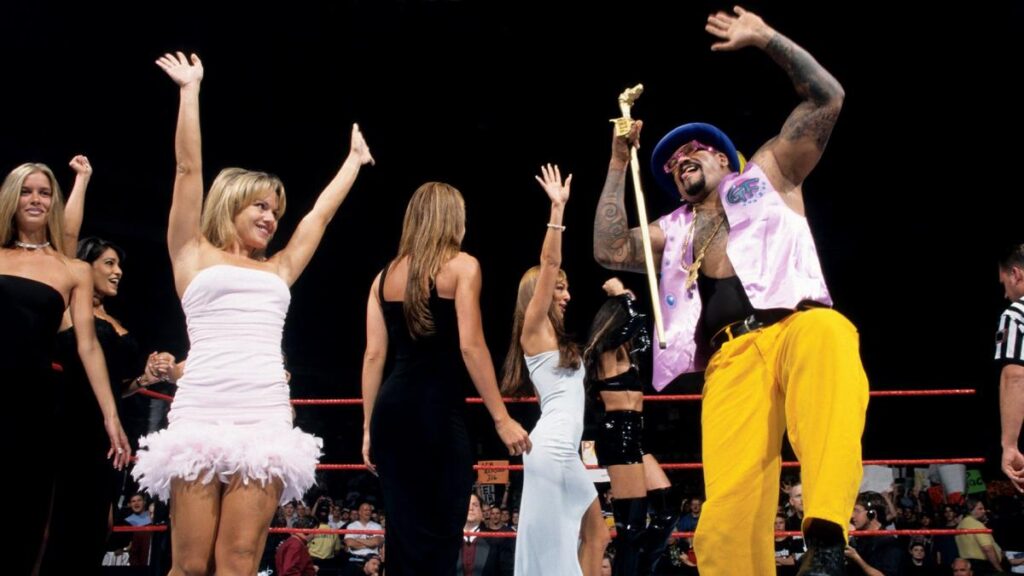
Anthony “Pretty Boy” Taylor On Sparring With Jake Paul, Tommy Fury Fight & Trusting Your Gut

Anthony “Pretty Boy” Taylor is a boxer, MMA fighter and entertainer. He joins Chris Van Vliet for an in-person interview recorded at Chris’ apartment in California, where Anthony talks about his hero Dwayne “The Rock” Johnson and why he wants to be the next electrifying man in sports along with how WWE influenced his style as a heel in sports. They also discuss the boxing career of Jake and Logan Paul and how a social media exchange led to a training session with Jake and then a boxing match with Tommy Fury, the prediction for Jake’s next fight, the origin of the “Pretty Boy” name and more! 

Are you more of a boxer or a fighter now?

“Overall Chris, I look at myself as an entertainer, because an entertainer does everything. He can sing, he can box, he can do MMA fights and stuff. I can do it all, that’s why when people ask me ‘Are you a fighter?’ I say ‘No I’m an entertainer.’ This is where I want to take my career, and part of my fighting career is entertainment.”

So much of the fight is now the leadup to it, it’s about how entertaining you can be.

“Right. And growing up watching WWE, you look at Triple H and you look at The Rock, and it’s ok to play the heel. Without the heel, there is no hero.”

You look at guys like Conor McGregor, Jake Paul and Logan Paul, what do they all have in common?

“They are playing the heel and playing the bad guy, so I’m like ok, let me play the heel. I’ve been playing a heel my whole career in MMA and boxing since I started off in the amateurs and stuff. What you can do is build your character, which is what you want to do with your character. You can take little things here and there and start to build it into your own personality.”

Are you worried that because you are playing a heel that people will think you’re an asshole in real life?

“Not really. I’ve been this consistent heel since the amateur days. So people have seen me be charismatic and loud. I walk loud, talk loud, wear loud and live loud.

So you said you watched wrestling growing up. Who were your guys?

“Well The Rock was definitely the number one guy who made me go this is something that I want to do. I want to be the best and most electrifying guy there is part 2. Triple H was one of those guys that I used to hate, but without Triple H there is no Rock. I hated Triple H because he was so good [at being a heel]. Mike Tyson was definitely one of those guys that I looked up to as well.”

What was it about The Rock that drew you in?

“The swag and the charisma, it was me thinking that I want to be just like him when I am older. Now I have the opportunity to be just like him but better than him. [Chris mentions dropping The People’s Elbow after a Bellator fight]. Right, I am The Rock of MMA.”

Were you surprised at the reaction to that?

“I was. I didn’t expect so many people to see that, hundreds of millions of people have seen it. The Rock is ready to pass the baton, and I am here to take the baton, carry that torch and continue his legacy. There it is, I am going to continue The Rock’s legacy and make it my own.”

I was watching the trash talk for your fight against Tommy Fury. I laughed out loud when you said that he looked like Shrek’s better looking cousin. Did you come up with that beforehand?

“Man I was just there pumping all those shot right on the spot! Literally just on the spot.”

I think a lot of people thought you had a lot of balls in taking that fight. Tommy Fury was significantly bigger than you, what was the mindset going into that?

“When you look at Tommy Fury, it’s like he is the perfect looking boxer. They are supposed to look gorgeous, have a chiselled body and have the perfect package. Me, I’m there being the pretty boy and this is going to be an ugly fight. I knew where my capabilities of fighting were and I knew where his was. I knew he didn’t have the knockout power to knock me out and I knew I had the power to knock him out. Unfortunately, it didn’t go my way, but I came, I saw and I conquered. In a way I won that fight, not as far as winning the boxing match, but I won in the sense that he was the bigger fighter who was supposed to knock me out in one round. I went four rounds with him, it was a unanimous decision that I should have knocked him out. I made him look mediocre, and I’m an MMA fighter, he’s a Fury.”

Walk me through this. You are on a card with Jake Paul, that’s amazing in itself. But the fact that you were training with Jake Paul, how did you even get on his radar?

“Well I Tweeted it out. I’m on Twitter and I have my guy Donagh Corby, who was a news anchor on MMA Island. I wrote on Twitter to Jake Paul’s trainer that Jake keeps ducking these fighters and he needs to come and fight me. BJ Flores, Jake’s trainer said ‘If you want to fight Jake, come to Miami and come and spar next Friday.’ So I book my ticket, I book my hotel, flew to Florida and I sparred with him. Jake walks up to me I’m like holy sh*t this guy is huge. I’m 5 foot 6 he is 6 foot 2. We spar in April and in June I’m getting ready for my next fight. I get a message from BJ Flores asking me to train in 6 weeks with Jake in Puerto Rico. I’m like ok, I go out there for 2 weeks. They took a liking to me and they warmed up to me.”

It makes sense because you are an MMA fighter, they wanted someone who could emulate Tyron Woodley.

“Absolutely. Then all of a sudden Jake is like ‘You heard of Tommy Fury?’ Of course I have. He then says ‘Well I want to give you the opportunity to fight Tommy Fury.’ I’m like woah, this just hit me hard! But let’s do it, let’s go!”

So you booked your flights and hotels. You bet on yourself, and look where it got you.

“Absolutely, and it could have gone two ways. Either I could have fought him, talked crap and left it at that. It would have got erased in the books after a couple of days. Or I could have gone out there and sparred with Jake Paul, built that relationship so there is a bridge between his team and our team. Let me get the opportunities and build on them. They say if you can’t beat them then join them. I don’t have the fanbase to be able to fight Jake, so let me join him. That’s what I did, I joined him and he has put me in a great position for the rest of my life. Without Jake, I don’t think that I would be here. Jake is a humble and sweet guy, he is very caring and supportive, a lot of people don’t know that about him.”

So you went from paying your way to get there to getting paid to train with Jake?

“Yeah and Jake has paid me more money to train with him than I have ever made in my entire career in MMA. I made about $40,000 in my whole career in MMA in 6 years, and I made more than that in 6 weeks with Jake.”

What’s interesting about both of the Paul brothers is that they have surrounded themselves with so many great people, they have been boxing for 3 years, that it’s almost like it feels like 9 years.

“Their dedication to the sport is unreal. A lot of people just see them as YouTubers, well who cares? You can be a YouTuber and be an actor, firefighter, NFL player, it doesn’t matter. If you set your goals, manifest it into mini goals and work on that, you can achieve your dreams. And Jake and Logan have achieved their dreams. When you think of boxing, you are going to hear Jake’s name in that conversation. It will be a top 10 name.”

So you’ve been in the ring with Tommy Fury, and now Jake is going to get into the ring with Tommy Fury. What do you think the outcome of that fight is going to be?

“It’s going to be just like the Anthony Joshua vs. Usyk fight. You look at Tommy and he is a big brute, 1 2 puncher. When you look at Usyk he is more the light on the feet and moving around, punch, move. You look at Jake Paul, he mimics Usyk in that way, he moves around and picks his shots. Tommy is a good boxer, but Jake is going to come out on top, 7th round TKO.”

Doing my research before this interview, I can’t believe you started out as a male stripper!

“Yeah before I turned pro in MMA, I was doing my amateur circuit and I took the greyhound bus to Stockton, California. This girl who knew my coach said ‘Hey, if you need money, I got a job for you.’ So I started stripping for a couple of months. I had no shame in what I do. This was similar to Magic Mike, bachelorette parties. You just light it on fire, twirl it sound and it’s main event time!”

If we look ahead to 5 years from now, what are you going to be doing?

“I’ll probably be walking the red carpet with Michael B. Jordan, I want to be a household name. I want to be marketable, have my own clothing brand, just to be successful and have financial freedom.”

The next goal right now is the fight on December 18th. Does this have to be a win?

“Absolutely. This is a fight for my legacy. If I can’t win on pay-per-view then what’s the point? What’s the point of being entertaining if you keep losing? If The Rock keeps losing his matches, it just doesn’t make sense.”

Who gave you the name ‘Pretty Boy?’

“The girls [laughs]. Well at first when I fought in MMA I used to fight in these orange shorts, and the girls used to call me ‘The Orange Crush.’ So some of the girls say ‘Yeah The Orange Crush, he don’t like being hit, he’s a pretty boy.’ I’m like Pretty Boy, Ok I’ll borrow it.”

I’m all about the little wins. What have been some of your little wins between your last fight and leading up to this fight?

“My little wins are just connecting with people. Whether it is on social media, speaking with family, speaking with friends. Also I got another opportunity to fight on a Jake Paul card, that’s another win.”

I end every interview with gratitude. What are 3 things in your life that you are grateful for?

“Family, friends and God.”

Embedded image credits: Instagram
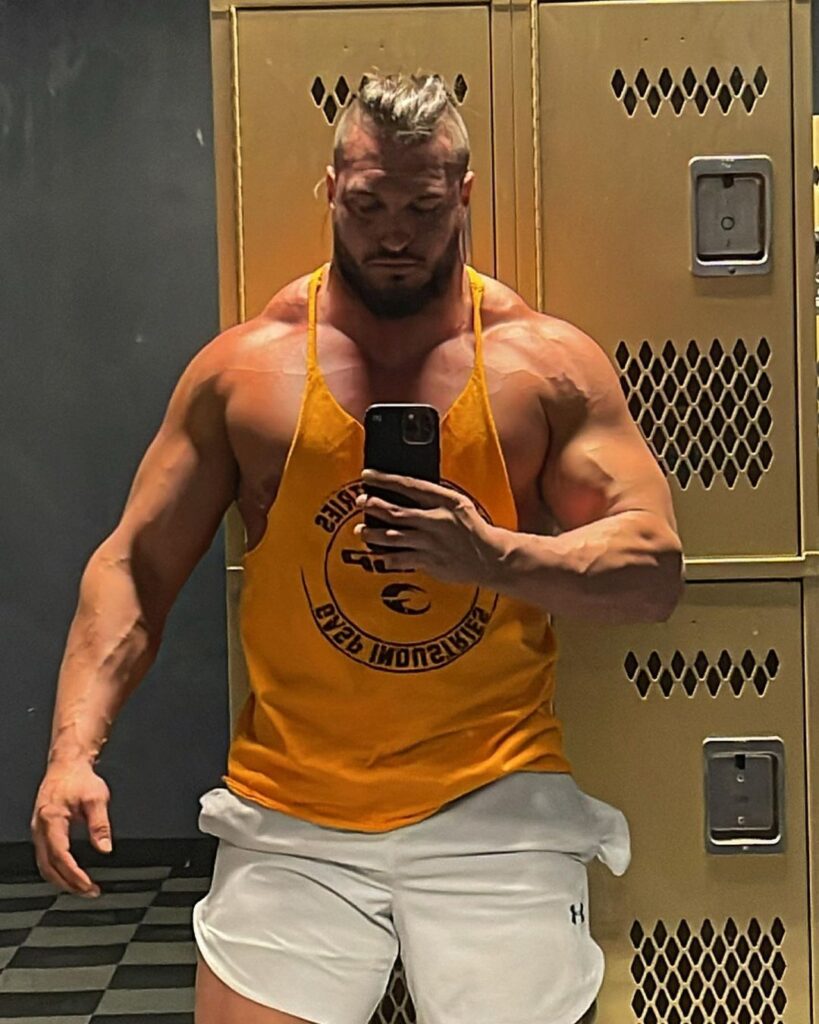
Jay White On NJPW, The Forbidden Door, His Favorite Matches, Betting On Yourself

Jay White is a professional wrestler currently signed to New Japan Pro Wrestling. He joins Chris Van Vliet at the NJPW Dojo in Los Angeles to talk about his upcoming match with The Fallen Angel Christopher Daniels, growing up in New Zealand, how winning a trip to WrestleMania 27 in Atlanta made him want to become a pro wrestler, moving to England to go to wrestling school, getting signed by NJPW, working for Ring Of Honor, his favorite matches, the best advice he’s ever received and much more!

On what a ride it’s been so far:

“Yeah it has been, It kind of took over since I left New Zealand in 2012. I didn’t start training until the beginning of 2013, but since then it has kind of consumed my life in great ways. It’s given me a lot of opportunities and I have done alright with it over the last 7 or 8 years. I managed to accomplish quite a bit in that time.”

On whether his success has been down to luck or skill:

“It’s both. I think you are going to require some luck in terms of meeting the right people and being in the right place at the right time. But also it’s arguable whether that is luck or not, because you have to put yourself in those positions. That’s the kind of advice I give to younger talent, you have to put yourself in those positions, you can’t go there expecting it. You have to be in it to win it as the cliché saying goes. It’s going to shows, whether you are on the show or not, there might be an opportunity there. You may meet the right people, so put yourself in the right position.”

On what wrestling teaches you:

“All the lessons cross over into life. You’ve got to be prepared for every opportunity, especially in something like wrestling, or just trying to work to any kind of goal that requires time and effort. You’ve just got to be prepared.”

On winning free tickets to WrestleMania:

“I think it was just being young and having that belief in myself. I have said this story a few times, I actually won a competition on the radio for tickets, flights all paid for to go to WrestleMania. I won that when I was 18, I just finished school. It was WrestleMania 27 in Atlanta and that got me back into wrestling. I thought if I was fortunate to win this, why not become a wrestler? From there, it kind of felt like it was meant to be, so I did everything I felt like I needed to. But there was never a blueprint, it wasn’t a guarantee. For me, I thought that I knew, and I was right to get out of New Zealand, there was no wrestling scene there.”

On the beginning of the wrestling journey:

“I couldn’t work in America because of the visa situation, but I could work in the UK. The way I thought about it, I had no knowledge of the independents, was that the states in the number one place, the UK is the little brother in terms of opportunities, so it went from there.”

How he won WrestleMania tickets:

“Out of school I went straight into the New Zealand army. I did the pre-training, but I left before I completed that, so I didn’t know what I was doing. I got a job labouring for a friend’s father who had a construction company. I heard on the radio that there was a competition on the winner would go to WrestleMania all paid for. I had to call up, and you had to debate with another person. They would just tell you if you were for or against it, and on the spot you had to win the debate. The topic they gave us was ‘chick-flicks were the best thing in the world.’ They said I was for it and the other person was against it. I managed to talk about how there were vouchers on the back of receipts for Video Easy [New Zealand’s version of Blockbuster] and you can get chick-flicks 2 for 1. They appreciated my sales pitch and I was in the draw. They did the debates multiple times a day for 2 weeks, everyone goes in the draw. At 8 in the morning a couple of weeks later, my phone starts calling and I answered it and won, it was crazy.”

On keeping the training a secret:

“Honestly I think I was too dumb to know any better. I just had this really stupid belief in myself and that it was went to be. After years of not being into it and then winning that competition, it was like it was meant to be and this is what I’m going to do now. It was a young and dumb belief, now I would be like this is not possible. I didn’t tell my parents at the time that wrestling was what I was going to do, I just went to England and started from scratch. I just got in contact with a wrestling school, stayed in a student house with 3 other guys and eventually paid 3 months in advance so I could stay somewhere while I got my start. The first time I told my mom was right before my debut, I had to tell somebody at some point. I didn’t want to tell someone that I am training and then it all goes to sh*t.”

On being a natural in the ring:

“I picked it up pretty quick. At my first training session I said that I hadn’t trained anywhere else before, which they found hard to believe. I’m not trying to big myself up too much, but like I could see people running ropes on tv and I could do it. Playing sports and the coordination helped me pick up things pretty quickly.”

On how the New Japan signing came about:

“I met Finn Balor about a year into it. I started in January 2013 and we brought him over to do some of our shows in February 2014. I think the way that he puts it, because he didn’t see me wrestle that much, what impressed him was that I was doing all the other jobs. I was building the ring with a broken thumb, I had a cast on, and Finn knew that I wanted it. So he spoke to the New Japan system, mentioned me, spoke to the right people, and I landed in Japan on January 1st 2015.”

On the language barrier:

“When I was first in the Dojo, I was with Sho and Yoh, who didn’t really speak any English. They didn’t speak English and I didn’t speak Japanese, so it was tricky to begin with, a lot of hand gestures used. When I first got there, I couldn’t communicate with the guys in the Dojo at all, you just try and find items or use your phone and translate. Luckily some of the older guys knew some English, so there would always be somebody who knew some broken English some of the time. Sho and Yoh learned some English and I learned some Japanese, so we kind of communicated.”

On going to the Tokyo Dome for the first time:

“The first time going there, I got to watch a show in 2015 before I did the jobs there. Seeing that for the first time, I didn’t know too much about New Japan, I didn’t do too much research at all. Just seeing it from a beginning stage, it takes your breath away more than if I was prepared. I had no expectations but it was awe inspiring. The big difference to me was experiencing that crowd, because I am mainly used to the WWE crowds. Going there and experiencing that Japanese crowd, you can feel the difference and how they are feeling about it.”

On becoming leaner:

“I’ve just tried to get leaner over time. There have been times where I have tried to put on size while going away on excursions. To be honest, at times I didn’t have an accurate idea of how I was looking. I think it was late 2018 where I realized it was time to lean down. I just feel more comfortable at a lighter weight and it’s better for training as well.”

On his upcoming match with Christopher Daniels:

“People call him ‘The Fallen Angel,’ but recently I have been calling him ‘The Fallen, Forgotten, Failing Angel.’ Because with Chris, it could be coming to an end, but I’m giving him an opportunity to see if he can spark something and get his name out there again. A guy like him needs one opportunity and he can get his career going again.”

On a dream opponent:

“I think I have mixed it up with most of them. There is no one that I am particularly after in New Japan Strong, because everybody is after me. That’s why I put the challenge out there to New Japan Strong, maybe somebody from Ring of Honor will come across, maybe AEW, maybe IMPACT. There’s the forbidden door but I have my own open door.”

On what Jay White is grateful for:

“Custom suits, meeting Finn Balor and Tanahashi so I can beat him.”

Embedded image credits: Instagram
Featured image credit: Daily DDT

Fred Rosser (Darren Young) On NJPW Strong, Prime Time Players, Block The Hate

Fred Rosser is a professional wrestler currently signed with New Japan Pro Wrestling Strong and is known for his time in WWE as Darren Young. He joins Chris Van Vliet at his home in Los Angeles to talk about working for NJPW Strong, his dream opponents, working for WWE under the name Darren Young, his tag team with Titus O’Neil called “The Prime Time Players”, his “Block The Hate” movement, being the first active pro wrestler to come out as gay, how that has changed his career and much more!

On wearing a New Japan branded jacket while filming a WWE documentary:

“The last time I wore this jacket [which is New Japan branded] was this past May with WWE. I was doing a Nexus uncut/uncensored documentary, they invited me and I said sure no problem. I came in with my New Japan jacket on, and before we started the producer said ‘Do you mind if you take off the New Japan jacket?’ So I’m like ‘So you are asking me to take it off? I hope not!’ I knew they were going to say it, so I said ‘Look I worked hard to get this jacket, and you guys have just inducted Jushin Liger into the Hall of Fame. This is supposed to be uncut and uncensored.’ Not only did I say that, I said ‘I just talked to John Laurinaitis, because he reached out to me about maybe doing a collaboration between New Japan and WWE. So let me just be me, this is supposed to be an uncut/uncensored Nexus documentary. Let me just be proud of this jacket. Then the producer said ‘No problem, you sold me on it.’”

More details on The Nexus documentary:

“Man I have worked hard for 10 or 11 years since Nexus, and they wanted to interview us guys. I am not some washed up wrestler, I’ve still got a lot left in the tank and I am proud of this. At the time when they did the interview I asked who they interviewed for this? I was one of them, there was Stu Bennett [Wade Barrett] and Daniel Bryan. So they ultimately shelved the documentary, maybe because of what I did and also because of Daniel Bryan going to AEW.”

On wanting the documentary to be released:

“I said to them ‘Come on man. Don’t rob the people of a good documentary.’ It was good, because I mentioned on the documentary that Daniel Bryan was not part of The Nexus. That’s coming from Wade Barrett, the leader of The Nexus. He [Bryan] was not part of it, he was part of the chaos we caused that one night, but the original were us. I know we are one on one right now, so don’t test me, I’m keeping the jacket on.”

On WWE reaching out for a possible partnership with New Japan:

“At the time when John Laurinaitis took over talent relations he reached out to old talent that he had hired, just seeing how things were. I said ‘Hey John, everything is going great. I’m with New Japan and doing my thing.’ And he goes [impersonates John Laurinaitis] ‘Yeah, you know, I did a run in All Japan.’ I told him that I watched his stuff and then he said about a possible partnership with New Japan and WWE. I said that’s great and that was that. Who knows what that relationship could have been, but that’s what he had told me. But never say never, bucket list for me is Daniel Bryan. We did original NXT and we trained together, but come to New Japan Strong. It’s a new show with New Japan and work me, put us on the map. That’s my challenge to Daniel Bryan. That forbidden door is so wide open.”

On starting the NJPW journey:

“Before this interview, I wasn’t doing much. I kept speaking into existence my goals and aspirations of working New Japan. I think it was probably September 2019 at a show in California where I ran into Lance Hoyt, who was still with New Japan at the time. He asked me how I was doing and I’m like I’m just keeping it moving and I’ve always had dreams and aspirations of New Japan. If we were at my place, I would show you the flyer he gave me about the New Japan show at The Globe Theater in November 2019, right before the pandemic.”

On the New Japan style:

“So I went to the New Japan show. It started at 7pm, I got there at 5pm, because I wanted to be able to feel the ring, meet the wrestlers and meet Rocky Romero, who is like my heart and soul. If it wasn’t for him, I wouldn’t be with New Japan Strong. So I sat there at the New Japan show, always intimidated in the style since I was a kid, it’s physical. So I watch the show in November 2019 from beginning to end, and the one question running through my head was do I fit in? After watching the show at the Globe Theater, I said to myself that I can hang with these guys and I can go and elevate these guys. At this stage in my career it’s about elevating guys and I can get my sh*t in. After the show I talked to Rocky Romero and I said ‘What do I have to do? Do I have to try out at the Dojo? Whatever it takes I will do it.’ that’s what my mindset was when I got signed in WWE.”

How the pandemic delayed things:

“The pandemic hit, and Rocky reached out to me in June or July of 2020. He asked me about working for New Japan Strong. I said ‘It’s a great opportunity, but we are heavy in the pandemic, so I’ll get back to you.’ He let me talk to my family, they are all doctors, and they assured me that if New Japan are all COVID compliant, then go for it. My family blessed me with this opportunity, so I called Rocky and said let’s do it.”

On acting aspirations:

“I moved to LA because I wanted to do some acting. The move was in August 2017 and I got released from WWE in October 2017, just before my birthday. I was very upset. I was hurt as well, I was injured in January 2017, came back to wrestling in August 2017 and was already moving out to LA. You just get that feeling, nothing lasts forever. I was out here developing a reel when the release happened. The goal can’t be money driven, you’ve got to suck it up and do the free stuff to develop.”   

On coming out to his immediate family:

“I came out to them 2 years before I came out publicly to the world [which was in 2011]. I came out to my immediate family, but I was nervous about my grandfather and what he would think. I said to my mom, because he saw it on the news ‘Mom, what did pop say about it?’ He said ‘I don’t give a damn if he’s green, yellow, brown, blue, that’s my grandson and I love him.’ We don’t talk about it but anytime that I am home, he’ll be like ‘Come on sonny. Let’s hit the town and find some chicks!’ I’m like ‘[sighs] Alright pop, let’s go.’ He knows, but he’s just joking like that.”

On coming out publicly:

“I tell people all the time that you need that support system, the sky’s the limit. There are many reasons why I wanted to come out publicly. I wanted to bring my boyfriend with me to red carpets at the time, which I did. Also I wanted to bring him backstage to the masculine world of professional wrestling, and I was able to do that. I hear the wrestlers talk about their relationship problems and I can be sassy. I can be like ‘mmm, honey thank goodness I am gay.’ I can just be me, before I wouldn’t be able to do that, I’d be very tough. But now I can just be me, and that is very important to me. When you come out as an athlete you have a duty to instil confidence into our youth and to lead by example. So that’s why I am always representing.”

On telling TMZ before WWE:

“I mean I did it, I thought that it was the biggest decision that I made in my life. At the time I regretted it, I was like oh my God, what did I say? At the time, we were approached by TMZ during The Nexus days, but it is what it is. And when they approached me, I said what I said and I’m like, big mistake. That was when I approached WWE, I had told them what happened, they supported me and the rest is history.”

On telling WWE and how the roster was supportive:

“They didn’t know, so I had to come out again. I remember that I had to do a Be A Star the next day. I told Stephanie McMahon that I can’t do it, I can’t be in front of a crowd because of that guilt feeling and that fear of the unknown. The next day when the news dropped, I remember Mark Henry being the first guy to text me. He said ‘Hey man, come down to the hotel.’ This was before SummerSlam. ‘Yeah come down to the green room.’ I met in the green room and he said ‘man, how come you didn’t tell me?’ I said that I was just fearful, Mark responds by telling me that he has cousins that are gay. From then on, me and Mark were just tight. We were tight with guys like Randy Orton and CM Punk. Those guys made it a lot easier for me to walk into a locker room.”

On being in incredible shape:

“I’m about 10 lbs lighter than I was with WWE. I go between 225 and 230, but slow feet don’t eat. I’m always on the agility ladder, always jump roping. You see any boxer that is lean, they do a lot of jump roping. For me, at 38 years old, functional training works for me. I move a lot better in the ring and I look great. I’ve incorporated yoga and incorporated mobility workouts, but I feel great.”

On WWE possibly pitching a gay gimmick to him:

“I get asked that a lot, I was just happy to be myself, I wasn’t worried about whether they would make it a gimmick or not. I just wanted to be me and live out my dream as a WWE superstar. Being gay is masculine, feminine, it’s anything you want to be, it’s just me. I just wanted to be me. Titus and I would implement it as a joke, little stuff like that and I would be cool with it. But if you’re going to have me dress up, I don’t know what I would do with that character.”

On the Block The Hate movement:

“The Block The Hate movement originally started with me being the first openly gay WWE Superstar. But it’s more than just a LGBTQ movement, it’s for anyone that gets bullied. If someone says you can’t achieve your dreams, as a kid I had a speech impediment and I was overweight. But I don’t let those disabilities hold me down, I tuned out the noise and blocked the hate, and achieved my dreams. My fight is bigger than the ring, I do my advocacy work and can’t wait to do more in 2022. Whatever it takes to share my stories with the masses, I’m going to do. You tell me I can’t achieve my dreams, well F you.”

On what Fred Rosser is grateful for:

“My health, my God babies and I can be me.”

Images obtained from Instagram

Charlie Haas On His New Look, Team Angle, Returning To Wrestling

Charlie Haas is an amateur wrestler and also a professional wrestler best known for his time in WWE. He joins Chris Van Vliet to talk about his new podcast called Wrestling’s Greatest Podcast, how his love of watching pro wrestling as a kid led him to start amateur wrestling, forming a tag team with his brother Russ Haas, how Russ’s death effected him, getting signed to WWE, becoming part of Team Angle with Shelton Benjamin and Kurt Angle, his marriage to Jackie Gayda and their recent divorce, his return to pro wrestling and new look and more!

On his new podcast:

“So my podcast is called Wrestling’s Greatest Podcast. We are covering all aspects of wrestling. Everyone knows my background and how important amateur wrestling is to me and was to me. So what we are doing is covering all aspects, we go into amateur wrestling and interview the high school prospects across the country. We talk about their work ethic and what universities they are looking at, and where they want to be if they continue into college. Then we go out and we interview the top wrestling coaches in places like Penn State, Iowa State and Oklahoma State just to name a few. We will ask them what they look for in a top prospect and in a student athlete in general. They are building for 4 to 5 years, and they want to make sure they have the right people to be successful. Penn State right now has the perfect blueprint for it, although they did get beat by Iowa last year.”

On the importance of women’s amateur wrestling:

“It’s also really important for women as well. Women’s wrestling in amateur wrestling is starting to take off. Iowa just announced a women’s team for next year, there’s over 1,300 scholarships for women, but only like 1,100 women wrestling. We are trying to get as much notice out there for women to let them know that if you continue in the sport, you can get your college paid for. Amateur wrestling is great for women, it’s the kind of sport where you have different weight classes. Say you have a woman who is slightly bigger and wants to play center mid in soccer, but it’s impossible for her to play that. If you go to wrestling, you have a chance to wrestle girls at your own weight, your own experience and maybe win a state title. Even if they don’t win but they are successful, they have a chance to get a scholarship, and you are building something up right there. The skills they learn can help them in all aspects of life.”

On being a wrestling coach:

“So I coach new programmers from kindergarten all the way up to high school. I look at what is the long term goal, which is to get a scholarship and hopefully get your education paid for. It is hard work and we want that work ethic. From there, it can go to winning a national title or becoming an All-American. We just have to keep the parents focused and say to them ‘Look. They might not be good right now, but in 5 or 6 years, they may become the person that is pinning everybody.’ The green light turns on at different times for everyone, but you have to stick with it and have fun.”

On what wrestling teaches you:

“Wrestling puts you in an uncomfortable position. You are on your back, getting your arms twisted behind you, and you have to learn how to get out of that. It taught me that if I can get out of these moves in amateur wrestling, and I apply that work ethic to life, I should be able to succeed and overcome adversity when it is thrown at me. My divorce with Jackie was very hard on the kids, but it taught me to stay focused and that things will work out in the long run and will be the best for you and the kids. It was the same when my dad and my brother died, you have to learn to overcome that. But I keep my head straight on and I will overcome and will figure out a way to get out of these uncomfortable positions. I won’t forget, but I can move on.”

On getting back into the ring:

“I was done and Robert Langdon brought me back in. They were honoring me to go into the Texoma Hall of Fame. They just wanted me to come out and take a look at the new talent, I didn’t really know what was going on. So they brought me into the ring and presented me with the Hall of Fame ring, which I didn’t even know about. While I was there James Beard said to me ‘Hey why don’t you get back into wrestling?’ I was like I am in no shape to do this, but my kids were like ‘Come on dad!’ They hadn’t seen me wrestle for a good 2 or 3 years so I didn’t even know where I would be at. We started throwing around at Texoma Pro, and I told James that my look wasn’t great but my cardio was fine for SWE. We went out to SWE and I tried the first match. Kevin Sullivan and Teddy Long were there and they said I had this different gear that they hadn’t seen there before. But I am a heel now and my style is a little bit different. I’m not worried about the moves, I concentrate on the work between the moves. I am bringing it up to a higher level and it is intense. It’s something that people haven’t seen in 4 years. I have a new look, a new attitude and I am healthy.” 

On when it was time to turn his life back around:

“Yeah it was when I was going through all the divorce papers back and forth. I remember what the exact day was, I signed the papers and my son says ‘Hey dad, there is someone in the kitchen eating my cereal.’ I’m like what? And then he says ‘Yeah he is living here, get used to it.’ I’m thinking what is going on? I had no idea there was someone like that and boom he is living there, the kids had never met him. That was when I was like you know what, it is time to move on. Evidently she has moved on, the papers are signed, it’s time for me to move on, and that was it.”     

On making the transition from amateur to professional wrestling:

“It’s easy to transition if you are a fan and if you grew up with it. It’s like if you are a fan of the UFC and you know all of the holds and all of the techniques that Joe Rogan is calling out in the middle of the UFC match. For me, when I heard Gordon Sully or Jim Ross call out the headlock takeovers, Irish whips, arm drags… It was easy because I knew everything that they were talking about. So when I started training, I knew some of the stuff because I was a fan. I knew some of the moves already, because I started practicing at my parents. We didn’t have a ring, but we destroyed a lot of king size bed frames. I could do dropkicks, suplexes and bodyslams, so it was an easier transition, especially when you add in the work ethic of an amateur wrestler.” 

On losing his younger brother Russ Haas:

“It destroyed me. It was like the divorce from Jackie, they are your best friend. You grew up with them, he’s your little brother, then you find him dead and it’s like, man, is this really happening? It was tough, it really was. But then you have to call your mom and dad and tell them that you found your brother dead, that’s not good. I didn’t think I was going to be able to get out of that, I really didn’t. I didn’t know how to survive that and I didn’t know what WWE would do. They signed the Haas brothers, not Charlie Haas. But thank God that Jim Ross saw that we could still do this with Charlie and Shelton, and Arn Anderson said ‘Let me take Charlie and Shelton and let me see what I can do with them.’ We basically just travelled with Arn, he put us in the ring prior to the house show matches and in the dark matches, and he taught us everything he knew. His heart was into it as much as ours was, and that was when I knew that someone really cared, he really put everything into us. Shelton was a guy who I found as a partner just like my brother, he is my brother and it just worked. Shelton had the same goals as I did, and I am just very lucky.”

Credit: The Sportster

On Team Angle splitting up:

“It should have been longer. What people don’t understand is at the time that we were getting hot on Team Angle [on SmackDown], who was getting hot on Raw, and that was Evolution. But when they have 4 guys and you have 3, when they do the mixed pay-per-views, we are starting to get a better reaction than them. I don’t care what they say, you can ask Kurt that, Shelton may not say because he is with WWE now, but we were getting a better reaction than they were. And I think that had a lot to do with ok it’s time to split them, because they kept Evolution going. That’s just the way it is.”      

On finding his character after the split:

“I’ll be honest with you man, I was lost. I was always a tag team wrestler, I was never a singles wrestler. Then all of a sudden, who is Charlie Haas? I had a really great match with RVD and a great match with Rico, and they put me with Rico, and we won the tag titles there. That was tough because I loved the character and I loved working with Rico, but other tag teams refused to work with us because they didn’t want to be in the ring with Rico because of the character. It hurt him a lot and I knew he was upset about that, and some of them took it out on him in the ring physically when they had to, it was uncalled for with some of the stuff that he went through. I think today he is suffering through concussions and all that stuff, he is having some mental issues right now. But we had a great tag team, we won the tag team titles, that was really cool.”

On a gimmick he wasn’t proud of:

“But when they separated us, I went into singles. That was really tough, because I didn’t know who Charlie Haas was as a singles wrestler. [Chris mentions the impersonation gimmick] Yeah I think that was when they were really trying to get rid of me and find a way to get me out of there. But I looked at it as a chance to honor the people that I grew up watching and embrace it. I did the best that I could, I didn’t want people saying ‘He has a bad attitude, let’s get him out of there.’ It’s crazy, I get so many people coming up to me about me doing this character or that character. It’s part of my career that I look back at and I did it because I had to. I am not proud of it, it was not something that I wanted my career to be based on. But I guess a lot of people watched it, because I get more people coming up to me, I guess they liked it.” 

On who he regrets impersonating:

“If you are honoring them and they enjoy it, then that’s good. The only one I didn’t like was when I had to do JR. I don’t know what was going on with JR and WWE at that time, but they wanted me to really make fun of him. He’s the guy that signed me to my WWE contract, and my feet were put to the fire with that. I wasn’t too happy about that. I apologised to him for it, and I wish I put my foot down and said I don’t want to do that. But I didn’t have the pull to say we were not going to go in that direction. It wasn’t fair to him and it was wrong.”   

On what he is grateful for:

“My kids, my family and God.”

Featured Image: Charlie Haas

Bruce Buffer – The Man Behind The Veteran Voice Of The UFC

Bruce is a ring announcer best known for working for the UFC as the “veteran voice of the octagon” for the last 25 years. He joins Chris Van Vliet to talk about how he got started as a ring announcer, meeting his half-brother Michael Buffer when he was 31 and Michael was 47, his business ventures outside of the UFC, his favorite names to introduce, his fight day preparation and more!

When we see you in the octagon we see that passion personified. I’m curious to know, do you live your life with that same passion for everything?

“Yeah absolutely I tried to. Passion is something that I feel that if you are waking up for something, especially for work, if you are not passionate about what you do, then you have a job. That’s ok and that’s great, as long as you are into your job. But if you are passionate about what you do and you are monetising it, then you are living a life by design. So you are waking up to go after what you love, and the UFC, with the travelling around the world and everything involved, it’s more than just announcing 13 fights in an evening over 6 to 8 hours. There’s prep work, sacrificing spending time with your family and being on the road. People look at the glorious side and the trick is to make it look easy. But you know, it’s definitely a lot of work. And that combined with all the other businesses I run and everything else, it gets a little overwhelming at times. But if the passion is involved you deal with it and you get it done.” 

Yeah tell us about everything else that you have going on. I think that people only see you looking dapper on a Saturday night in the octagon, but they don’t know everything else that goes on.

“Well for instance last weekend and next weekend, I’ll use last weekend as an example. I’ll fly to Vegas on the Friday, do UFC on the Saturday, stay the night and then open up the Raider game at Allegiant Stadium for the Las Vegas Raiders, that’s one thing I do. It was awesome and a big boost to my career, I’m not just a performer and an announcer. I do motivational speaking and I have a few tv commercials coming out in the next few months. My latest Manscaped commercial got released. I always have a kick in doing those, I am very self-deprecating, I don’t mind giving a giggle to people over what I do. But at the same time, with what I do with businesses, the business I expanded with my brother Michael, who is known for his ‘Let’s get ready to rumble!’ catchphrase. We got together some 30 years ago, where I properly trademarked and built his career worldwide along with a half billion dollar brand with him. During that process, I created my career in the octagon, which is now 25 plus years. But in business, you should start from a base and build out of the base, which I did with Michael with all the toys and video games that we created. So I am doing the same thing with myself. To me, all business is the same, it’s just the product that is different.”

We know you as the UFC announcer, but what else do you have going on?

“I have 3 or 4 huge things happening. I just launched a site called millions.co. What that does is something that has never been done. We start it with fighters, and I’m all about the fighters making a million dollars a night when they put their blood, sweat and tears in the octagon. That doesn’t happen, except for a choice few, but that’s the same with any business. The UFC pays more than anyone, I don’t care what anyone says, I can argue that point all day long. The fighters are making good money, but when they are not fighting, they need to train, and having a second job takes up a lot of time, so we are trying to teach them how to market themselves. We will take a fighter, or an NCAA athlete, there’s also NFL and MLB athletes coming in. What millions.co does is that we will create merchandise for them. We will make them money through things like Cameos. It gives them a chance to market on social media to their direct market, which is what business is about these days. I want to teach this to the athletes.”

What are some of the more bizarre Cameo requests that you have gotten?

“Yeah the championship intros, the fans love them. I introduce you like a champion in the cage. If you go to Cameo, you’ll see the examples. But I’ve had things like eulogies, people want this played at their funeral, they haven’t even died yet. I had a request to introduce Jesus Christ against The Devil in a battle for a sermon in a Sunday church. I also did a ‘It’s time to move on…’ for a guy because I thought it was for his girlfriend’s new job or something. In fact he was breaking up with her, that went viral everywhere, but I didn’t know from looking at the script. You got to keep it classy or I won’t do it.”

Talk me through fight day. What does your routine look like before you get into the octagon?

“You know, a good night’s sleep, power breakfast, meditation, workout. I don’t rehearse, I will go over the names and make sure I am saying them correctly. I’ve got about 4 hours prep on the fight cards that I hold in my hands, which have also become huge collectables. One of those cards sold for $4,200. I’m big on sports memorabilia collectibles, I know how to make a market for it. But it’s just about being prepared for the show. Once I walk out into the arena, I feel the energy of the crowd and that’s what gets me going.”

What’s the toughest type of name to say?

“Believe it or not, the single syllable names like Mike Swick. Give me Khabib Nurmagomedov all day long, the more meat, the more fun. With single syllables, it’s just ‘Mike Swick!’ I mean he is a great friend of mine but it’s just Mike Swick. There’s so much more to Khabib Nurmagomedov.”

Your speaking voice is so different from your announcing voice. How did you find that voice?

“My dad was a Marine drill instructor, he served in World War 2 and in Korea. I used to walk into a room when I was 5 or 6 and say ‘Hey dad.’ He would say ‘Son! Project your voice! Chest back, shoulders out. Let them know that you are in the room.’ Ok dad. This is what I grew up with, my dad never hit me but his voice could scare the pope. If I knew that my dad was mad at me, I did not want to reap that wrath of God when he got home. I loved him to death, he is not with me anymore. But I have never been trained, I did motivational speaking but I built it up like a tool. If you look at the first fight I did in 1996, it’s a completely different voice, it’s an evolutionary process.”

How long did it take you to create your own style?

“I said to myself that if I can’t create my own distinct style then I wasn’t going to do it. No disrespect to him but I didn’t want to be Frank Sinatra Jr. I didn’t want to be known as Michael Buffer’s brother. I had no interest in that, I manage Michael but I don’t ride his coattails. If I was going to stand out by myself, I needed to make my own mark in life. I would say over the course of 3 to 7 years, I was standing still for the first 3 years, but then I had this lion inside of me and I wanted to introduce the warriors the way that I would have wanted to be introduced. So I started to move, and I don’t know what I will do until I do it, but I know that octagon like a basketball player knows their half court. I know where I am all of the time. Like I said, it’s passion, the show is not about me, it’s about the fighters and the fans, and I am there to entertain them.”

On how much meeting Michael Buffer means to him:

“If I didn’t then we wouldn’t be having this conversation. I started my first business at 19, I’ve always known how to make money. I’ve gone broke and I have made 7 figures, you have to know what it is like to fail before you succeed. Thank God me and Michael did meet for 2 reasons. First, I found my long-lost half brother, who I love dearly. I was able to get into sports entertainment, which I wouldn’t have if I didn’t meet Michael.”

What Bruce Buffer is grateful for:

“My family, my health and I have the attitude that I have.”

Embedded image credit: Instagram

Featured image: New York Post

Dreams Don’t Have An Expiry Date With Terry Fator – America’s Got Talent Winner

Terry Fator is a ventriloquist, impressionist, singer, stand-up comedian and the winner of season 2 of America’s Got Talent. He has a residency at the New York-New York Hotel and Casino in Las Vegas, NV. He joins Chris Van Vliet at the Blue Wire Studios at the Wynn Las Vegas to talk about how he got his start as an entertainer, the art of learning ventriloquism, why you should never give up on your dreams, how he created all of his characters, his incredible impression skills and more!

On wanting to be an entertainer all his life:

“The goal was to become an entertainer, and I tried everything. Before I became a ventriloquist, I was a singer, a magician, a hypnotist… I tried everything. I just wanted to get on stage and make people feel good. So once I discovered that I can do it, I am a big proponent of trying to find something that is unique and different and a talent that not many people have. If you have that and you hone that, then you are going to find an audience.”

On just wanting to perform:

“The stage made no difference at all. I thought well maybe I will be an actor, maybe I will be a tv news anchor, I didn’t know. When I was 10, I auditioned for The Bad News Bears Go To Japan. The problem was that I had seen the other Bad News Bears movie, and when I got there the first thing I said was ‘I’m a Christian, I don’t swear.’ So we can guess that I did not get the part [laughs].”

That defining moment:

“My first memory as a child was me standing on a church cafeteria table at 3 years old and singing. I remember looking at the sea of adult faces that were smiling and clapping. I remember vividly saying ‘This is what I want to do.’ It’s interesting because if you look into entertainment and the psychology of entertainment, almost every big entertainer had a defining moment that said ‘This is it.’”   

The first voices he could do:

“Probably Michael Jackson and Donny Osmond. As a kid, I had to do all the high voices until my voice changed. I got lucky, because when my voice changed, I would talk on the phone and people would say ‘Yes ma’am.’ I’m like, this is a guy. Then I realized it was a blessing, because I can sing male and female voices. It’s a perfect sweet spot and I am happy with my voice.”   

On his amazing vocal chords:

“Well firstly I try to find someone who has a very distinctive voice, like Sammy Davis Jr. He’s got that Kermit the Frog type sound where it’s very deep. Oddly, I can do things with my throat, that sounds dirty, but I can do things with my voice that other people can’t do. I can actually change my vocal chords where I can still do voices even if I have a cold or something. It truly is a gift that God gave me, most can’t understand it.”

On the hardest sounds to make:

“It’s any of them that use your lips. Words that start with br or bl are hard. It’s about practicing them. The books tell you to substitute the b’s for d’s, but I’m doing that and it does not sound good. So I started recording myself, playing it back and substituting for what sounds better. All the ventriloquists do this, which I didn’t know, I am self taught. What you do is put the tip of your tongue against the back of your front teeth, instead of the roof of your mouth. Then the d’s sound more like a b. When you try to do it, you won’t do it as well, but give yourself 50 years and you will be really good.”

On being a good ventriloquist:

“Everyone has to move their mouths. If you see a ventriloquist who does not move their mouth at all, then there is a tape. The only way to do it is to have a little tiny slit open, so the sound can come out. My doctor, who is the doctor to the stars, he worked on Mick Jagger recently. In a recent interview he said that ‘Terry Fader makes sounds that are physically impossible.’ I get a full tone, and it sounds like I am singing. I am doing it all with just a little bit of my mouth open. But all I can say is that it’s a gift.”

On getting the America’s Got Talent audition:  

“That was kind of an accident in Providence, Rhode Island. In 2006, my entire show was my puppets doing impressions of singers. 2006 was also the year that America’s Got Talent was on. So people were coming up to me ‘You need to get on America’s Got Talent.’ I was thinking that I would consider it, but unbeknownst to me, hundreds and thousands of people are writing and calling NBC saying ‘You’ve to see this ventriloquist, he does impressions of singers.’ I randomly get a call in October 2006 from America’s Got Talent. They said that they were getting a lot of buzz about me, and would I like to audition? I was like sure, but I was really busy. I happened to be performing at the schools in Los Angeles, and it was 15 minutes away from where the auditions were being held. So I drove over, didn’t have to stand in line. I was told I got 5 minutes, if I go longer then they will yank me off the stage and that’s it. There’s 6 producers there, I do my 5 minutes, but then they want more. I picked a few songs off my iPod, did 5 more minutes, and then 5 more…”

The judge’s reactions:

“The judges thought I was cheating. After my audition they said there was no way I was doing this, they thought that there was a tape recorder in the puppet. So then I was told to get right up to the table and do Etta James. I got 6 inches from their face and did it, they were stunned, and I was on the show.”  

On a midlife crisis:

“From the time I was a kid, I knew that I was talented. I knew I had a lot of talent, could do amazing things that no one else could do, and that I was good at it. I just assumed that I would hit it and that I would get discovered. When I hit 40, I hit a midlife crisis and was a little depressed for about 6 months. I was like I am 40 years old and I never made it. I was a little depressed, but I knew that I wouldn’t have to go to work as a janitor again. There’s nothing wrong with that, I just don’t like physical labour and I don’t have that passion. I can perform at fairs and for kids, I am living the dream! But every time someone gets kicked off America’s Got Talent and they are crying and blubbering. Not me, if I can get on 3 episodes I can double my price at the elementary schools. I was not worried about getting kicked off.”

On what happened after America’s Got Talent:

“I did not know I was going to win, but when I did it all became this whirlwind. It all happened so fast, I’m headlining Vegas, then The Mirage asks me to perform and I headline for 11 years there. I then get a call from my agent asking me if I want to move to New York-New York, because they are really stoked and want me. I was ready for a change, New York New York is my favorite casino, it’s a match made in heaven.”     

How many voices can he do and advice to others:

“We stopped counting after 200. I can pretty much do any singing voice with practice, it took me 5 years to master Frank Sinatra. I can do any voice that I want to do. My advice to people is to not stop working on your craft. If you put the guitar in the closet, the dream will die. If you practice for 15 minutes a day, in 20 years you will be really good, anything can happen. It may not happen, but you will get that satisfaction of getting better and better.”   

What he is grateful for:

“God, my wife and Winston.”

Featured image credit: IMDB

Embedded images credit: Instagram

Jay Cutler On Winning Mr. Olympia 4 Times, The Lessons Bodybuilding Teaches You And How To Build A Positive Mindset

Jay Cutler is a bodybuilder and known for being a four-time Mr. Olympia winner. He joins Chris Van Vliet at the Blue Wire Studios at the Wynn Las Vegas to talk about his legendary bodybuilding career, how Joe Weider became his mentor and changed his life, competing against the greats like Ronnie Coleman, Flex Wheeler and Dexter Jackson, how he became the first person in history to come back and win Mr. Olympia after losing the year before, the life lessons he learned from bodybuilding, his training schedule now, a crazy story about buying entire cows so he would have enough meat and more!

On his impressive size:

“It’s funny, when I walked in you were like ‘Man look at the size of you!’ If people saw me when I was on top and 60 or 70 lbs bigger, that’s when I was really noticeable. But yeah I am still getting stopped and now I think I am more recognizable for the face.” 

On what he weighs:

“I weigh about 230 lbs, but at my peak I was over 300 lbs. I would step on stage at about 260, I’ve been 270 and 250, I’ve been all over the place. But I think my best is at the 250’s. A lot of eating, a lot of training and a lot of years, that was how I was over 300 lbs towards the end. I was 240 as a teenager, but then I cut down to 215, and gained up to about 260. That’s the thing about bodybuilding, we transition up in weight, then we deplete calories and body fat in order to get to that weight where everything shows and there is definition. You compete in a day, it’s like the Olympics, you train for that one event, and that’s it.”

On looking great but not feeling great:

“No definitely not, especially with the dehydration, that’s the hardest part. I was a 2 and a half gallon a day drinker up until just before the competition. I cut water down to the minimal, and then zero for the last 24 hours. It makes you feel very delirious.”

On where it all began:

“It’s a little different how I started. I was interested at 12 years old, I saw books on it and started working out in high school. We had challenges in school, everyone wants to bench press the most, I was the strongest kid in my school. My family has a concrete business, which my brother still owns. We did concrete basements, floors, that kind of stuff. On the weekends that was what I would do, so when I toyed with the weights, it gave me that look, and I was naturally lean. Not a lot of my family attended college, my older sister is the only other one. I wanted to go to college, at the time I was pursuing criminal justice. I didn’t want to be in the concrete business, at the time it was like I was going to eventually take over. So I did that from 11 to 18, but I knew there had to be a better way, I didn’t enjoy it. The work was hard in all weathers, and with the family business you don’t just do 8 hours a day.”

Early gym memories:

“I started college in the fall of 1991. I enrolled at Gold’s Gym on my 18th birthday. In the gym, I would train from 8 to 10 at night, because I had college during the day, and that was a huge stress relief for me. My family were like ‘Yeah you can go to college, but when you come back you will be here at the concrete business.’ I didn’t want to do that. I wasn’t really sure I wanted to do criminal justice either, but when I was in the gy I didn’t really think about it. For those 2 hours I switched off, and my body just came alive. The weights came up, the arms and legs just exploded and grew like crazy. When you are that age and people start looking at you, it starts to fill your ego. I wasn’t the guy who got picked on at high school, I was popular, but still unsure in what I wanted to do. I got a coach in the gym and started to compete, and I was doing well. So when I placed 2nd in my first contest, and I was hooked.”

When Jay Cutler made it:

“When you are on the cover of a magazine, and your mom is in the grocery store aisle, because the magazine was in every grocery store… Here I was standing with a hot blonde girl, I had made it. How much money you make doesn’t matter, I didn’t get paid for the cover, but it opened up so many avenues for me. I started a small mail order company, I had one t-shirt design, signed 8 x 10 pictures, autographs… If i made $400 a week, I was rich, this was in 1993.”

On jobs before bodybuilding:

“I was working a job, but my dream was to be sponsored by Joe Weider, who was the guy who brought Arnold Schwarzenegger from Austria. I did golf course maintenance, I was a line cook and I worked security. The line cook got me a great deal on chicken and eggs, I bought 30 dozen eggs and had 20 egg whites for breakfast.”

On eating a high calorie diet:

“10,000 clean calories is very hard to get. I was on about 6,000, people love to exaggerate. I would buy a whole cow at a time, 140 lbs of chicken at a time. What is nice about living in Massachusetts is that I could go to a local butcher, see a cow hanging there and say ‘Ok I want this part as burgers, this part as steaks…’ I literally bought a whole cow at a time, that would go in one freezer, and I had a separate freezer for my chicken. All I literally did was eat, sleep and train.”

On moving to LA:

“Joe pushed me, he wanted me closer so we could shoot all year round. I moved to Orange County, California in 1999. Joe gave me a raise to move out there, and I woke up with a smile on my face every day after that. My career went from just finishing Mr Olympia in 1999, where I finished 15th out of 16. Then I moved, 6 months later I won my first show, the Night of Champions. Next year I came 8th in Mr Olympia, then the year after it was 2nd.”   

How it feels to finish 2nd in Mr. Olympia:

“It doesn’t feel bad the first time, it felt amazing, especially when I was nearly dead last the year before. But when I was 2nd more and more, I was 2nd 4 times to Ronnie Coleman, there is only one position to go to win. I was appreciative and I was respectful, but I wanted the title. It wasn’t like I was trying to beat some guy that doesn’t deserve it, Ronnie won 8 in a row. He was a great challenger, to come 2nd to him is an honor.”

On Jay Cutler’s training mindset:

“I say all I do is eat, sleep and train everyday, but there is something very methodical in thinking about what we do. When I finished shoulders one day, on the ride home I was envisioning myself the next day going through my back workout the next day. I knew the rep ranges and the weights. But you mentally prepare like it’s robotic, and you zone everything else out. When I train, I am so zoned in that I don’t hear the music. I was able to go into the gym and beat my body where it was enough, then go out and feed it.”  

On what the gym teaches you:

“Discipline, organisation and commitment. There’s so many things like knowing there is a workout to prepare for, meals to prepare, sleep to prepare for. You have to have your mind in that space to improve. It is such a great guideline for business and for life. The structure that bodybuilding has taught me has helped me so much outside of the gym as well as inside it. Unless you workout, have a routine and are dedicated, then you wouldn’t understand. The best part of my day is still training. I could go and see The Rolling Stones or go to a Raiders game, but I just want to go to a gym. Some people go to a bottle to get their relief, I go to the gym. It can be consuming though. I wake up and categorize my day while I do my cardio, I don’t go on social media then.” 

When it was time to step away:

“There was a guy that beat me called Phil Heath, he actually won 7 times. It’s funny, I remember seeing him at a show when he was amateur and I said ‘This guy is going to be a future Mr. Olympia.’ Some believed me, some didn’t. I ended up helping him to get paid and support his bodybuilding career. But little did I know that he would beat me [laughs]. I was the proud mentor, I was ok with him winning. I tore my bicep 3 weeks before the contest he beat me at. So I still competed, but I knew it was time to take a step back. Reviewing the pictures afterwards, I realized I can’t compete with this.”    

On what Jay Cutler is grateful for:

“My family, my health and my happiness.”

Embedded image credit: Instagram

Melissa Santos On Joining OnlyFans, Brian Cage, AEW, Returning To IMPACT Wrestling

Melissa Santos is an actress, bodybuilder and ring announcer known for her time in IMPACT Wrestling and Lucha Underground. She joins Chris Van Vliet at the Blue Wire Studios at the Wynn Las Vegas to talk about why she started her OnlyFans account, what her husband Brian Cage thinks of it, her return to ring announcing for IMPACT Wrestling, her comments about Brian Cage and AEW, the preparation behind her first bodybuilding competition, moving from Los Angeles to Las Vegas and more!

On first meeting her husband Brian Cage:

“I remember when I first met him it was really shocking. Him and John Morrison were probably the most shocking, they were the most like ‘Wow, these guys are wrestlers, this is what a wrestler should look like.’ But yeah Brian John were surely the ones, and Brian just kept my attention. So yeah there is now a marriage, a baby and a move to Las Vegas later…”

On moving from California to Las Vegas:

“During COVID, California got restricted, like super restricted. And as parents, I couldn’t keep my daughter inside all day. No parks were open and it just went on for so long. It was really hard to find a day-care so I could go back to work and do stuff. So we were like ok, where can we go that is not as restrictive and has some freedom, so we found Vegas. I love Cali, and I don’t miss all of it just yet, I’m still new here in Vegas and there is so much to do here. Not yet, but I always go back.”

On starting an OnlyFans page:

“I wasn’t expecting to make the announcement. I had some new management that was like ‘Hey. We can do this and this for you, and we can organise you as this model. But we can also handle some stuff for you and put some content together for you for OnlyFans…’ They just kept pushing and they work for influencers and stuff. Also they helped me out with partnerships outside of that so yeah, this is good, let’s do this. I have a partnership that makes it better for the fans. I didn’t want to do it on my own, I needed to get that push. Brian was like ‘Babe do it! I want to see you out there being so hot!’ My husband just put me out there on a little pedestal.”   

What does Brian think about the OnlyFans page:

“Yes he loves it, he approves some of the content. [Chris asks if he is taking the photos] In some cases, yes. He’s all like ‘Oh my Gosh, this is perfect this is great.’ And I feel like because he is a man and men know what they want to see on Only Fans, he’ll approve the content, so here we are.”     

The popularity of her OnlyFans:

“It was like one day in and I had over 100 subscribers, this was at 6 in the morning, it hadn’t even been 24 hours yet. Every time I go there are more subscribers, it’s amazing. And they are sending me tips and messages thanking me, well you’re welcome. You will see a lot of me, but you will have to subscribe to see it. It’s a lot of me, but not in a way that you will be used to. It’s been nothing but positivity.”

On staying at home more:

“COVID really changed a lot of things for me. As a mother, someone has to stay home. I can’t leave my child at home with a bowl of good and some water and come back in a couple of days. I’m her mom and the parent that is always with her, so things changed. After becoming a mom, I had to re-route my efforts. And then when COVID hit, everyone had to re-route. But slowly, things are going back to, or becoming what they are but in a different way now.”

On getting into bodybuilding:

“Not exactly. I just always loved fitness, I just never thought that I would do the bodybuilding. The diet is so restrictive, I mean so restrictive. You understand the disciplines that come with it if you lift weights, so you can transition a little bit easier to bodybuilding. I needed the structure, and I wanted to learn something new, so it’s very different. I learned what works and doesn’t work for my body. Also, I learned about peak week, which is the week of the contest, and that was the worst. The water loading, the depletion, I was on zero carbs for 3 weeks too. I went from 137lbs to 112 lbs. Fats were every other day, so some days were just protein, it was horrible.”  

On speaking out about AEW not using Brian Cage enough:

“I’m his wife. I’m not going to be like ‘Oh I wish things were different…’ No, f*cking use him more! I love my husband, he is my favorite wrestler. That’s how we started talking, I called him my favorite at Lucha Underground. There are not many people that look like him. I want to see him more like I used to. At Lucha Underground he was used all the time, at IMPACT he was the champion. I’m not saying ‘Hey. Let’s make him the champion!’ I just want to see my husband more. He comes out on the first episode of AEW and he f*cking ripping ladders apart. He is doing like the body guy stuff and you don’t really see that anymore. You see more like the cruiserweights. For me, yes I am biased because he is my husband, I want to see more of that. I did get heat because I am spicy, I’m very straightforward.” 

On the heat that Brian got:

“I found an article, because there were a lot of articles written about him. I got really spicy when I shouldn’t have. But then he got all the heat for that, he didn’t say anything. I do feel bad for that because he loves wrestling, loves AEW, loves Tony Khan and loves being there. A lot of it came from the love of being involved. But because I am loud I got him in trouble, but it’s hard man.”  

On returning in-ring but mainly as an announcer:

“Yes, but I am not against doing wrestling stuff. I have done stuff with Brian, but it has to be momentary. I can’t go up against a female wrestler, they are killing it right now and doing more than the men mostly. So I can’t compare myself to that, but I would love to work with someone like Havoc. I’m not against it, you can never say never.”

On what she is grateful for:

“My healthy body, my family and I was raised to believe that I can.”

Embedded image credit: Instagram

Featured image credit: Wrestling Inc.

Brad Lea On Why Authenticity Is Key – Dropping Bombs

Brad Lea is an entrepreneur, speaker and a leading authority on web-based training. He is also the host of the podcast “Dropping Bombs with Brad Lea”. He joins Chris Van Vliet at the Blue Wire Studios in Las Vegas to talk about his path to success, why you need to be true to yourself, the difference between being a salesperson and being a closer, the best investment he’s ever made, what he’s learned developing training courses for Grant Cardone, Damon John, Tony Robbins and others.

Where it began:

“I don’t know when it happened, but I appreciate it. It’s not that I am trying to do it, I have someone follow me with a camera all day. I believe that authenticity is key, so I don’t try to think about what to say, I just say to film me being me. Whether that’s me talking to employees or talking to customers, just answering their questions and film it all, then put a few up on social media.”

How to build your brand:

“That happened around 3 to 4 years ago. Well 4 years ago I started to build an account, and I started to think to myself what could I say and what should I say. I would try to think of something clever and try to think what people would want to see. But it got to a point where it was so stupid, because I’ve got to put so much time and effort into thinking about what to say and what do people want to hear. So I just got tired of it, and told my guy at the time ‘Listen, I’m not going to think anymore. From now on, just get here at 8am, turn on the camera and roll it the whole day. If I am in a meeting, then film the meeting.’ We just started filming me being me and we started chopping it up, and that was when people started to come. If someone is trying to build a brand, just be you, film you and put that up.”

How Brad is different to how he was when he was younger:

“Today I am a little more convinced and a little more confident and valuable than I was before. So before that I was naïve, lost and searching for the way. I didn’t like myself too much, I was a little too insecure. But I was still the same person, I wanted to make an impact but I didn’t know how. I am still that way now, but I’m a little more sure of myself.” 

If someone took your money away, could you bounce back in 5 or 10 years?

“I would say I could in 3 or 6 months. Now I know the formula, which is relationships. The new currency and the new formula is relationships. People say ‘It’s not what you know but who you know.’ But in reality it’s ‘Who knows you?’ Why am I in this beautiful studio getting interviewed? It’s because you know me, otherwise I wouldn’t be here.”

On mentoring:

“I literally learned from everybody. To me a mentor is someone who puts their arm around you and says ‘Come here buddy, let me show you the way.’ Nobody did that for me, they still don’t. I try to do it for people, that’s my social media, I am virtually mentoring people. But to me, mentoring is free, to spend my time to help someone build something, I normally want to be paid for that.”

On people being scared to lose money:

“That’s because they don’t know how to get it. I can teach anybody how to get $300,000 to $500,000 in a year easy. It’s in life, but sales will be a part of it. Sales related jobs are the highest paid jobs. I can teach you how to sell clothes and persuade people, personal branding, marketing, and you can work for another company, start your own, or work for one of my companies and you will make 7 figures a year. So why don’t people do that? They don’t have the right information. Even if I show 50 people before them who have become a success, they are like ‘This is a scam.’ This podcasting thing is bullsh*t, it’s a waste of time, why would you do that? How easy is it to start a podcast? It’s easy, but why don’t people? People make excuses, but it boils down to what other people will think and say.”

On the worst job he has ever had:

“The worst job I ever had was the best job that I ever had, which was fighting fires in Oregon. I was told to get a “real job.” So I applied, got the job and thought that I was going to fight forest fires. In reality, I got these backpacks filled with water and squirt stumps that were smouldering. The firefighters were there at the front, and I was the dipsh*t at the back with a p*ss bag. I pictured myself with a flannel shirt, wolf and an axe. But it was hard labour, going up and down mountains and getting hit by trees. I got some poison oak on me and I said to another guy ‘I can’t make it up.’ He took off his shirt and he was covered in it and said ‘It’s part of the job, let’s go. Everybody gets it.’ So I said screw that and I quit. That was the worst job I had, but it taught me that hard work was not the answer. The pens who work the hardest are generally the poorest. The people they are working for are the ones making all the money. I went home, saw an ad in the paper for sales and I made 4 times what I made fighting forest fires. If I didn’t get that job fighting fires, I wouldn’t have appreciated the job in sales so much.”

On adapting to the sales world:

“I was pretty good automatically, because I was curious, empathetic and outgoing. I asked a lot of questions because I was interested. Also I was excited and enthusiastic, and enthusiasm sells. When I was 6 years old I was selling candy bars. I remember saying to the houses ‘Do you know a good roofer?” They would ask why and I would say ‘because once you taste these you will go through the roof.’ I was selling them out and when other kids couldn’t sell theirs then they would give them to me. When I got the sales job, the first thing I learned was to actively listen. Most people don’t actively listen.”

An example of active listening:

“When I taught sales, I would bring out a quarter, a dime and a nickel. I would say to my students Bob’s mom has 3 kids. The first one is Nicholas, I hold up the nickel. The second one is Dimitrius, I would hold up the dime. Then I hold up the quarter and ask what’s the third kid’s name, and they would never get it. Quarterless? They didn’t get it. After the third or fourth time, they would get it. But I would get it the first time, because I am actively listening.”   

On what is stopping people:

“Usually the breaking point is that they don’t value themselves and they worry about other people’s judgement. If you want to leave your job to chase your dreams but you’re afraid, think about this, why would you be worried about leaving something you don’t want? Are you afraid to reach for what you want? Is that OK? If you have a soccer ball in your hand, but you want the football, you have to let go of the soccer ball. You have to let go of what you have to get what you want. If you don’t sacrifice to get what you want, then you won’t get what you want.”

On the fear of taking that leap of faith:

“Well what’s the worst that could happen? Are you going to die quitting your job or asking for that sale? You don’t die, that’s when you become cautious. I have been broke before, it’s not that bad. There are loads of opportunities, it’s just about getting it again. I’m afraid of physical things. One time there were 3 dudes trying to beat me up, I’m afraid of that. Michael Chandler ain’t around me all the time. Things like going to prison, I’m afraid of that. I was asked to sponsor a skydive, then they offered me to jump, why would I do that? Why would I jump out of a perfectly good airplane? If the plane was going down and we are throwing out parachutes, then I’m jumping.”

What he is grateful for:

“Health, family, love, capability and that I get to open my eyes each day.”

Featured image: Brad Lea

Robin Black: From Glam Rocker To MMA Commentator. BINK!

Robin Black is a mixed martial arts commentator and analyst, former MMA fighter and glam rocker. He sits down with Chris Van Vliet in Los Angeles to talk about how he went from front man in a Canadian glam rock band to MMA fighter to now MMA commentator and analyst working for Bellator, UFC, Karate Combat and many other companies. He discusses his one-minute breakdowns on social media, his friendship with Joe Rogan, making his fighting debut at 39-years old, the power of reverse engineering and more!

Where the love of martial arts started:

“I have always thought of myself as being built around martial arts. I was the weird little kid who was hyperactive, odd and saw things all differently. Martial arts gave me a little bit of structure, made me a little wiser, and that was always my purpose. But I sang in a rock band with tight pants and that was really fun. Martial arts was the route of it, but when I saw you last, I was a singer in a rock band who wanted to fight in a cage. My motivation was I want to learn about martial arts and obtain some kind of mastery. Now I talk about it, analyze it and it remains a route in my life. The job part, I was just trying to figure it out.”

Early critics:

“When I first started talking about fighting on television, people would post this picture of me with crazy hair and clothing and go ‘Look at this guy.’ I was thinking, are they trying to make fun of me? Because I think this looks cool. I did my hair, I did my makeup, because I thought it was cool. It was an odd reflection of society that people thought I would be embarrassed by that. I did that on purpose. So it was a part of a strange path, at one point I was a hairdresser while I played in a band. Then I am in a band and learning from good producers, then it’s art, then it’s fighting and then it’s tv. It’s all the path of being an artist.”

Turning his life around:

“I had a seizure while I was on tour with the band. When I got back, I went to the doctor and he told me I was doing way too many drugs, and that I had a hypoglycaemic seizure. I was doing speed and all sorts, but it was the days of vodka and red bull that caused the spike and the seizure, people can die from this. I went home, the doctor told me to clean up, and I started diving into martial arts deeper, and that became the hard shift in my life. That’s the origin story of me and how it happened.”

Not wanting to out-stay his welcome in the music world:

“I used to go into these bars, and I would look around and this guy would be there. He had the same hairstyle as me, but receding, and he had a gut. He would tell young girls ‘I used to play in a big rock band.’ I would look and be like, is that where my life is heading? I had the big turning point and dove into the martial arts. Within weeks I decided that I’m going to fight a guy in a cage. The only way you can do that is to go through the process of try and fail and try and then succeed.”

On making his MMA debut at 39:

“I got in, and that first fight I fought really hard, but I got beat up. I had a cut on my eyeball, I wore contact lenses the fight because I can’t see without them. That’s not really allowed, but I did it. I had a cut in the shape of my contact lens. I had paralysis in my cheek for like 5 months. From my eye to my tooth, it was numb from being hit repeatedly. I have resigned myself to thinking that this will be the memory of the fight and it’s permanent. I was hoping that it wasn’t going to affect my face, because the feeling had gone, but months later it came back. People say they admire anyone who gets into a cage, I admire anyone who gets in a second time. The first time in your mind, you will go in, land a jumping spin kick, the ring girl takes you home and you get the call from Dana White. The truth is that you get punched in the face and fail at the things you are good at under pressure. I got in there 8 more times after the agony, and that I am proud of.” 

The power of reverse engineering: 

“My parents really drove me hard. No one in my dad’s family graduated highschool, his father could only spell his name, which was Ed. Things had to be a certain way with my parents, my dad sacrificed being my friend to be my teacher. My mother instilled the idea that anyone can do anything very early on, I really believed that. At one point I wanted to be the first man to walk on Mars, I was born in 1969, so shortly after the moon landings. My dad broke it down and said ‘Ok, to go to Mars you have to work for NASA. You have glasses, so vision might be a problem, so you can be a scientist. To be a scientist, you go this way and apply at NASA.’ The idea of working for NASA became a real thing at 6 years old.”

On online critics:

“I don’t try to get involved in a lot of negativity, but if I do, I try to understand. [Someone said about me] ‘This guy is a failed musician, failed fighter and now a failed analyst.’ I don’t think you understand the thing. I think that travelling around the world and making records with genius producers and fighting in a cage, if you are seeing that as failure, you’re not going to play. I think we are incorrectly viewing the universe, don’t react to it, see the person. What is the anxiety? and what is the disconnect?”

Analyzing MMA:

“I’m trying to learn, like really learn. Being a martial artist since 7 or 9, so around 40 years, you start to understand how the humans move. Along the way, I hit plateaus where something didn’t make sense. So I spent a lot of time just reading or thinking by watching a lot of fighting. I try to see what is happening, physically, emotionally, chemically, psychologically. The further along I go, I have these periods of tension. When I go through this, I make these breakthroughs, generally it is the language of sport is very incorrect. The way we describe fighting, is we do it in the way we think a sports commentator would, and that’s not truthful. The guy does not have knockout power in his hands, no one does, it is just flesh and bones, you channel the power. We don’t notice it, but it isn’t truthful. If you start to learn MMA through that language, you learn the television interpretation of the thing. It’s fine if that’s what you want to do. But my goal is to understand it, so the language becomes a barrier, because it is limiting. Once I started to reject that, it started to become tension and a barrier. I love Rogan, but I muted his commentary when UFC was on. I would put it on mute and listen to classical music, and I did that for years! Soundbites and narratives begin to dominate our thinking, what we don’t grab is that Joe is brilliant because he is an individual. If you copy Joe, you are not an individual. So everyone commentates the same way, because they have a steady diet of the language. You have to reject the language and explore. It is really difficult, but you have to study it.”

On what he is grateful for:

“That my wife is my best friend, that she is carrying my future child, and that I get to do this every day.”

Featured image credit: Combat Press

2-Time Super Bowl Champion Chris Long On Developing A Champion’s Mindset

Chris Long is a retired NFL player, 2-time Super Bowl Champion, podcaster, and philanthropist. He joins Chris Van Vliet to talk about his identity shift to life after the NFL, growing up the son of Pro Football Hall of Famer Howie Long, his podcast called “Green Light with Chris Long”, winning back-to-back Super Bowls, his charity work to get clean water in Tanzania, climbing Mount Kilimanjaro, becoming a father, raising his two sons and much more!

On forgetting the microphone is on and being yourself on his podcast:

“It’s easy to forget. But it’s better to forget, because if you do, for the most part you are going to be yourself. If I was on TV, the cameras are there, you know it’s live and all that stuff. When I am podcasting, it’s good and bad. When I played, you knew instantly with the crowd if you made a good play or not. But when I am podcasting, you don’t have that. So that’s the one thing that I am trying to break is knowing how people felt about the podcast, it’s a nice feeling when you just let that out into the world.”

On the Green Light podcast:

“Green Light to me, well green is my favorite color. I have a green truck, I’m wearing a green hoodie and my shorts are green. I like the color, but also we talk about pretty much anything that I want to talk about, which is pretty much the whole point of podcasting.  We just turn it on and whatever we talk about, we talk about.”

On early sporting memories:

“ So I first started playing soccer. I was on a team and didn’t score the entire season, but that’s not my fault, I was the goalie. I started with football at about 9 or 10, but I was above the weight limit. Although I wasn’t big, I was tall, so you’re going to weigh more than the other kids. I was pretty bad at football for a long time.”

On playing defensive:

“Honestly, it was probably in middle school football years. In 7th grade I got the ball out of the bag and I tripped. My coach didn’t give me the ball ever again, which spoke volumes. Actually he gave the ball one more time, I made 12 yards, but I got held back for a holding penalty. The fact that I was 6 foot 3, 255 lbs and I could run, but I still wasn’t getting the ball, that said everything I needed to know about my prospects as an offensive player in the future. In high school my dad told me to work on my guard more, and defence just happened. I loved third downs and the atmosphere of that, whether it’s in college or in the SuperBowl, it’s all the same to me.”

How do you replace the buzz of football in retirement:

“You don’t. To me, it’s an unrealistic expectation. I remember my college coach telling me ‘Don’t go into the next phase looking to replace football, because you will never replace football.’ If I go looking for that same feeling I got on 3rd down sacking a quarterback, I will be disappointed. If you do some inventory and look at why you play football, for me it was the satisfaction of the grind and the competing, that was the feeling that you loved. That feeling is hard to replace too. But that feeling of we have just busted our asses for 8 days, we are tired, sore and people are writing articles about us. Maybe we didn’t have a chance to win this game, but we went out and we won it and I was a part of it. That’s something you can try to replace, maybe it’s the work, the comradery, the satisfaction. But you never really replace that one thing, and if you accept that then I think it will be ok.”

On how to handle retirement from football:

“There’s no like, this is the next room. The next room is retirement and then maybe obscurity. If guys want to disappear then they can really disappear. There is no ‘I can work at this job for the next 40 years.’ If you are the best at your industry, it’s very likely that you will be able to do it for a very long time. It’s nice when your head hits the pillow and you know that you have the next 30 years figured out. But I don’t think I would be able to do that in some alternate universe where you get old and just keep playing football. But if you approach retirement and the next steps in the right way and with realistic expectations, you can beat retirement. So many guys struggle with it, I do too, but the next game is life. That’s why certain guys struggle, because it is so different to football.”

On when it was time:

“I wasn’t sure, and even down to retiring I wasn’t sure. A decision like that isn’t like ok, now it’s time. I think the craziest thing is that if you have the luxury of not getting run out of the league, which can happen to all of us. I am sitting there in my 11th season and feeling burned out, not by the football, but by the politics upstairs and downstairs. There’s the GM’s and the coaches trying to run you out of the league because you are an older player and cost more. You just get burned out, and I think the bottom line is you will get to a crossroads, and you don’t know when it’s going to be, but you will make that decision. Every other decision you make as a football player has been made for you. Everyone’s career and how they feel about it is different, I just woke up one day and said what I loved from Monday to Saturday I didn’t love any more.”      

On the longevity of Tom Brady’s career:

“It’s really weird. I get that he has played for as long as he has, but he is a quarterback. I wouldn’t want to get drilled a couple of times a day. Playing defensive and linebacker is likely having a bunch of car accidents every week. When I look at somebody like Tom, he is the greatest of all time, maniacal about his body, he placed himself in a situation where he can play longer. He is very intentional about everything that he does, and he has a 15 year plan. I watch him and I am amazed by him, but it doesn’t surprise me.”

What he has learned from Tom Brady:

“I would say that from watching him I have learned that he is not this scary guy who yells at people from the side-lines. He is a great teammate, really welcoming and a warm dude. He is a great guy to have around the locker room. You have seen the way his brand has changed now he has moved from New England to Tampa Bay, it’s like when a kid goes to college and never got to do anything fun in high school. I think that’s what we are seeing with Brady now, we get to see what he is like and it’s what teammates knew he was like years ago.”   

On how to keep your kids grounded:

“It’s tough. My dad didn’t have anything growing up, but had more as an NFL player in the 80’s.We make more money now than they would ever dream of making. But I think it helps that I have been through it, as far as how do you grow up relatively grounded in a situation where you could be an asshole. I don’t think it’s right, but you could easily fall into that trap. I have insulated my kids from making them feel like dad is special. But I think also reinforcing, whether it’s through service, or through experience, that not everyone lives like you do. Those are little things, and it does become hard to stay on top of it. One thing you think when you become a parent is that you will be focused entirely on how you raise your kids. But you are still figuring life out yourself, and you are a parent. That is one of the biggest surprises is that you can’t build a schedule on how to raise your kids, you kind of just have to work on the fly. But I think the person you are and the example you set, inevitably they will pick that up, so the pressure is on me. That and sprinkle some things into their lives so they don’t live in a bubble.”   

On one player that always gave him trouble:

“Bryan Bulaga was a guy that I really had trouble with. I never beat him for a sack and I had one of my worst games against him. The Packers came to play St. Louis, they came into town and I just had a bad plan for Bulaga. There are not a lot of games where I can say ‘I did not beat that guy.’ Bryan is a great player in the league, he really gave me fits.”

On what he is grateful for:

“My family, my health and good weed.”

Embedded image credits: Instagram
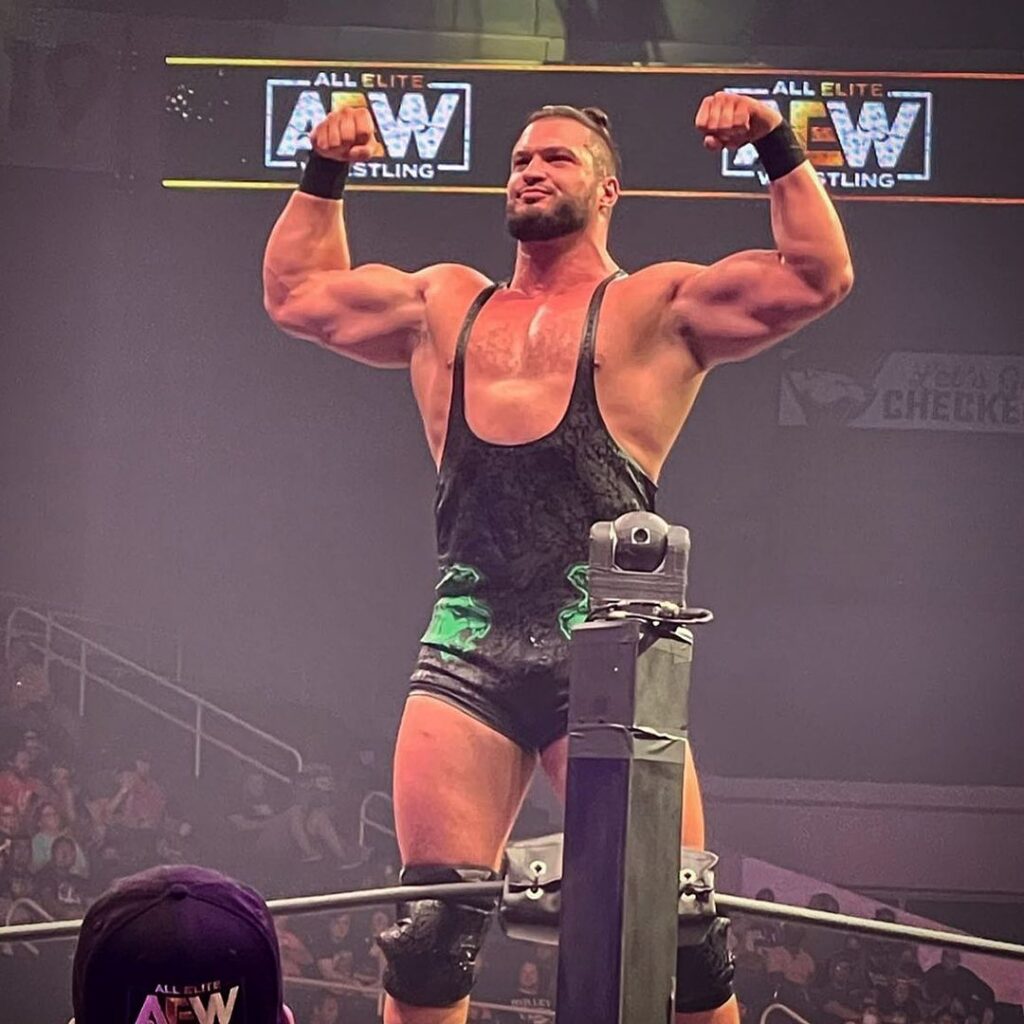
Featured image credit: Bleacher Report

Ryan Pineda On Building Your Side Hustle, House Flipping And Leaving Your 9-5 Job

Ryan has been in the real estate industry since 2010 and is also a YouTuber and the host of the podcast “The Ryan Pineda Show”. He joins Chris Van Vliet at the Blue Wire Studios at the Wynn Las Vegas to talk about how to build your side hustle, what it takes to flip your first house, how he built his social media following from 0 to 900k in 18 months, why now is the right time to invest in real estate and much more!

On where it all started:

“I always knew that content was important, and I have always been active on Instagram. I post stories and try and do some cool little videos here and there, but it was a hobby. When COVID hit, I was like, ok where is the world going here? What can I do to do something with my time? I thought that TikTok and YouTube, they are only going to get bigger, this is where the world is going. It ended up being the right bet, for me it was the ebay thing that ever happened. I got to sit down and look at the world for what it was and I’m like, the world is going digital. Now I am all in on the digital side. Because if you win where, whatever you have physically, will win too.”

Growing the brand:

“So my plan was to put out two YouTube videos a week and one TikTok a day, and let’s see what happens. Sure enough, we started getting traction, so I doubled down. I ended up doing a YouTube video every day, which is not easy. Then I started doing TikToks, that starts taking off. So what would be the optimal amount of content if there was no restriction of time or money? If I can do the optimal that fits my time and my schedule, I think we can get the best results, and I think I have finally figured that out. I’ve tried YouTube from two videos a week to one a day. We currently do 5 videos a week, and that is the sweet spot.”

The power of hiring:

“One of the big things in business I learned early was that there were a lot of things that I didn’t want to do. When I started flipping houses, I never once fixed a house on my own. A lot of people tell me ‘You Should do it yourself, get your feet wet and know what you are doing…’ No, I’m not swinging a hammer, that ain’t me. So I always hired. I did this while I was playing baseball in Canada, and while I was playing, I was flipping houses, you can’t do both unless you know delegation. So it was kind of natural for me to do that, and as I started to build more businesses, it was very easy for me to repeat this throughout industries and businesses. You hire people and give them a process to follow. As long as you hire the right people, then you will succeed.”

On the hiring process:

“I didn’t either, but you don’t hire 10 people in a day, it’s a gradual thing. I started off by filming my content myself, if you watch my earlier videos, they are all in my dining room. My wife edited them, because she didn’t have anything to do, and they just started taking off. I was like, this is moving, so I need to hire someone. I hired my first videographer and paid him $3,000 a month. The plan was to put out 3 videos a week and I would pay him 3 grand a month. Some would be in the office, some would be a house flip, whatever. So that worked, so I hired guy number 2,3,4 and it just goes on. We now spend about $40,000 on wages, but the return of investment is phenomenal. If I could spend 100 grand, I would do it. But right now, we are doing the optimal of what we can do.”

Why Ryan likes doing multiple things:

“I get bored really easy, which is why I have all these businesses and challenge myself. I don’t know if I will ever be the guy who can just grow one business to crazy levels. When I have talked to other business people and asked them ‘What does it take to go from 1 million to 10 million, then to 100 million…’ They say to me ‘Well Ryan, very few have multiple businesses that they are getting to that level, they focus on one.’ I couldn’t do it, I would get bored focusing on that one business for the next 20 years. Also I don’t want to put in the work to do that, I don’t want to go public and have stockholders. It’s better for me to just chill, have a few businesses that make millions, and I am good with that.”

No risk no reward:

“I think the moment you decide you want to flip a house, you have to understand that there is risk with everything that you do. I think that is the biggest thing that holds people back is the fear of losing money. It could be contractors screwing you over or the market. The fear of the risk scares people. But if you fail, what’s the worst thing that can happen? If you’re young, who cares? You’ve got the time to recover. It’s not like you’re older and you’ve got 4 kids, if so, I get it. I was 25 years old, had no money, I had nothing to lose. But if it doesn’t work, I am still broke. If it does work, that upside is so great! What is the risk of doing nothing? It’s staying in the same spot for the rest of your life.”

Why the time is now:

“I think that has never been a better time to flip houses than today. The market is so hot that it is easy to get bailed out, if you try to flip in a downmarket, you have the risk of not having a buyer and having to drop the price. I have not had to drop the price in a long time, I’m getting 10 or even 20% more than I thought. Right now there is so much room for error in today’s market. If you are looking for a deal today, now is the best time to start.”

Why flipping is better than renting out:

“My philosophy is that most people are trying to get passive too quick. They are buying a rental here and there and accumulate a load over the long haul, but it’s not going to make you rich quick. What I teach is to master flipping houses, because if you can do that, rental is the same thing. But instead of selling the rental on, you choose to keep it. If you have the skill of flipping houses, you can do anything in real estate. Most people who start, they are not making a lot of money. A rental might make you $200 a month, but life is the same. If you flip, you can maybe make $40 grand, and that is life changing.”

On when he will stop:

“I always get asked the ‘When are you going to stop?’ question. And there isn’t really an end to this. I just want to get better and grow. Right now if I am focused on social media, that is what I will try and do. A couple of years ago it was the flipping business. There will come a point where I am happy with social media and my focus will shift, it might be to my family. But I know I can get better every day, there is always a way to get better, but people just get too complacent.”

On one of his failures:

“My first big failure was back in 2018. We were speculating on the market, actually it was similar to how it is today, super hot, we were making more money than ever. But going into the winter, they decided to raise interest rates. Being younger and only seeing interest rates go down and down, I was like ok, whatever, who cares? Well people care, and when they raise the rates, people stop buying. I got stuck with a ton of inventory on deals that were not great deals. I thought that the market would be good and bail me out, but I ended up losing $500,000 on those bad deals. That was tough to swallow, you think you will make a million, but you lose half a million. But my investors did not think less of me, they thought more of me. They saw that when it hits the fan, you will still do what you said you were going to.”

What are the first steps:

“You have to look at your budget, and say to yourself ‘How much money am I willing to put into this business.’ For me, I bought a good camera and I did it all myself. We get some momentum, so I hired the video guy. Yeah $3000 a month is a big commitment, but it started snowballing. Right now the iPhone is incredible, you can get high quality videos with your phone right now. You can buy a $20 microphone and a $30 light from Amazon and you basically have what I have.”

On what he is grateful for:

“My wife, my kids and my employees.”

Featured images: Instagram

Featured image: Kivo Daily

Carrot Top: 30+ Years Of Comedy, The Power Of Consistency, His Favorite Props & Las Vegas

Scott Thompson, better known to fans around the world as Carrot Top, is a comedian an actor who has been making people laugh for more than 30 years and he joins Chris Van Vliet for this interview at the Blue Wire Studios at the Wynn Las Vegas. Carrot Top talks about performing his show 6 nights a week at the Luxor Hotel and Casino, how Jay Leno and The Tonight Show helped him get his first big break, the art of prop comedy, how he has been able to achieve such longevity in show business, the best advice he has ever received and much more!

On being nervous about the Las Vegas residency:

“Absolutely, I was terrified. I was a road guy and then we would do a residency for like a week or two. We would do two weeks, go on the road and then come back, it was kind of an in and out thing. They offered me the full time residency and I was like, hmm I’m not doing that, I’m a road guy. But I took it, and now I can’t imagine doing anything else.”

On the advantages of being in one place:

“Oh it’s great. I have done this for so long that I have built in an audience, so I am lucky in that regard where people actually come to see me. Back in the day it was [people saying] “We couldn’t get into Cirque Du Soleil, so we went to see Carrot Top.” I still ask every night if people have never seen my show and a lot of people stick their hands up, have never seen my show. It’s cool to get those new fans.”

On playing every night:

“I get the same thing that the audience gets, it’s a rush. That’s what’s so great about performing in front of a live audience, you get to feed off of the energy of the crowd, so every night you get that same kind of energy. Also I get to try new things, we just did a Halloween bit last night. Having a show every night gives me a chance to play around a bit and try the new jokes.”

On how he crafts his jokes:

“The whole idea of any kind of joke, whether it’s a standup joke or a prop, there has to be a beginning and an end. There has got to be something funny and something clever in a sense. For Halloween I did a bit where I said “Because of COVID I played it safe this year, and instead of giving out candy I gave out COVID shots. I’m then there with a pumpkin [mimics vaccination]. So it’s funny, it’s current, and I say “If you feel funny in an hour it’s from the candy and not the vaccination. So there’s the start and the nice big punchline at the end.”

On possibly shaving his hair:

“No, never. I’ve shaved my balls but I have never shaved my head. I love my hair, having hair is like my power. People have asked me if I would cut it for a movie, and of course I would. But now they can just CGI it, bald cap it or whatever.”

On who was the first person to say he was funny:

“I think it was my mom, she would always tell me that I’m funny. Then as it went on, I would make my friends at school laugh. My dad had a great sense of humour, he was very funny with his humour being so dry, he had great timing. He would tell his jokes with all the neighbours, I would try and recreate it the next day in school and would get in trouble. One of the first things I came up with was at 10 or 11. We were at a campfire, there was me and about 20 other kids, and the police came and said we had to put the campfire out. I said ‘Well why not? We are next to water and sand, two things that can put a fire out.’ They thought I was being funny, I wasn’t but my friends were like well he is right. What should I do, go to the woods? I started thinking of observational humour after that and really admired comics who also have the observational humour.”

On his first show and getting started:

“I really don’t know how I did, but I remember my first time. I was in college and there was an open mic night. My roommates came back with this flyer, I was like let’s go to this. They said ‘Go? You should be in it!’ I’m like what do I recite poetry, play an instrument? They said I should tell jokes. I told all the old jokes from my dad, it went great. They kept doing the open mic nights every month, and the third time I actually told a few original jokes, but ended with an old joke so I could end strong. My jokes were mainly about college, where I would make fun of the school, the parking and the teachers. There was then an open mic night at a comedy club, so I auditioned. The lady there said I was good, but talking about college isn’t going to work with a diverse crowd, so I had to widen my act. That was when I started using the props. I had a neighbourhood watch sign, which I had stolen and drawn a logo on it, my logo. The hard part is the logo, now I had to write the act. I walked on stage with the sign and said ‘Sorry I was late I was in the neighbourhood. How good is the neighbourhood watch if you are not watching the signs?’ And it killed. The lady said to me can I do more of that? I said, ‘What, stealing signs?’  She said yeah and it all just kind of went from there. The more props I had, the more time I could do.”

On Jay Leno:

“He gave me a lot of opportunities, I was on that show about 30 times. They loved me there and I loved them, I just had to call them and I got a set. I got lucky at the end of the tv bubble, now I don’t know who watches television anymore.”

On his favorite prop:

“One of my favorite props was a paper cup and string phone. I said they should make a new version, and my version had multiple cups. There was one for call waiting, there was one for conference calls, a clear cup for caller ID. It was my closing bit for ages. There has to be some cleverness to it.”  

On possibly stepping away:

“I don’t feel like I am near retirement age. I still have 5 years left on my Vegas deal, this is all I really know how to do. It’s either this or try and guess people’s weight at the fair. But I don’t have any desire to stop, everyone knows it’s when you or no one is enjoying it. If no one shows up to my shows, then I know that’s it.”

On his pre-show rituals:

“Lots of drugs [laughs]. No, there’s not really a lot of prep. There is a different ritual between road shows and host shows. For the Vegas shows, I get there 2 hours early, I have to get there early, music going, soundcheck, maybe rehearse some new stuff. Then there is the meet and greet, shot of espresso, shot of Crown Royal. Then I have a chat with the crew and go ‘Let’s just all do the best that we can.’” 

On advice to aspiring comics:

“The most challenging thing was to become a young comic in 2020, unless it’s all on Zoom. But the best advice I would give is to have as much time on an actual stage to hone in on what you’re going to talk about. You have to know what you are going to do for those 5 or 10 minutes. You need to know what is your craft, is it political, dancing, juggling? I wasn’t originally a prop guy, but I had something with visuals, so I made it my thing. I had what I wanted to do in my head. There were a lot of shows where it didn’t go well, everyone does.”

On what he is grateful for:

“My health, my hair and my family.”

Embedded images credit: Instagram

Darby Allin On Being Your Authentic Self, Trusting Your Gut And Chasing After Your Dreams

Darby is a skateboarder and professional wrestler signed to All Elite Wrestling (AEW). He talks about the obstacles that stood in his way on his journey to become a pro wrestler, how skateboarding has influenced his style, his friendship with Tony Hawk, why he thinks fans relate to him so much, how he created his finishing move “The Coffin Drop”, his match with MJF at AEW Full Gear and much more!

On what airport staff think when they see Darby arrive with the face paint:

“They think that I am a rockstar or something like that. Then they start questioning me, because sometimes I am carrying my thumbtack skateboard. The TSA actually let me through with the thumbtack skateboard. It’s crazy, but they are cool with it.”

On doing things his way:

“Yeah it was always the plan. For me to do things on my terms and to get as far as possible on my terms, because money is good, but dignity is better. I feel that I have kept my whole dignity intact on my road to success in AEW, which is amazing. But yeah, this is what I dreamed of, having a ring in my basement and a skate ramp. I have lots of crazy sh*t here, I just bring my friends here and we just do crazy sh*t.”

On if AEW is happy with him still skateboarding:

“They know that I am filming a new skate video right now, and I am about done with it. I’m actually coming out with a Darby Allin collaboration with Deathwish Skateboards, I have their logo tattooed on my cheek. So they are coming out with the Darby Allin skateboard and I wanted to put a video out for it, so they know, and I know my own limits. AEW is my top priority, and I can’t show up to there with a broken hip.”

On where his worst injury came from:

“Skateboarding, by far. It’s kind of a crazy story. I was going down this big hill, and I hit a crack at the bottom, my elbow went into my ribs, I thought I broke my ribs. Then my kneecap smashed into the wall, I was laying there and I thought I had broke everything. I was laying on the ground and then I see I am laying in a red ant hill. It just got worse and worse, I thought I broke my wrist, and I had to wrestle next week, it was f*cked up. I was contemplating going to the hospital for 3 hours. I was like if I cough up blood then I will go, but I didn’t, so I didn’t go.”

On his personality and his best quality:

“Realness. A lot of people are fake, a lot of people play something on tv, but in reality they are the most boring thing, their personality is like watching paint dry. But with me I feel like it’s like oh sh*t, he’s legit. What you see inside of the ring, I am even crazier on the outside. To me, wrestling is therapy, and the fans see that and take notice to that.”

On if he can still continue with his crazy style in the future:

“Yeah I feel great and my body feels great. We all know that I am straight edge, but people don’t know all of the work that I put in to feel healthy. There is the stretching, the eating right and taking care of myself. Plus I feel like I don’t give my body time to rest, I am either skateboarding or something active. That was the one thing that Tony Hawk told me, he’s like 54 and killing it on the skateboard scene still, he says ‘Just don’t stop. Because the moment that you take a break, that’s when everything starts to feel like sh*t.’ So after I have this crazy match, I’ve got to go to the skatepark or I’ve got to swim or jump out of a helicopter, whatever I have to do.”

On his vice:

“I’m an adrenaline junkie. I legit get sketchy if I don’t do something every day. I’m like I’m being lazy or I’m f*cking up or something. 

The scariest Coffin Drop he has ever done:

“I would say the one to Ethan Page when I had him in the coffin. There was little room for error, and the moment I broke through the coffin, you see the spikes sticking up, I could have easily impaled myself. I could have hit my head on the rim of the coffin too, but there was zero room for error. People were like did you practice that? I don’t know how you practise that, you just gotta [do it]. I didn’t know what was going to happen to Ethan, I crashed through the coffin and all I hear is him screaming. I’m like well I guess I f*cked him up. The cameras are not on him while he is in there screaming.”

On where The Coffin Drop came from:

“I think I was bored of watching people do 450s or Shooting Stars. I was like, I don’t want to fly to look pretty, I want to fly to hurt, so I just started falling backwards. There is zero room for error, people do the 630s with the double front flips, I would hate to do that. I would hate to think every night I can’t slip, if you f*ck up a Coffin Drop, you’ve got issues, it’s pretty easy, you just fall back on someone. A lot of it is adrenaline, I’m not going to do a Coffin Drop cold turkey. I think lots of skateboarding got me ready.”

On how he found out about the CM Punk match at All Out:

“I was talking to Tony [Khan] on the phone, that was it pretty much. You don’t believe something until it happens, and then once I cut that promo about the best in the world that aired in North Carolina, I knew that it was a done deal and it was go time. That was the high pressure moment ever, because I knew everyone was going to be watching him because it’s such a big thing. Seven years, holy sh*t that’s a long time. For him to leave wrestling the way he did and to come back, people were not sure if he ever was going to come back. So when he did, and I was the first opponent, I was so nervous. I was in a zone, and I’ve been in a few zones in life, but like I was in a zone that day where I was like it’s not going to get more nerve wracking than this. It’s cool to get moments like that because it does make you mentally stronger. But it started hitting me hard because I remember when he left wrestling in 2014, it was the same year that I started wrestling. At the time he was my favorite wrestler. Besides the whole straight edge, it was the punk rock and I don’t give a sh*t what you think about me attitude. It was cool as a kid watching him, but then it hit me. When he left, I was a dishwasher and dude, life is a trip, so I got a little teary eyed before that match.”

On if CM Punk specifically chose Darby as his first match:

“I don’t know I have no f*cking clue. I just know that he was a fan of my work prior, but I don’t know if he said ‘Let me have him.’ But it worked out, and there is always one return match back. That’s a good thing to have for the resume and life in general, I had a lovely time that night.” 

On teaming with Sting:

“Me and Sting have grown so much together outside of what people have seen on TV. Our personalities outside of the ring, we’ve come so close and the fans don’t see that part. Originally, he was supposed to come in for some cinematic matches and I went to his house in Texas where he had a ring set up and we started rolling around and training and I convinced him to actually wrestle in front of a live crowd. Nobody gets to see those moments behind the scenes. It’s just us talking. ‘You got this. I’m training with you and seeing what you’re doing, let’s fucking do it.’ Double or Nothing against Scorpio Sky and Ethan Page meant a lot because we never thought it would happen. He gives other people confidence and it’s cool that I can help go, ‘You got this.’ It’s cool to do that in all aspects of life.”

On where he would be if AEW didn’t exist:

“Dude I have no idea, and that’s the trip, that’s why I don’t take anything for granted. I work my ass off when it comes to promos, outside of wrestling. Whether it’s Dark, Rampage, Dynamite, when I come to work I am in the zone. I like to be alone, I change in Sting’s locker room, he has his own room. Not because I think that I am better, I just don’t want to be caught up in the dramas. AEW has been great, and I just want to treat it with respect.”

On what he is grateful for:

“The spot I am in at AEW, that I can walk and to kill MJF on Saturday.”

On MJF’s comments in a recent promo:

“Personally I don’t care, because I’ve put that out there into the world, what he’s already said. If you want to do that, go and do that. I think if something happens and you’ve talked about it, then it shouldn’t be an issue. I think if you haven’t talked about it and they say it, it’s like oh what? But it’s cool, I don’t give a sh*t. I just care about the pillars of AEW stealing the show, and no one is willing to go through what I go through to push the story.”

Embedded image credit: Instagram

Featured image credit: Daily DDT