ArchivesChrisVanVliet.com

How To Build A Successful Business And The Power Of Giving Back With Reece Mennie

Reece Mennie (@reecemennie) is an entrepreneur, podcaster, investor and B2B expert. He is the CEO and co-founder of Hunter Jones, HJ Collection and Bigas Marketing. He joins Chris Van Vliet to chat about how he got started as an entrepreneur, tips on how you can start a business, the best advice he’s ever received, what he’s learned from working with Grant Cardone, why it’s important to have great mentors, we also discuss his boxing gym called Dennis & Dyer Boxing Academy, his podcast called “Mennie Talks”, the importance of giving back and much more!

I know that a lot of people are not in a job that they necessarily love. I think the great thing about you is that you always created this for yourself. Was that something that started for you early on?

“At a very young age I would always look into something that I wanted to do and not what other people wanted me to do. I started working with my dad from a very young age, and I learned that. Going back to before that, when I was at school, because here in the UK you are at school for a long time. I was doing paper rounds and working through the 6 week school holiday we get in the summer. My friends would be out playing football or whatever, and I would get a part time job just for those 6 weeks. I just wanted to get a feel of the working environment, because academically I did not enjoy school. Nothing at school motivated me and I was not very inspired, I mean I enjoyed seeing my friends and messing around. But when it came down to it, I was more interested in getting out there and experiencing the world while making money. At that young age, I was motivated by making money.”

A lot of people want to start a business and see people on Instagram showing you how glorious it can look? Where do you start?

“You need to want to do it, you need to have a plan and you need to realize what it takes. You can’t go into business and just look at all the glory and think that it is easy because somebody else is really successful. In my opinion, if you are going into business, then you have to go all in, give it everything and make sure that it is the right time. I listen to many entrepreneurs that give advice to many people. The things they always say are like ‘Just start.’ And it is about just starting, but it’s got to be not necessarily the right time, but the right time for you. You need to stand what is in it, because if you don’t go all in, you won’t succeed.”

How did you know what kind of business you wanted to go in?

“At the start I didn’t. I had a few different businesses, I worked with my dad in the printing company, we grew that and I got a good feel of what business is. What I mean by that is the darker side as opposed to just going to work and getting paid. As a kid you just think that you go to work and get paid, and if you are the owner then you get paid more. They don’t realize that you are responsible for collecting money and for being responsible for the employees. I learned that from my father at an early age, and that was when I realized that if I didn’t go all in then it isn’t going to work.”

You’ve been your most successful in real estate, where did that all come in?

“So that’s a funny story. I was working for a company that was introducing these property opportunities to high net worth and sophisticated investors. The company I worked for was successful with that, I built the team and we did really well. But I was looking at it and thinking that there’s so many different things that I could do myself that would make this a much more enjoyable place to work and better for the investors. I spoke to the people I worked with, and they had no interest in doing these things. So I thought my time is now, I put the business together from scratch and just grew it organically. We started raising money for property developers, and then went on to team up with one of my business partners and make our own development company.”

Is there any broad advice you can give to somebody who is looking to get into the real estate market?

“Well it depends what they are looking for. When you get into a property deal, you need to know what you are looking for. It could be the yield, holding the asset, flipping the asset… There’s a lot of different advice I can give, but if people are really interested in getting into the property market, I can talk to people about what they want and point them in the right direction.”

Both personally and professionally, what drives you right now?

“Well right now it’s my kids that drive me and leaving a legacy, making sure that they have everything that they need. I have a 5 year old daughter and I have just had twins, so that’s my main motivator there. I’m a family man and enjoy family time when I am relaxing.” 

How do you balance it when you can give your kids everything they want, but you shouldn’t?

“Yeah you have to be careful. You don’t want to be spoiling them, it’s about educating them and having them grow up in the real world. Every day I am giving them information that I have learned and executed, it’s about advice.”

You are also a fellow podcaster. Where did the idea come from to start a podcast?

“The idea was to put myself in a situation I was in 10-15 years ago. If there was a podcast that would spark the answer to that question that I was thinking about, that would have been great. I interview high profile entrepreneurs, people that have run multiple companies and have been successful. I get into their mindset and try to figure out what it takes. If you are not a doer, it won’t work.”

How do you take the stuff you have learned and apply it?

“You just have to do it and experience trial and error. You’ve got to make mistakes to learn, the only people who don’t make mistakes are people that don’t do anything. People have to try and grow an organisation and make mistakes, because if not then they will never make those big decisions.”

What would you say is the biggest mistake that you have made, and what did you learn from it?

“The biggest mistake I had was having a business partner at 50/50. Going in now, I would rather be slightly less or a majority shareholder than straight 50/50. Because then at the key decisions, you become at loggerheads. One can’t make a decision without the other, and you just waste time. Even if it’s 51/49, then someone can make a decision.”

As we look ahead to 2022, what are your goals?

“So we are looking to grow the academy I have, the boxing academy. We are looking to grow the property side of the business with 1,000 units a year and to get 100,000 people to get a return on their investments. There is also a USA expansion coming too, I am looking forward to getting into the American market.”

I end every interview talking about gratitude. What are 3 things you are grateful for?

“Family, being here every day and my businesses.”

Featured image: Forbes

Embedded images: Instagram

WWE Hall Of Famer The Godfather Is An Absolute Legend

Charles Wright is better known as The Godfather (@thegodfather). He is a WWE Hall of Famer and also performed under the names Papa Shango, Kama Mustafa and The Goodfather with Right to Censor. He joins Chris Van Vliet at the Blue Wire Studios in Las Vegas to talk about his legendary career, his friendship with The Undertaker, being discovered working as a bartender at a strip club, having his first wrestling match against Jerry “The King” Lawler, his time in the faction “Right to Censor” with Ivory, Stevie Richards, Val Venis and Bull Buchanan, being inducted into the WWE Hall of Fame and much more!

It’s awesome that we get to do this in person. How long have you been in Vegas?

“I moved to Vegas in 1984. I just got out of college playing football, and I moved down here from northern California.”

I think it’s amazing that you have been so many characters. I’m curious, which character did you pitch and you thought ‘This is absolutely going to work.’ And maybe it didn’t.

“Well the one that did was The Godfather. It was not pitched to me, my wife came up with it. It wasn’t that I should be a pimp, but she said ‘If you can make people see you for who you really are. You are not a voodoo man, you are not an ultimate fighter, you are not a nation member. Just be who you are, we are sitting on something there.’ I didn’t want to be a pimp, I hated pimps. But everything she asked me to do that I didn’t want to do, it worked. The Godfather was never pitched to me. My wife and I came up with it on our own. At the time I am in the Nation of Domination, and they are building The Rock. So me and D’Lo Brown are just walking to the ring with the Rock, and when it was time for Undertaker or Steve Austin to do the finish, we are feeding into it, that’s all we are doing. So my contract was coming up, and I’ve got to come up with something different, I’m still under contract with WWE to this day. So we grew out my hair, built this character and it kind of just took off. I was wrestling Bradshaw, and I am Kama Mustafa. It’s the popcorn match, the one that no one cares about. So we are beating the hell out of each other for 12 minutes, and I said to Bradshaw ‘Let’s try something different.’ So we went to the agent, Jack Lanza, and we tried something. 

So I went out there with no girls and said ‘People, I’m just gonna come out and say it, I’m a pimp.’ [Chris laughs] See how you laughed there? Everyone laughed. We went out there for 12 minutes and no one cares. But that night I say ‘I’m a pimp. And right here in Cleveland, Ohio, you have some of the best ho’s ever born!’ Now I have no girls with me, I offer John [Bradshaw] the girls instead of fighting me. I don’t have girls, I say they are in the back or in the limo, and people are chanting ‘Take the ho’s! Take the ho’s!’ We were getting no reaction and now they are chanting. So he goes to the back and start going ‘Stupid redneck.’ They start booing me. John comes back, hits me with the clothesline, 1,2,3. I get up, put on that hat and say ‘Man, pimping ain’t easy.’ And the place would pop. We did it 2 times on the road, and we get to TV, Vince pulls me into his office and says ‘Charles we might be onto something here.’ 

You hadn’t pitched this to Vince yet?

“Nope. I was there as Kama and Rock did all the talking. I said to him ‘Rock, call me The Godfather.’ He’s like ‘What?’ I said ‘Just call me The Godfather.’ So he goes ‘My man here The Godfather…’ And once he did that, everyone called me The Godfather, nothing to do with the WWE. Vince then came to me, and I’m known to know my way around a strip club or 2. When I came here in 1984, I was from The Crazy Horse. The guy who owned it before me had his head cut off and they found it in the desert.”

Can you rank your other characters from most over to least over in your opinion?

“In my opinion, The Godfather by far is the most over. Then Papa Shango, Kama in The Nation of Domination, Kama the Supreme Fighting Machine, and last and very least The Goodfather, I hated that.”

When they told you that you would be joining Right To Censor, did you think they were joking?

“I knew it was coming, because that’s when Vince went public and had people to answer to. They were going from cable to network, and they were cutting out DX with the ‘Suck it!’ They were cutting out the puppies, this and that, and they were after me! You had this black guy calling girls ho’s, talking about how pimping ain’t easy and telling people to smoke weed!”

I think between yourself and Val Venis there were a lot of issues there.

“We were a tag team for a bit called Supply and Demand. Those were the days.”

I think the people now don’t realize that RTC [Right to Censor] was the PTC, basically taking a stand and saying ‘We don’t believe in what you guys stand in.

“Right, and I hated it. As soon as they told me what I was doing, that was why you would see me come and go all of the time. I always had the strip clubs here in Vegas, so I always had means of making money. So when I was not having fun and not making money, I would leave. I would go to Vince and I would say ‘Hey Vince. It’s time for me to go.’ He would just laugh and say ‘OK Charles. We will call you in a year or so and see if you want to come back.’ And that was how that would go.”

Did you think at any point in time that The Godfather would be a Hall of Fame character?

“It depends how you would look at it. Money wise, yes. Even though it was a mid-card character, it was over like a top character. It sold a lot of merchandise, still sells merchandise, and when I go to these signings, there are still people who want to see The Godfather, which is so cool.”    

So when did the girls first start to appear on TV?

“Vince says to me ‘Charles. Do you think you could go and get some girls?’ I’m like ‘Vince are you joking? Me and Taker are in the strip clubs every night.’ So I go and grab The Undertaker, and we go to a strip club, this is during the day, we grab 3 or 4 girls and take them back to the WWE/F, they sign them, pay them, we take them on tv and they [WWE] don’t ask me anything, just tell me to do what you do. I was doing the same thing I was doing with Bradshaw, but just with girls. And I swear I went from walking through an airport and maybe some people notice you, to the next day, people are like ‘Godfather! Where are the ho’s?’ It got over the second it got on TV.”

So walk me through this pitch with you and The Undertaker at the strip club?

“Well more than likely we were there the night before, so they probably knew who we were. But it wasn’t hard. And after the first time that we did it, Vince took it over. And Bruce Prichard, it was his job to get the girls. He would just call a strip club and ask them to send girls. It got over so fast that the strip clubs would then call the WWE and say ‘Hey, you’re in Connecticut, we would love to supply the girls.’ And WWE would pay the girls good. But then the girls started getting crazy on TV, so Vince was like ‘We need to back off on these strippers a bit.’ So instead we started getting actresses, and let me tell you, the actresses were worse than the strippers. But it was just a good time bro.”

When did you realize that The Godfather was not going to work anymore with the way that the world was shifting?

“When they said you can’t be on Saturday morning, you can’t be on Sunday morning, you can’t be on Monday until after 9pm. You can’t say this, you can’t say that, you can’t call the ho’s, say pimping ain’t easy or tell people to smoke weed. Vince said ‘Charles I’m fighting for you, but they are coming for you bro.’ And I knew that they were. They called me into that office, said ‘This is what we are going to do [Right To Censor].’ I said ‘I’m not having fun anymore, I’m out.’ And I told the wrong people, and somebody told Vince that I was quitting. Next thing you know, Bull [Buchanan] and I are the Tag Team Champions, and I’m not going to leave with the belt. So they kept me there a little bit longer, but as soon as the belts were off I was out of there.”

Was there animosity from going from such an over character with The Godfather to Right To Censor and getting the heel heat?

“My answer is that I hated all of it. But it’s nobody’s fault, it was just hard. I know it is a work, but just going out all those years and being yourself and not just a character, and you are having fun. All of a sudden they take it away from you, I remember being in that office with Vince. I asked him ‘So no more ho’s?’ He said ‘No more ho’s.’ So I said again ‘No more ho’s?!’ I said it like 4 times. I didn’t want to be there no more it wasn’t fun and it was time to go. They tried to bring him back later as an escort and the girls were no longer called ho’s.”

I heard you took a lot of frustrations out on Stevie Richards, but it’s no fault of his, right?

“No none of it is. And I haven’t seen him since. But if I ever see him, and I’m not a bully, but I wasn’t nice to him. I was in a bad place and I blamed him.”

Did you smoke a lot of weed back then too?

“Oh yeah. I tried cannabis at 27 years old. I am Papa Shango, taking Vicodin, Percocet, drinking Jack Daniels with it all, but cannabis? No I ain’t taking that stuff. I tried it at 27 and things don’t hurt as bad as they used to. I’m like, you know what? We went to eat and it was the best burger that I ever had. It made me less mean, more creative and a more positive person. I always tell people what marijuana has done for me, it might not do it for you, but I don’t take painkillers, eat better and stay positive.”  

How much pain do you think you would be in without marijuana?

“I would be a mess. I would be on pain pills and drinking a whole lot more. But the CBDs and all that stuff really works for me, but I do have a large intake. I smoke a lot, more than RVD.”

How much wrestling would you say you have done while you were medicated?

“Well I have smoked it every day of my life since I was 27 so take it from there. I function well on it, I have had 10 dabs, 10 bong hits and 3 joints today. Like I said, it works for me.”

I feel like you would be a great Royal Rumble entrant.

“No. They tried to get me, but no. I couldn’t do it right now. It has been a few years but they have always been interested in me coming out first as Kama with the haircut, then go back and come back as Papa Shango bald. Then come back as Godfather with the girls at the end. They have talked about it but they have a problem with the girls now.”

Can you take me back to the Over The Edge pay-per-view? You were supposed to face The Blue Blazer that night. At what point did you realize that something was wrong?

“Owen, I had spent that whole day with Owen, he was such a great dude bro. I mean when I went to Japan for the first time, I was in Japan for 6 months and Owen was there. He taught me how to take the train, order food and get to the Dojo. I then spent 7 months in Germany and Owen was there, he taught me the same thing, get transportation, order cabs, he was such a great dude. He was supposed to do his thing first and I was then going to come out with the girls. I was behind the curtain and I was doing my normal ‘OK girls…’ I had a normal speech because every now and then the girls would fall or trip and they would feel embarrassed. So I would tell them ‘If you fall then this is what we are going to do. Don’t worry, you can’t do anything wrong, whatever you do, I will cover it. Just have fun.’ I was going through that speech where I was like the most important thing is to be fun and to have fun, don’t worry about anything else. Then all of a sudden whoever was over here [motions to the left], I want to say Bruce Prichard said ‘Owen fell.’ I said ‘Owen what?’ He then said ‘Owen just fell!’ It didn’t register, I’m like ‘Owen fell from what?’ And then everything went down. I see him when they wheeled him through the curtain and I was just like wow. My wife remembers more than me, because I guess I called her right after and I told her everything, and I don’t remember a lot of the things that I said, I was probably a little bit in shock. But he was a good due man, that was just sad.”

There is obviously a lot of chaos, and your match now is not happening. Who made the call to say the match isn’t on?

“At that point you can’t just put a match together like that with the girls, you have to at least script some of it. I don’t remember a lot of it to be honest.”

Wasn’t he going to win the Intercontinental Title?

“Yes. He was going to win because they realized that they put the title on me, but on me the title didn’t mean anything because I have the girls. All the title was, because I had such a show, not a wrestling show but a Godfather show. It had nothing to do with the wrestling, it was the before and after part that people wanted to see. It was something for the girls to carry out, so they were going to take it off of me and put it on Owen.”   

What do you think is the thing that people will most remember you for?

“I think it’s got to be The Godfather, the personality and the body of work. I’ve been involved as Papa Shango with The Ultimate Warrior, in The Nation with The Rock, then the Godfather, I was always in the mix. If you look at my body of work, I deserve to be in the Hall of Fame. I might have not been the most polished wrestler, but I was a hell of an entertainer.”

I end every interview talking about gratitude. What are 3 things that you are grateful for?

“My family, my life and my dogs.”

Image credits: WWE


Married By Elvis – Confessions Of Las Vegas Wedding Chapel Owner Brendan Paul

Brendan Paul is an Elvis Presley impersonator and the owner of Graceland Wedding Chapel in Las Vegas (@gracelandweddingchapell) which hosts Elvis themed weddings. He joins Chris Van Vliet at the Blue Wire Studios at the Wynn Las Vegas to talk about how he got started, officiating weddings for celebrities like Jon Bon Jovi, Shawn Michaels, Billy Ray Cyrus, Aaron Neville and members of popular groups such as Def Lepard, KISS and Deep Purple. He also shares some absolutely crazy stories that he’s seen from some of his customers. As they say: what happens in Vegas stays in Vegas!

For people who are watching and not listening to this, you are authentically dressed like Elvis right now.

“It’s a living, man.”

Are you like the Elvis impersonator?

“Someone once asked me if I am the best Elvis impersonator and I said no. I said I am the most successful because I am the best! But I am very lucky, a lot of guys have been doing this for many years. But I have been able to find my niche and run with it.”

How do you decide which version of Elvis you are going to be?

“It depends how much weight I have put on [laughs]. No, I go back and forth through a whole bunch of phases, but I realize what people want in this town is “Vegas Elvis.” they want the jumpsuit, the glasses, the rhinestones… Elvis had a lot of different looks throughout his career, but it’s what people think of. I used to not wear the glasses, but people were like ‘Where are the glasses?’ So I’m like, well ok.“

Is this every day for you?

“Pretty much for 26 years!”

Ok so let’s go back 26 years. Who was Brendon before all this?

“So I was born in Los Angeles and grew up in San Francisco. I was a musician since I was 13 when I started to play guitar. I had seen KISS in the 70’s and that was great. So I went on and started playing clubs in LA and was in a band, all really cool.”

So how does playing music lead to being Elvis?

“My hair is naturally blonde. When I started playing, I was in punk bands. So I had orange hair, green hair and spiked it up. Then when I dyed it black, I kept it black until I was 19. I went to UCLA as an art major, where I cut my hair short and had sideburns. On the way home, I’m at a red light and some guy goes to me ‘Elvis you look great!’ So the next day I’m thinking I’ve got to do something to fix this. I go to college and somebody asks me if I am an Elvis impersonator, which I wasn’t at the time. She said that she needed an Elvis impersonator for her roommate’s birthday and would pay me $100. I’m like ok I’ll do it! Then when I get there someone else needs an Elvis impersonator, she wanted a card and I didn’t have any. I’m then singing at this rap party in Beverly Hills and I made $800 a week. It beats being a waiter, I can get $500 here and there, so I fell into it. I graduated UCLA with a degree in fine art and I’m delivering Domino’s pizza. Once I graduated, I thought I could move to Vegas and see what happens. I stayed at Circus Circus and it was rough for the first 6 months.” 

When you walked to the studio, how many people stopped for a photo?

“I never turn down a photo. Firstly I’m not famous, and secondly, I loved The Six Million Dollar Man as a kid. I found where Lee Majors played touch football every week in Hollywood. I had all this stuff and this guy told me he doesn’t do autographs, and I was crushed. I’m a 9 year old kid and my mom wouldn’t bring me back. That’s why in 26 years I have never turned down the opportunity for a photo or an autograph. If people try and sneak a photo, I will go there and do it properly. It makes people’s day.”

What made you believe it was going to work in Vegas?

“I’m not sure that it would. I went to the Hard Rock because I needed a job, and they gave me $10 an hour to seat people and be a host. I was due to start in 2 weeks, nothing was beneath me even though I had a UCLA degree. It’s a living, you know what I mean?”

So here at the Graceland Wedding Chapel, it’s like 2 jobs in one?

“I kind of fell into that. I moved here and I went to the chapel because Jon Bon Jovi got married there. I said I needed a job, and they had an Elvis who was older and heavier but working 7 days a week. I said I could help so he could get a few days off, came in a couple of days later and the other Elvis wanted me to be there. 6 or 7 years later he asked if I wanted to buy it for $1 million. I worked my ass off and put $300 to $400,000 down for it.”   

A lot of big names have gotten married there. Can you list a few?

“So Jon Bon Jovi got married there, so did his brother, who has now got divorced [laughs]. People pick Graceland because Jon got married here. I have renewed the vows of Shawn Michaels, Billy Ray Cyrus and Rob Zombie. Speaking of wrestling, I actually went into the ring and sang happy birthday to Vince McMahon.”

So how did WWE come about?

“An agency called me and said that Stephanie wants to surprise her dad. I got to the Thomas & Mack and they kept me hidden, it was a big surprise. We go down this hall and you can’t go to the bathroom, you have to stay here and we will escort you if you need to know, we don’t want him to see anything. They brought him into the ring and I think 10 showgirls got in the ring and it was awesome. When I walked in, they are playing Elvis music and I’ve been hidden in this room. I go around the corner and it’s like a rock concert. I didn’t realize that wrestling was on that level, the arena was packed. To this day people go ‘Elvis can I get a picture? Were you the guy on Monday Night Raw?’ I’m like yeah and they go ‘Dude! High Five!’ So I walk out and people are going crazy, they said to me ‘When you go out, the ring is a little soft.’ The showgirls are there and they are sinking like it’s a mattress. But it was awesome, I gave him [Vince] my glasses, he took them off and stepped on them but hey that’s kind of cool. It was nice that Stephanie had arranged that surprise, but when I got in the ring he looked so embarrassed. Too late to back down now.”  

How many people ask you if these are real weddings?

“Every day. Or they say ‘How many of these weddings actually last?’ And I like to say ‘Well every single one of them.’ I don’t want to be pessimistic about it, but then again, we have seen women come in who are 35 and it’s their 7th husband. But guess what? When I look in her eyes, she thinks that this is the right guy, it’s number 7, but it’s the right guy.”   

So what do the packages look like?

“We start at $199 and it just goes up. They are really quick, 4 an hour, all day. The most I have ever done is 46 weddings in a day. I sing 2 songs for $199 and do some cute stuff. You also get picked up in a limo, taken around Vegas, all from $199! Some people have never even been in a limo before.”

Do you ever say no to people?

“Yeah, if the credit card doesn’t go through [laughs]. Here’s the thing, if people show up drunk, that’s fine, we have rails to help them down the aisle. But they have to be sober to get the marriage licence, and you have a year. They will not issue one if you are drunk. If you don’t have a licence, we can take you to the courthouse around the corner, and if you are drunk they will not give you one. We once had a girl who had the look of a deer in the headlights, so I said to her ‘Blink twice if you want me to call the police.’ It gets a laugh.”

What is the most ridiculous request that you have had?

“I was asked to call this woman because she was upset. They say ‘Is this the ordained Elvis, I have a woman at the front desk.’ I ask ‘What does she want?’ The lady says ‘My husband and I are coming to Vegas and we are bringing in a third person into our marriage. I want to give the guy away.’ They were trying to having a 3 way marriage, she was going to be the best man and give away her husband, and I said that’s illegal. So she was all upset, but I said we could do a commitment ceremony, but we can’t legally marry you. It is Vegas but we do have laws here!”    

People also think that it is 24/7?

“We used to be open until 3am, because the courthouse was open all night too. But now it only opens until midnight, so we started closing then too. We started seeing the clientele drop off then too.”

How much did COVID change your business?

“We shut down for a couple of months, as did most of Vegas. It was sad to see, I rode my bike down the strip and I saw the Bellagio’s doors shut, that never happens! The fountains are not going off and there are boards on the doors, it was like a ghost town. Everyone from bartenders to valets make their money on tourism. But I hope we are starting to turn a corner now.” 

When you retire, who would fill the blue suede shoes?

“We have some guys that fill in when I go on vacation, and they are like ‘How do you do it.’ I tell them that it’s part ADD and part cocaine [laughs]. It’s like groundhog day as it’s every 10 minutes, but it’s great with me and my ADD. But I love it, it’s like being Mickey Mouse in Disneyland. The Vegas Elvis wedding is a thing now, which is great because it is what we do.”

I end every interview talking about gratitude. What are 3 things that you are grateful for?

“The support of a great family, my health and that I have been a part of so many people’s lives.”

Images credit: Twitter

How To Talk To Anyone – Rob Lawless Is On A Quest To Meet 10,000 Strangers

Rob Lawless (@robs10kfriends) is the founder of Rob’s 10k Friends, a project where he’s seeking to spend one hour with 10,000 different people to see what comes from opening doors for no particular reason. He joins Chris Van Vliet to discuss how you can talk to anyone, why he started this project, what his goal is with it, the difference between an interview and a conversation, what’s he’s learned about people through doing this, his interactions with celebrities like Ryan Seacrest and Kelly Clarkson and more!

I think at the core of this, it is such a simple concept. It’s just the idea of meeting people and having conversations with them. What is the goal of this with you?

“It started as a personal mission. I always said that I wanted to meet 10,000 people for one hour each to see what comes of opening doors for no particular reason. To me, I have this belief that every human interaction has the potential to change your life, no matter how brief. To me, sitting down with a person for an hour, you are unwrapping the gift. You have no idea what you are going to learn from that person, when you will see them again and how they will impact you 5 or 10 years down the road. So for me, it’s just personally fulfilling and I am interested about the people around me. I also want to treat human interaction as an experience rather than just a transaction. A lot of us, once we go through school and graduate, relationships are so transactional. I used to think that if it’s not networking or dating, then why am I doing this? It became my way to infuse authentic connection in my life, and to encourage others to do the same.”

It’s so easy to make friends in high school and college. But then you get into the “real world” and it is so difficult to make friends as a result.

“I agree. I think a misconception is that everyone’s friend group is solidified when they graduate. So everyone is walking around with this mindset that ‘I want to make friends, but people are already set and they don’t want to spend time with me.’ I think once everyone walks around with that mindset, no one takes the time to reach out to each other. It’s only when you move to a new city that you are forced to break out and start to go down that path. It’s something that a lot of people want, but they don’t have the confidence.”

I want to make it clear that you don’t want 10,000 interviews, you just want to meet 10,000 people.

“Correct. And with everyone that I meet, I send them a PSA that I am not interviewing people. I just want it to be a 2 way conversation like if you were meet someone at the bar or a friend you have not seen for a while. When you do that you have the opportunity to ask new questions. If people think I am doing an interview, they will be like ‘OK Rob, grill me!’ I’m like well I have nothing here, I just want to get to know you. I think it goes back to that connection, if it’s an interview, then it just formalises everything.”

The word ‘Interview’ scares a lot of people, because for most people you are either interviewed for a job or by the police. For you, what do you think makes a great interview and what makes a great conversation?

“I think interviews are when you do research beforehand. I used to be terrible at them at school, you have to research the company and tell them what you like and come prepared. A conversation is a blank canvas and see where you go from there. I think the difference is that an interview has expectations, conversations don’t.”

You don’t do research for your conversations beforehand. So how do these conversations begin?

“I usually say ‘So where are you calling from?’ For context, I have met 4,768 people. The first 3,259 were all in person. I intended for the entire project to be in person, but I did not foresee COVID coming. When I went virtual, I started meeting people all over the world. It gives me an idea of where the journey starts if I know where they come from. My style is about building a timeline and figuring out their life story. I just then ask casual questions to fill in the timeline, it’s like asking questions about a movie. I’m just interested in the story arcs of people.”

Why is one hour a sweet spot?

“So I started 10 minutes at a time, but I never went 10 minutes, that was a bad idea. In my job, I started doing 30 minute conversations, but it was very surface level. I decided that I wanted to do an hour with everyone, I’m not going to run out of time to find things to talk about, and I get to dig a little deeper. I wanted to get to know people beyond the surface, and the 10,000 people and 10,000 hours, I think a lot of people are familiar with the 10,000 hour theory. It was highly underestimated in how long this would take. I thought it would be done in 4 years, but I am now 6 years in and still less than half way.”

We have to mention that this is a full time thing right now.

“Yes. I started in 2015 while I was working at a tech start-up. 8 months later, that company was bought out and I was laid off. I jumped into this full time in July 2016 and I haven’t looked back.”

When you told your family and friends about this, what was the initial reaction?

“I was one of the people that they kept on when the initial layoffs happened in 2016. I was telling my brother at the time that if I meet 50 people by June, I will jump into this full time. My brother said that was stupid becasue I need money to support myself, I was living in Philadelphia at the time. Then the company was acquired, I was laid off and I had no choice, just kicked out the door. It was not a sad event, it was that I can focus on this full time. My sister and my parents questioned me about what I was doing with my life. My sister has come around and my parents have started to, but they don’t really understand the modern world.”

So who was the guest that really got the ball rolling?

“Have you heard of ‘Yes Theory.’ They have had the biggest impact on my project. I don’t want to say of anyone, but they gave it legs that it did not have before. Even today I have met people who know me from Yes Theory.”

You’re almost halfway through. What is the biggest thing you have learned about yourself and about people in general?

“The biggest thing I have learned about myself is how wealthy I am in terms of life. I have gained so much gratitude for the things that I have. Going into this full time for over 6 years, you just don’t have the money to put in clothes or other new things, it really makes you focus what your value is on. For me, it is my friends, family and support system.”

So if this your main thing, how do you make money now?

“I had 3 years of savings from working at the tech start-up. When I took it full time, that was my budget to get this off the ground. I have had partnerships with everything to help me, dog walking wedding bands… When I met Ryan Seacrest and had that interview, I sent it to a working space and said that was where I was meeting them. I asked to do a partnership where I met the people at their space for a month, and fortunately that went well and extended another 6 months. The partnership ended March 2020 on that day. But this is the first time I have paid rest since 2017, being able to cut that out was a big expense. I was able to just focus on this.”

A lot of the interviews are now virtual. How has that changed things?

“I think that you miss out on the atmosphere of things. So I used to meet people in coffee shops or bars, you miss the handshake, hug or a third party interjecting themselves for whatever reason. I forget that every day I just sit at a chair everyday, my mind could be in Ecuador or in Germany. We all have that perception of how we experience things, and I have had the most unique COVID experience.”

So what happens when you hit 10,000?

“I don’t think that I will stop at 10,000. I imagine hitting 10,000 and people will be like ‘That’s so cool!’ And I will be like ‘Yeah, I did it.’ I will still be going for that connection, but I don’t think I will be talking to 3 people a day like I currently do. But I want to speak now and speak throughout my life and impact other people.”

I think a lot of people think there is a catch to this. Did you find that?

“I think they might be thinking it secretly. I did a podcast with a guy afterwards, and he was like ‘Yeah I thought you were running a marketing scheme and I was waiting for your pitch, but it never came.’ But I think people who thought of that never really reached out. The same way that they don’t understand what I am doing, I don’t understand what they are doing.”

Do you have a bucket list of people you want to talk to?

“I don’t have a bucket list as such. I find the best people are the ones who really want to be part of the project. If you think about celebrities, not that I have met many, but it feels like they are doing a favor to be here. Jon Bellion, a music producer, he is a musical genius. We are the same age and I would love to know what is going on in his mind. Music is my biggest passion in the world aside from this.” 

I end every interview talking about gratitude. What are 3 things in your life that you are grateful for right now?

“The fact that I have this apartment, my friends and family and the Philadelphia Eagles are in the playoffs.”

Featured image: Tough Mudder

Wardlow – The Man Behind AEW’s Mr. Mayhem

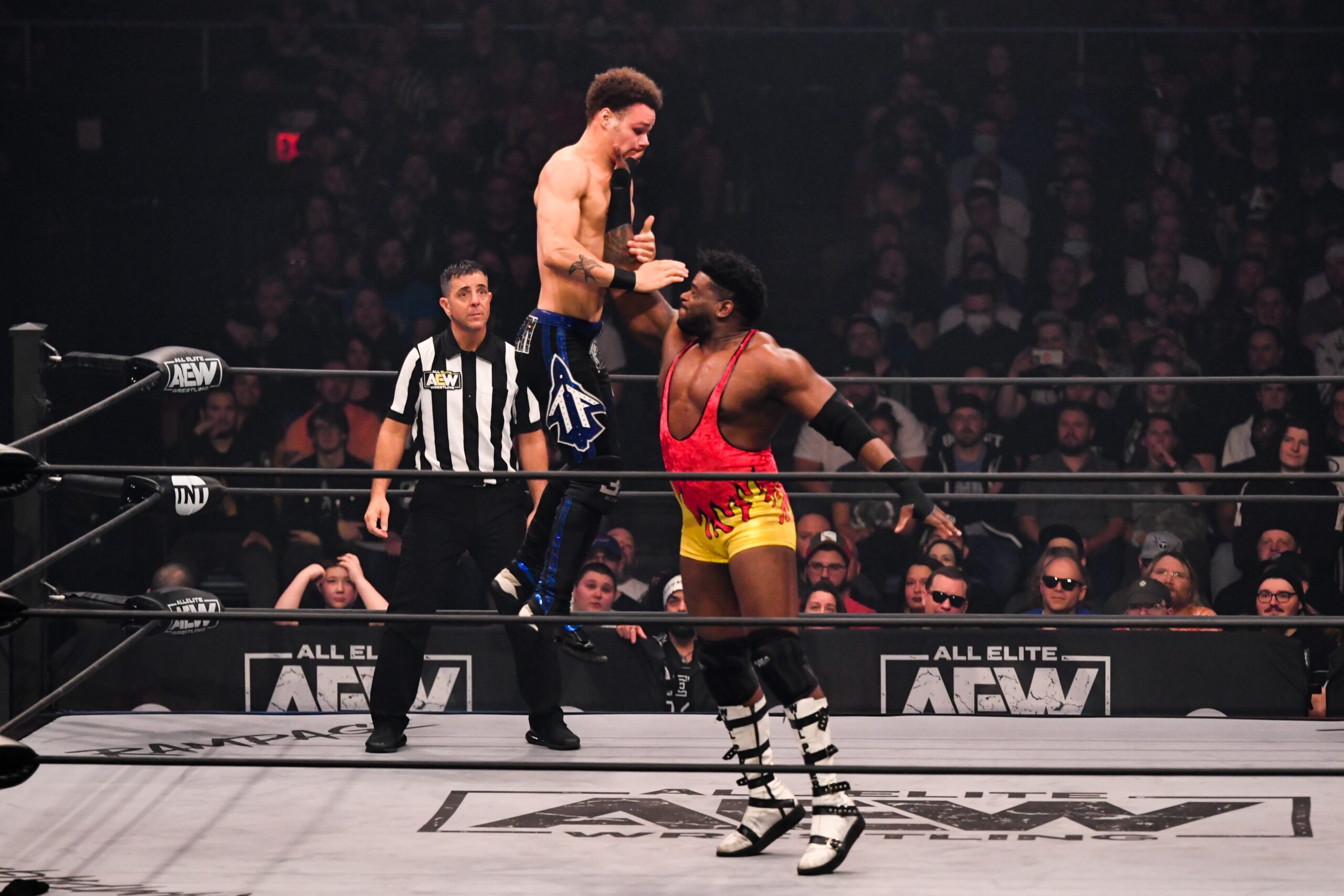
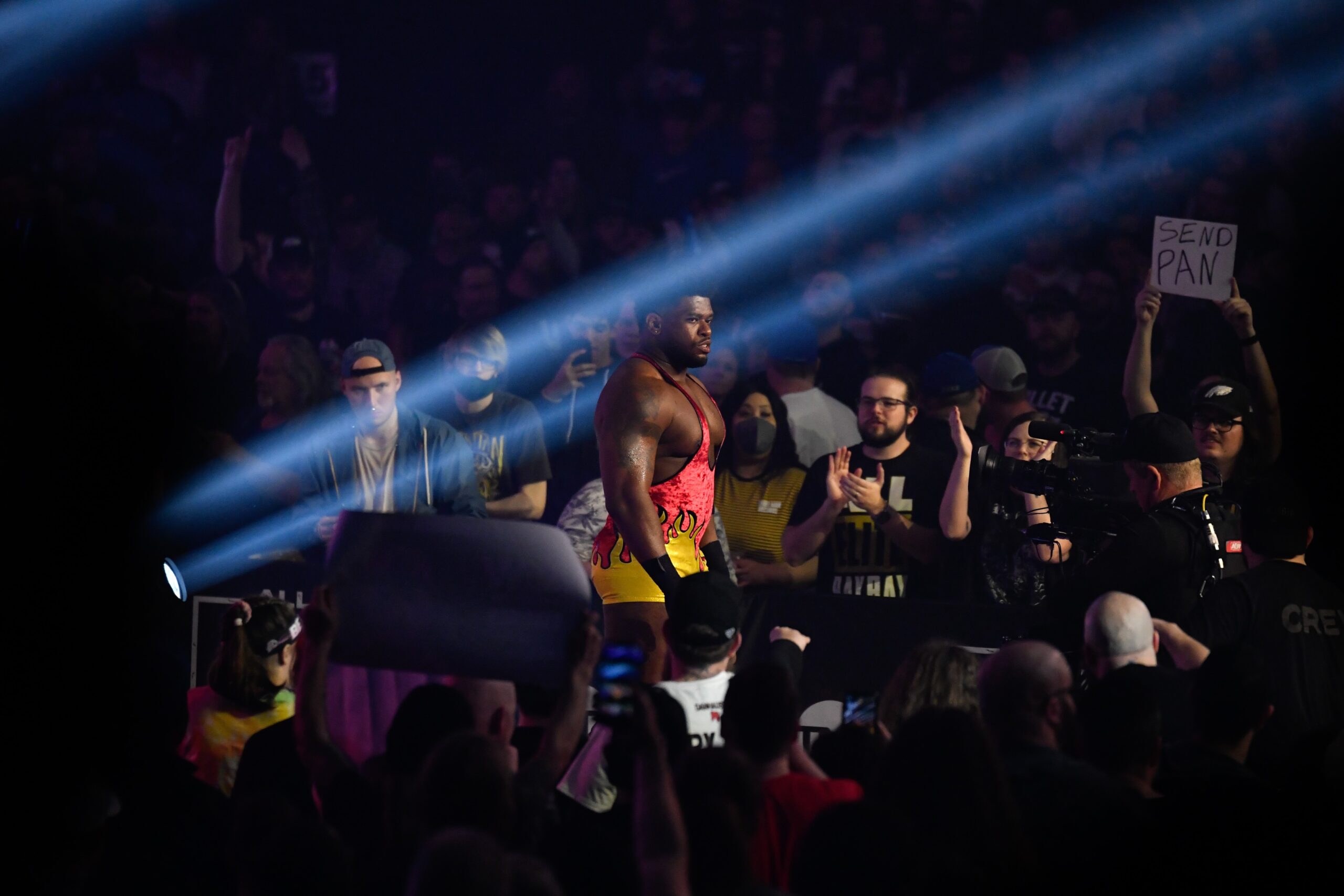
Wardlow (@realwardlow) is a professional wrestler currently signed to All Elite Wrestling. He joins Chris Van Vliet to talk about signing with AEW, his diet and workout regimen, what he has learned from being paired with MJF, what his WWE tryout was like and why it almost made him quit wrestling, his goals for his career, what it was like working with CM Punk and much more!

Here we are. On TV you are kind of an enigma. You speak with your actions and not that much with your words. I think there might be some people listening on here that this will be the first time that they hear you speak?

“This is very true. I am excited to get this side of me into the light as well.”

Who was it that made you want to start working out?

“Dave Bautista. Yeah, Dave Bautista. So I was a junior in high school in 2005, and in 2005 Dave Bautista was in Evolution in the peak Evolution era. He was starting to branch out on his own and I was just amazed by him. I personally think that he has the best physique in the history of professional wrestling. If you are just talking about looks alone, his physique was just astounding to me. I looked at him and I was like yeah that is what I am going for.”

Yeah and Dave is like 300lbs.

“I have accepted that I will never be quite as big as Batista, but as close as I can get I am happy with.”

What would you say about growing up in Cleveland that helped you shape the person that you are now?

“So I currently live about 15 minutes east of Cleveland. Growing up, I was born and raised 40 minutes east of Cleveland in a small Amish town. My graduation class was 80 people, it was a very small town. I grew up pretty poor, so small town, not a lot of money and not a lot to do. We would entertain ourselves by going into the backyard and wrestling. There were days where we would go down to my buddy’s house and take every mattress. While the moms and sisters were at work, we would take every mattress to the back yard and put them on a tarp and have a field day.”

How big were you in high school?

“Oh man. As a freshman I was lucky if I was 5 foot 2! As a freshman, I was 5 foot 4 at the most, but that was pushing it. I still had that pre-puberty chubbiness going on, everybody was blowing up except for me, and that was frustrating. Fortunately at the time I was a huge Jeff Hardy fan, so in my head I was going to be the little guy. I just started practising flips and corkscrews, I was on a trampoline every day of my life after school perfecting moonsaults, swantons, everything. Then of course I perfect all of these acrobatic moves, and I blow up after my senior year. But your body doesn’t forget that stuff, so you see me bust out an occasional swanton even today.”

At what point did you decide to really pursue wrestling?

“I’ve always been such a big dreamer, I believed it when I was in elementary school. I was locked in like this is what I am going to do, and nothing will veer me away from that. I was very confident that even through school that this is what I was going to do for living. It was a weird thing because I knew what my life was going to be, almost to a fault, I was overconfident when I was leaving highschool. I knew that I was going to be this superstar pro-wrestler, but life happens and you make some bad choices. I went far from that path for a number of years and fortunately, destiny is destiny. If you are born to do something, then it will find a way.”

You mentioned making mistakes. I’m curious, what is the biggest thing you have learned about yourself?

“Don’t be overconfident. You have to be confident and be sure of yourself, but maybe I was a bit too cocky. It was a long time ago, but I thought it was so guaranteed that I didn’t have to work for it. I think I just took my eye off the ball with too much partying rather than training and dieting. But keep your circles small and surround yourself with those who have the same dreams as you do.”

Before you signed with AEW I know you had a try-out with WWE. Do you feel like having that audition made you go ‘OK, this is possible.’

“Almost the opposite. I mean I aced the try-out with flying colors, and they didn’t want me. For the first time in my life, I went ‘Oh, well maybe this isn’t going to happen. But fortunately I stuck with it, and I was determined to make it happen. I thank God every day that AEW came about. But yeah, being denied, that was a unique experience and a unique feeling. But it put me where I needed to be, so I am happy for it.”

QT Marshall gave you a call to get to AEW. How do you think you got on his radar?

“It was one of those perfect storms. It was 3 or people had mentioned my name to Cody Rhodes all within like 3 weeks. So it started with Britt Baker, because her and I came up together in IWC in Pittsburgh. So she had mentioned my name to Cody [and said] ‘Hey, my friend Wardlow is pretty good, you should give him a look.’ Then they had a guy that QT partners with and came into the seminar, Lloyd, he was Glacier in WCW. He did a seminar in IWC, and ended up watching my match. He called Cody the next day and went ‘Hey. You might want to take a look at this guy.’ I think there was one more guy from Warrior Wrestling that had contacted Cody about me. So it was this perfect storm where so many people said my name, it was like well ok, let’s give this guy a shot.”

Did they immediately go ‘Let’s pair this guy with MJF?’

“Not immediately. When I first met them, it was start thinking up some things and we will figure some things out. It was months before that kind of worked itself out and they worked that stuff out.”

We recently saw you in the ring with CM Punk. What was it like to have a match with him?

“Dude, honestly I am still waking up every morning feeling like I hit the lottery. It brought such a sense of peace and fulfilment over me. Those big matches, I am usually very focused and very tense and it’s hard to be around me. This time, I wasn’t at all, and I think it was because I didn’t believe it. I’m like ‘I’m not wrestling CM Punk in 3 days.’ So it’s just another normal day. Then the day of the show, it all hit me like ok, this is happening. That was possibly the most nervous I have ever been before a match, but it was also the most comfortable I have been. But the fact I got to wrestle CM Punk, that’s something I thought that I would never be able to do.”

That’s a bucket list item right there! What is on the list now?

“I almost want to now put impossible things on that bucket list. Can we get Dave Bautista to make an appearance, can we get Jeff Hardy in? Can we have a 6 man with Matt and Jeff as my partners? I think that’s at the top.”

You are making a lot of headlines recently. In particular, when people say ‘Who will go from AEW to WWE?’ You are at the top of everybody’s list.

“I always believed I was going to walk into the front door of WWE and they were going to say ‘What took you so long? Get over here!’ So I don’t want to sound cocky, but I was confident years ago and it didn’t happen. But I still feel like a certain individual in that company would go ‘Oh you are my guy!’ I feel I would be right up their alley of what their cookie cutter wrestler would be, but hey, they had their shot.”

You got everyone’s radar initially with that cage match against Cody, which was a great match!

“Thank you. That is up there with the CM Punk match. The CM Punk match and the Cody match, they are the 2 best days and the 2 happiest days of my life. That was the same thing, but the difference is with CM Punk match was that I took the time to enjoy myself. I finally just calmed down, looked around at the crowd, and I was in the moment. The Cody match was like a blackout, it was all business, it was let’s get to this. I don’t remember much of the Cody match vividly like I do the CM Punk match. Just because there was so much pressure, first match, first time on TV and Cody and I had never touched. Before I walked out there, Tony Khan looked at me and he said ‘Don’t F this up.’ It’s all the pressure in the world, but I thrive in high pressure situations, that’s what makes me.”

When did Cody tell you about the big spot?

“I think it was the day before. He said the day before that he may or may not. There is no practicing it, and then sure enough, the cage is 6 feet higher than it is supposed to be, so this ought to be great.”

I end every interview talking about gratitude. What are 3 things in your life that you are grateful for?

“My health, for AEW and the support I have.”

Embedded images: Instagram

Featured image: AEW

Tom Phillips Is Making An IMPACT After Being Released From WWE

Tom Hannifan (@tomhannifan) is a play-by-play broadcaster and TV host best known for his time in WWE where he worked under the name Tom Phillips. He is currently signed to Impact Wrestling as their main commentator with D-Lo Brown. Tom joins Chris Van Vliet to talk about his time working for WWE, what his plans are now as a sport broadcaster, the pressures of calling matches on live TV, what he learned working with Michael Cole, making his Impact debut at Hard To Kill and more!

I think a lot of people were surprised when they heard you on IMPACT at Hard To Kill. But this just goes to show how talented you are. You just went in there like you’ve always been at IMPACT Wrestling.

“That’s nice of you to say. I think that because I was off the grid for about 6 months, and that was by design. I was talking to Renee [Paquette] about it, the amount of content that you have to be up to speed on every week in WWE, it’s like 6 regular weekly shows that you have to watch every single week. Then there is the travel and the whole grind of it, it’s a lot. So when I got released, it was like ok I don’t now have to watch all this stuff. It was elective if I have felt like it, and I haven’t, but at the same time it was like I don’t have to do all of this, I don’t have to spend all this time doing this. So it gave me a second to breathe and then step away from wrestling. Also it made me realize that I do miss this, it is a passion and I have spent a lot of time working on this. So alright, I still want to be in this.”

You were the constant in WWE for like 9 years. The thing is that you were on Raw, SmackDown, NXT and you just fit right in.

“One of the best experiences I had was at NXT UK, which is criminally underrated. Just having that opportunity to briefly be working over there in the United Kingdom with the extraordinary group of talented people that they have over there. Everybody that they have on that show wants to be there. That for me was an opportunity at the end of 2019. I had been taken off of SmackDown, I did 205 and NXT UK for a while, and then in 2020 I came back for the Rumble. But I just prided myself on staying up to date on everything, because at one point or another, I had to cover everything.” 

You had to keep up to date on all the WWE shows! I can’t imagine there is time to keep up with anything else, yet alone another wrestling program. So you go to IMPACT wrestling and you know a lot of the people there because they are your former colleagues, but it was like you had always been there. How much prep did you have to do?

“It was kind of 50/50. I was legitimately a fan, I grew up a fan of The Motor City Machine Guns, Samoa Joe, I loved the X Division. I remember Magnus’ World Title run being a big heel run. It was all these experiences where I had seen this show before, so it was just fun. I got a lot of people tweeting me saying I was fed stuff, but no, I did a lot of research.”

So we have heard the stories about Vince being in all the commentator’s ears in WWE, but who is in your ear at IMPACT?

“I will get fed the occasional note from the match producer if there is something important. My executive producer is Josh Matthews, but if you told me that a few years ago I would be like what? It is wild, we have crossed paths briefly in WWE, I was getting started as his time was coming to an end. But it’s wild that you keep running across the same people, it’s like a quarterback going from one system to another but with another playbook.”

For most of your career you have been known as Tom Phillips, which is a stage name. You are starting to  figure out who you actually are as a wrestling broadcaster and just a broadcaster in general. So how did wrestling find you?

“When I graduated from Penn State, I was trying to get a job in broadcast journalism. I was applying everywhere, and there was a job lead that came through from WWE. I’m like this is a billion dollar company, I was surprised that this was on the website when you look at the other leads. So I’m like alright, give it a shot. I was a fan as a kid and watching TNA sporadically, but also I was watching Raw and Nitro, but I was not a die hard fan. I was so lucky to get hired at 23 and to interact with everyone that I did.”

So you reach out to WWE, and they reply, what material are they looking at?

“They did not want to see any conventional play by play, that was the edict. Granted Michael Cole who has been in charge of the announce team for a number of years, this predated that. I was speaking with the production team in Stamford. I just recorded a 2 minute production video with my buddy and put some b roll of me calling stuff. So I got very fortunate that the secretary had found my audition CD and showed it to her boss, we still stay in contact. I did the audition in June 2012 with Josh Matthews ironically.”

So then it’s off to Stamford?

“Yeah I went up to Stamford and it was with Josh. You may have heard Renee saying they want you to sell you a broom [Chris mentions a YouTube video where Renee is selling a battery pack]. I was handed the same thing and I thought it went terribly. I thought I did good with the play by play stuff, but that was not my strong suit. But that is broadcasting where you have to make something sound good in 30 or 60 seconds. I was taught that by WWE, but at the time I was a 23 year old kid who was like well I don’t know what to do.”

So when you got hired, what did they say that you were being hired for?

“I was being hired predominantly to start in Stamford for a show called Bottom Line, I think it’s still in existence? It’s an international wrap around show that recaps the big events on raw or SmackDown. So I was doing that for a while with Renee, and Renee taught me how to work in a studio and work with a prompter to off script, there were so many baby steps. After that, NXT in 2013 was morphing from the game show to what Triple H had envisioned. I had the opportunity to do a few backstage interviews and some play by play, which was very incremental.”

When did you feel like you were given a big opportunity?

“I would say it was the first time that I got called up to SmackDown, in retrospect I had no clue what I was doing, I had no idea what I was in for. I thought it was just calling a match, but there are so many layers to this. Thankfully the powers that be gave me a lot of opportunities to fail and to grow. I think that’s something where people just look at success, but no you need to fail and mature to get better. I feel like I was a success in WWE.”

Do you have like a “uh-oh” moment while on live TV?

“Yeah there have been a bunch. I can’t really remember what it was, but it was a Samoa Joe match with me [Corey] Graves and Byron [Saxton] because we were all tied at the hip. I got tongue tied and invented the calf bone, which Graves got on top of me and said ‘That’s not a thing Phillips, that’s a shin.’ My head just bounced off the desk and I’m like yeah, I will see myself out.”

I think a lot of people don’t appreciate that this is a television program. I think they look at it like a wrestling show. But it’s also a live TV program every week.

“You always hear the phrase ‘We’re making movies.’ That’s what WWE prides themselves on, they are an entertainment company. With so much of what they are doing, they are basically trying to make a live movie. The star needs to be in the right position, the right camera angles, they want it to be as polished as possible. On top of that, they also want the commentary to be on point with every incremental step of the show. That is a real challenge as it is like live commentary of a movie. Imagine you are doing a scripted tv show, you can’t see the script but you have lines. You have to learn that as it goes on and understand what fits where. It’s really challenging, but that’s professional wrestling as a whole.”

Let’s say Raw, what does the average Monday look like?

“We start off with the production meeting and get the general feeling for the show. Things get changed throughout the day, so you can’t get tethered to too many concrete ideas. I learned as I began my career, my notes were gigantic, but they shrunk and shrunk until I could think of things off the top of my head, you have to adapt. You have to understand that the segment, the talent and the finish could all change entirely. There’s also the community outreach programs and what we are tied to each month. If I have this lead-in tied in my head, you are dead in the water.”

So what words can’t you say in WWE?

“I think the obvious ones are that you always refer to the fans as the WWE Universe. You don’t call them fans, the crowd or the audience, it’s to build the fans as a community. It’s just little things like, also like pro-wrestling, they don’t want us to say that.”

I heard that you always had to say the full name like Roman Reigns or John Cena, you couldn’t just say Reigns.

“No, I never experienced that. One thing that I was taught by Michael Cole and a number of tenured announcers was just don’t refer to guys by just their first name. If it was any form of combat sports, you wouldn’t say ‘Jorge hit him!’ It sounds too friendly and too casual.”

What do you think is the biggest thing you learned from Michael Cole?

“While I did not have a ton of patience he was very patient with me. It was just to be patient, keep working and not give up on circumstance. I was moved around shows on the carousel, and I was so freaking young. For him to be patient with me, that was the biggest thing.”

You were the person who was also interviewing the younger announcers. From the outside looking in, it seemed to me that you were like the heir to Michael Cole.

“I appreciate that and that was the model that I had to work off of. As you mentioned, this is the modern day play by play guy for WWE, so it’s like yeah, follow that path and see what he is doing. I fell into a lot of habits that he fell into and I got a lot of tweets saying ‘You sound like Michael Cole.’ Well a) that is a huge compliment, and b) I understand the core of that, the phrases and the mannerisms, sound similar. So I think it is now an opportunity to differentiate, I can now separate from Tom Phillips and be Tom Hannifan. It’s scary but it’s also exciting.”

A lot of people were shocked when they saw your name on the release list.

“Thank you. It was a shock and it was a surprise. It was an emotional and heart-breaking day, but this is a business, it’s budget cuts, and the pandemic has hit a lot of different businesses in a lot of different ways. I kind of understood how things were going, Adnan Virk was brought in in April, then they made the move to Jimmy Smith. I saw the way that things were going but that’s just business. It took me a while to separate my personal feelings from what happened to a business standpoint.”

What were your feelings when they told you that Adnan Virk would be replacing you?

“My first thought was wow, Adnan is a heavy hitter. I’m proud to say that Adnan is a friend and we do talk once in a while. I have tremendous respect for him, I had seen what he had done on Sports Center, and this guy is good, he has the chops and can cope with the traffic. Before anyone can say ‘I’m going to call WWE because I can call a good boxing or MMA match.’ That really doesn’t matter. If you can’t handle the flow of a 2 or 3 hour live show, or a pay-per-view, then you are dead. I knew he could handle that traffic. So I was very much like well this is serious, now I have to do 205 Live, be a producer on NXT and do what I can to compete.”

There will be people out there that are aspiring commentators. So what do you look for?

“I always look for people that showed adaptability. I always looked for people who had that conversational style. And you hear that and what does that mean? Well it means that you don’t sound like a newscaster and go [in an enhanced voice] ‘Well this morning a cat fell out of a tree…’ No one talks like that. Michael Cole, that is how he talks, it’s just amplified. If you sound like a weatherman, it just sounds so unnatural. People do pick up bad habits, but I try and tell them that it is positive, but change it slightly if WWE is your endgame.”     

What is your favorite call of all time that you did in WWE?

“Oh gosh. I mentioned Kofi Mania. I loved the call in the conclusion of that match. I will always remember TakeOver Dallas where Corey Graves called Shinsuke’s arrival in NXT and Sami Zayn’s last match in NXT. The building is shaking and Graves and I are just freaking out, we had Goosebumps and everything. But there were a lot of individual moments that I was proud of that call. But for every good one, there are 100 bad ones. I have a perfectionist mentality. But I will watch it back and lighten up on myself, I think a lot of people need to do that in general.”

Did you ever think about taking some bumps or getting trained?

“Oh God no! So there was one instance where we had to learn how to take a bump. It was a safety measure, say you are doing an interview in the ring and there is an attack from behind, you are caught in the melee, so you might have to take a bump or get out of the ring. Escaping the ring is not that easy, so I remember being at the Performance Center, it’s me and a handful of the announcers, and we had to learn how to take a bump. Michael Cole is there watching, Matt Bloom is there watching, and I took one bump, forgot to breathe, my legs stayed straight up and the wind is knocked out of me. Cole and Bloom are there laughing hysterically and they are reminding me that I have to sell, I’m like [raspy] ‘I am selling!’ It just sucked, and I’m thinking about the guys who are taking horrific bumps in the center of the ring and in the corners, and I’m like what is wrong with these people? But you understand the glory of being a superstar. But it is just not for me.”

I end every interview talking about gratitude. What are 3 things you are grateful for?

“A fantastic family, a wonderful group of friends and a bevy of opportunities.”

Featured image: The Ringer

Embedded image credits: Instagram

Nick Santonastasso Inspires The Hell Out Of Me – Born Without Legs And One Arm

Nick Santonastasso (@nicksantonastasso) is an author, motivational speaker, bodybuilder, wrestler and coach born with a very rare condition called Hanhart Syndrome. Only 3 out of 12 others Born with this condition are alive . Although he survived, Nick was born without legs and with only a portion of one of his arms. Nick hasn’t allowed any of those challenges to stand in his way of living the life of his dreams. During this conversation with Chris Van Vliet at the Blue Wire Studios as the Wynn Las Vegas he talks about why the biggest disability is a bad mindset, why he believes he can accomplish anything, being an inspiration to Dwayne “The Rock” Johnson, learning from Tony Robbins, why he loves bodybuilding and more. This conversation with inspire the hell out of you like it did for me!

I’ve been looking forward to this interview for such a long time! You inspire people by just being who you are, I love that we get to dig deep into your story.

“I’m in. Wherever you want to go, I’m down!”

If someone is finding out about you for the first time, what’s the cliff notes version?

“So yeah, I am Nick Santonastasso. I was born into this unicorn body with no legs and one arm and I help entrepreneurs unwire and rewire their brain through brain exercises. It could be removing traumas and limiting beliefs, things that can be holding you back. People look at me and go ‘Oh wow he’s disabled.’ But I believe the biggest disability you can have is a bad mindset, it is your software. We just help people break out of the box and break out of the matrix.”

I think a lot of people watching this will be going “That’s the guy I saw The Rock talking about.”   

“Yeah the guy crawling around WalMart when Vine was a thing. I’ve had a lot of identities.”

What is so great about you is all the things that you are doing. There’s nothing that you can’t do and a lot of people will be thinking “Well if Nick can do it then why can’t I do it too?”

“It’s funny you say that. When I started talking my thing was ‘If I can do it then you can too!’ But after studying psychology and the masters of psychology it’s about breaking it down and making people realize that they have been fooled by mindsets. The word mindset has been jaded and thrown around so much, but it’s not your fault, you hear it everywhere. When most people think of mindset, they think of motivation. But the truth is that mindset is training the body and mind with enough condition on repetition and intensity to change the biochemistry of your body. It changes your emotions, thoughts and the way that you think, so it’s deeper than just motivation. It’s about getting your mind and your body aligned so that you can get what you want in this world. I built this person over time, mindset is about repetition until you get what you want.”

I think people don’t realize that there are good mindsets and bad mindsets.

“So most of your beliefs and the way that you view the world are cultivated when you are between 0 and 7 years old. The reason why is because your brain was in theta state. What that means is that you are suggestible, because your mind is in unconscious mode. You can still get that as an adult through meditation and by dreaming. So if you heard between 0 and 7 ‘Money doesn’t grow on trees.’ Along the line, you pick up that unconscious thought and realize that money is hard to get.”

So who were you between 0 and 7 years old?

“So at an early age I didn’t realize that I was different. My parents have this great story. So I was born with this super rare genetic condition called Hanhart Syndrome, which will either leave the babies with underdeveloped limbs or underdeveloped organs. At the time of my birth in 1996, I was the 12th baby in medical history that this has ever happened to. Out of those 12, 8 have passed away due to underdeveloped organs. As a parent, what do you do? My parents made this massive decision, they were going to focus on the 30% chance of me living vs. 70% chance of me passing away, because you get more of what you focus on. So I was born, I survived, and the only thing that was affected was my limbs. I was born with no legs and one arm. But as I was saying, my parents bring me home all wrapped up like baby Jesus, and they never acknowledged or let my other siblings know that I was different. They bring me home, unravel me, and they see this kid with no legs and one arm, the first thing that they say is ‘Look at his hair. He’s so beautiful.’ They never put an emphasis on the disability, it was just acknowledged as normal.”        

So you didn’t realize that you were different when growing up. At what point did you start to feel different?

“By that time it was middle school and high school. I think that middle school and high school are some of the most judgemental times in your lives, and some people did let me know that was different. But there were a few ‘Aha’ moments where I was like ‘Hmm. I’m in a wheelchair.’ Or ‘Everyone is taller than me.’ But there were a few little moments where I realized that I am different. Specifically, I struggled with females. Boyfriends and girlfriends are a big deal in high school, I feel like I didn’t receive the same level of love as my buddies got. I saw people with boyfriends and girlfriends and I wanted it. There was a time on the bus where this girl was making fun of everyone and she said ‘Nick, I’m not going to even start with you, you’re already too messed up.’ In a moment like that, your mind starts to stack. You can either stack the thoughts in the negative way or the positive way.”

How did you come back from that?

“I had the realization that if someone doesn’t want to be with you or be friends with you because of the disability, then maybe the disability is working for you. Maybe this is filtering out the kind of people that you don’t want in your life anyway. Your body is a clear filter, it saves you time, if people don’t like you then there is the door!”   

How did you first get connected with Tony Robbins?

“I was 20 or 21 years old, and I moved to Tampa to pursue bodybuilding. Yeah a guy with no legs and one arm tries bodybuilding. My friend said ‘Hey, we are having a bunch of people over for a mastermind, come and meet some entrepreneurs.’ I went over there and people are asking me what is my story? After I shared my story, there was a Russian guy who said one day I would be on stage with Tony Robbins. I didn’t know who Tony was and he laughed. He then said that he would work with me for free, 50% real estate and 50% me. 4 or 5 years later I am on a world tour with Tony Robbins.”   

You have such a captivating presence on stage like you have been doing this for over 30 years.

“Thanks, it’s repetition. It’s one thing to have skill, but it’s another to do it again and again. I can give you tools and strategies, but will you do it until it becomes you? Think about the first time you learn how to drive, you are thinking about everything and freaking out. But after a few times you are slapping the wheel and singing, and now what can you do while you drive? Some things some people shouldn’t do though! But with enough repetition it is like autopilot, and you can do that with speaking. I’ve only been speaking for 4 years, and there have been moments where I have been uncertain, but it’s all about getting the reps in.”

I’ve heard you tell stories in other interviews where you have said that your parents did not raise you any differently. Do you think if you were raised differently you wouldn’t be the man who you are right now?

“For sure. My mom has a book called ‘How we raised an adaptive child in a handicapped world.’ You can have all your body parts but can be crippled, or you can be someone with no legs and one arm and do everything. It’s no one’s fault, it’s down to conditioning. My parents did not intentionally cast beliefs onto me, they were just doing their best, and as a kid you think that everything is your fault. If your parents get divorced, you think that it’s your fault. The other assumption we have is that the adults have their sh*t together, but we are actually all in Earth school trying to figure this out. But it’s your power to break the generational curse.”

So your parents would put clothes in front of you and say ‘Figure out how to dress yourself?’

“So when I got to a certain age, they would give me clothes and verbal suggestions. But clearly I figured it out, I got clothes on for this interview. I had an early relationship with failure too, people go ‘Don’t fall.’ But all the gold comes from the grit of falling down and looking at what you can do better by falling down. Failure is feedback, the more I fail, the more I can learn and succeed.”  

How often do people tell you how inadequate they make them feel?

“Yeah quite a lot, sorry [laughs]. A lot of my clients use me as the antidote to their bitch voice. ‘Oh my legs hurt, but Nick doesn’t have any legs.’ I may make people feel inadequate, but it makes people realize that they have more to give.”

Watching you lift weights is inspiring. You have mastered every exercise.

“Like I aid before, failure is feedback. I went into the gym and I couldn’t use all the machines. I had to be careful with my posture and the movements. But I didn’t quit, I figured out what worked for me and just keep tweaking and moving.”

So were you in the gym and The Rock was there too?

“Yeah, I’m a big believer of right place, right time and being guided. If you are dreaming of a car, you will focus on it and see it more. If you focus on the good, you will see the good. I am very focused and one of my goals was to meet The Rock. I was 10 weeks into a 12 week bodybuilding preparation, and I was pretty shredded. I flew to Vegas to do Mr. Olympia, I went to a gym and it was really crowded. My buddy says that The Rock is lifting upstairs but I was still ok to come in and lift. To give you context, I have blown up with his videos and he knows who I was. I looked at my friends and said ‘He knows who I am, he will come up to me if he wants to.’ I’m lifting and he is next to me curling. You know when you lock eyes and look away? We both did that and then kind of went away. His security guard came up to me and said ‘Hey, can Dwayne meet you?’ So he came up to me, dropped down to my level and got a picture with me.”     

If someone wants to make a change in their life, what do you think are 3 things they need to do today?

“The first one is vision, you need a compelling reason. Why do you go to work? Because you have to? That’s bullsh*t. You need to get clear on where you are and where you want to be. The more clarity you have, the easier it will be. Get some leverage, and that can cause pain to some people. Ask yourself ‘What’s going to happen if I don’t build this business?’ You miss out on joy and financial freedom. Get some leverage, because your brain is always going to try and pull you back. Next, find out who is pulling you down and who is building you up, evaluate your circle. The third thing is what you listen to and what you consume is what you become.”         

What does your morning routine look like?

“I have a few non-negotiables. If I get them done, I am good. My non-negotiables are I try not to look at my phone for the first 30 minutes, give myself the gift of being a human. I tell myself this is going to be an amazing day, and then I pray.”

I end every interview talking about gratitude. What are 3 things in your life that you are grateful for right now?

“To be able to see, hear and feel, my team and the opportunity to be here today and we are all alive at the same time.”

Image credits: Instagram

Lindy La Rocque: UNLV Head Women’s Basketball Coach On Developing A Winner’s Mindset

Linday La Rocque (@lindylarocque) is the head coach of the women’s basketball team at the University of Nevada , Las Vegas (UNLV). At her time of hiring, she was the second-youngest coach in Division I women’s basketball at age 30. She joins Chris Van Vliet at the Blue Wire Studios at the Wynn Las Vegas to talk about her style of coaching, what she looks for in an athlete, why a team is different from a family, he favorite quotes, what she learned playing basketball at Stanford University and making it to four NCAA Final Four tournaments under coach Tara VanDerveer and much more!

A lot of people watch sports and I think that they only think about the game day. There’s a lot of preparation that goes into what practice will look like.

“You know, I sleep and dream practice plans. I just put a lot of thought and detail into it, because you want to be really efficient. I want to be extremely prepared for young women and not waste their time. With practice planning, someone once said that it takes twice as long to make a practice plan to how long the practice is.”

So if practice is an hour, it takes two hours to plan?

“Well there is at least two hours of thought along with film and analysing what yesterday was and what we need for the next day.”

Is practice easier after a win or a loss?

“That’s a tough question. Sometimes after a loss there are some glaring things that you have to work on, so practice can be easier then, because that is as clear as day. Obviously when you are playing really well, you have to continue to motivate them, even when they think they are riding high.”

Was basketball the first sport that you played?

“Yes. I grew up in the gym and my father was a high school coach in town. He never forced it upon us, but we were there. My sister and I played soccer and some other sports growing up though.”

So what was it about basketball that really drew you to it?

“I don’t know. Obviously as a kid you are fascinated about a ball that bounces. You throw it and it comes back to you. I think growing up in the gym and being exposed to it so much at a young age, I found a lot of the intricacies, and you just find your love and your passion from it. I was blessed to see a lot of that at a young age.”

Was basketball the main sport you watched growing up?

“I think it was because of the exposure. I don’t remember watching a lot of sports on TV as a kid, but we had a sports family. Whatever was on and around, we were playing it. I think we made up some sports sometimes.”

Did you ever think that you would be able to do this professionally?

“I do remember a moment where there was a lightbulb clicking for sure. With the exposure, I was a ball girl right here at UNLV [University of Nevada, Las Vegas]. I think I was 10 or 12 at the time, so still pretty young. My sister and I had done that for a few years, but it was mainly so we could get out of school early in 2002. At the time Backy Hammon was playing for UNLV and for Colorado state, she was small and I was a little small kid. I remember watching her with the best seat in the house and being like well this is something that I can do. If she can do it, I can do it too if I work hard. That’s a clear memory of me knowing I could play basketball.”

So many people think that you need to be over 6 foot to play basketball, but that is not the case.

“There’s a lot of things. There’s the speed, the skill, the athleticism. I think watching Becky as a young girl, she didn’t have the size, but she could shoot that ball. I think I kind of adopted that, I didn’t have the height but I perfected the skill and worked hard at it.”

It’s easy to do the things that you are good at, but what was the skill that you had to work on?

“It was probably my defense. I think any coach that I have ever had will know that it was not my expertise. But the offensive side, I loved it. Everyone loves scoring, I practised the shooting so much and the ball handling. But for sure the hardest thing was being as excited for defensive playing as I was for offensive.”

Do you think there is more pressure on you now as a coach or when you were playing?

“Oh for sure as a coach. When you are playing, ultimately you have more control. As a coach, it is not in my hands, it’s about all the things I can do beforehand to put the team in a successful situation.”

How do you go from being a player to being a coach?

Everyone has their own unique path and perspective. I had such a great playing career, I didn’t play past college. When the light is coming and you can see it and hit the crossroads and you either go overseas or commit to coaching. To me, it was all about contempt and fulfilment. I was really fulfilled with the outcomes and was not going to regret not trying to play professionally. I was at peace with not playing on a team again, and I’m good with it.” 

What was that moment for you?

“I wanted to step away from basketball. After graduating, I worked for a software company, but everyone knew I wanted to coach. I needed to take off my playing hat and have that closure and start a new chapter. I worked at the software company for about 8 months, but when football season was over, I had that moment of yeah I’m ready now. So I kind of had a gap year and tried to dive back into coaching.” 

Does anything hurt now from your years of playing?

“Oh yeah. All of the joints and my hips, but luckily I never had any major injuries, so I am fortunate. But I do think I have some joint inflammation and wearing of the bones, but it’s alright.”  

What do you think is the best advice you have been given about coaching?

“I think for coaching, there are so many layers to it. But if I am not having fun with it, how can I expect those around me to enjoy it? Yes you do set the tone for those things as a coach, but if you are not having fun, it is a big red flag.

Is it still fun after a big loss?

“It is and it is challenging. It is such a big challenge, and I love that. Basketball is a game of mistakes, it’s like who can be the most imperfectly perfect. No two games are the same, it’s a fun puzzle to try and put together.” 

What do you look for in an athlete?

“Well obviously there is the basketball side of bigger, stronger faster. There’s the size and the athleticism as well. Our recruiting philosophy is looking at the full picture, if you don’t take your academics seriously, then there is a piece of you missing. How you study a math test shows me how you would study a scouting report. Also there’s the intangibles of body language, being a teammate, communication.”

You seem so calm and mellow. How do you calm down after a game?

“I think especially as a young coach, that has been one of the big challenges. I am lucky that I live 20 minutes from campus, it’s close but not so close that I can walk. In my commute I can prepare for the day on the way there and decompress on the way back. It’s a constant roller coaster ride everyday. But calming down, I rely on my support system, my husband is the opposite of me and is so calm all the time. I rely on my parents to keep me grounded and see the perspective of things.”

You’re probably not a 10/10 excited every day. How do you show up every day?

“It’s tough. There are different days where it is tough. We talk about the drive, some days I need the music to get pumped up. There are good days and bad days, and sometimes the compartmentalisation is good and bad. I just need to remind myself of who I am doing this for and why I am doing it. Doing that can get you pumped up enough to get you where you need to be.”  

So in collegiate sports, you only get these girls for 4 years maximum. What’s that like?

“Well it may be different to the pros, it’s a time in their life when they are most able to find themselves. I think it is a blessing to be a part of. Yes it’s only 4 years, but it might be the most impactful 4 years of their life. If they only remember 4 years, it might be those 4. It’s all about having a good feeling and investing as much as you can, having a lifelong relationship and writing those recommendations and send them into the world.” 

I end every conversation talking about gratitude. What are 3 things in your life that you are grateful for?

“My health and my family’s health, to be in this position and my husband.”

Featured image: Las Vegas Review-Journal

Karrion Kross On Creating His WWE Character, What’s Next For Him, AEW, Scarlett Bordeaux

Killer Kross (@realkillerkross) is a wrestler FKA Karrion Kross in WWE. He joins Chris Van Vliet to talk about what lead him to sign with NXT over AEW and NJPW. They also talk about winning the NXT Championship with a separated shoulder, his fiancee Scarlett Bordeaux, advice from Jon Moxley, his infamous main roster run in WWE, inspiration from director Christopher Nolan films and more!

It’s so good to see you. I think now more than anything people are surprised to see that you actually have hair.

“Oh my God, it’s non-stop!”

Is it because people just thought that you didn’t have hair?

“I think that it’s a mixed bag based on perceptions and opinions of the subject. You know this about me, I have become very committed to character work. I thought that the character would be best presented as being bald, because there are a lot of character patterns and behavioural personalities associated with people that shave their head. You can’t style it and you can’t put product in it. For someone who is tactical and doesn’t want to participate in society in levels of social dynamics, they would shave their head. It’s like they are going into war or going into combat, something like that. I felt that the character presentation would not be concerned with having hair, I would go that deep into it. I went to a lot of acting workshops and learned about how actors would approach their craft. I also love wrestling and I want to be the best version of myself, so I would apply that to what I was doing.”

You look at wrestling as an artform, as opposed to it being a sport. You are really into the character work.

“Yeah totally. To me it’s all of that. Some people put themselves into really specific lanes in what this is to them or what it should be. I think that it is comprised of many lanes, that’s the place where I come from with this. I think a person can become frustrated with themselves either in this industry or out of it if they try to over define exactly what this is. It just encompasses so much.”

So the last time we talked was September 2019 at All Out weekend. I feel like a lot of people thought that you might be going to AEW, was that ever an option?

“Yes. Yes it was. So at that time, I was trying to swerve people as to where I was going to go, because when I put the post out on Twitter I already knew. I was trying to do my best to protect that as much as I could and protect my work. So I put out the post saying ‘Hey, where would you like to see me go next?’ And it was an overwhelming amount of people saying that they wanted to see me go to AEW. I was like [groans]. I had that Peter Griffin moment [with the knee]. I know that there’s a lot of different ways to look at that, but one way I looked at it was that it kind of p*ssed me off. This is my own doing and I know it wasn’t meant to be this way, but at the time, when I saw the amount of people that wanted me to go to AEW instead of WWE or New Japan, I was like well why are people so convinced that I would find more success in AEW? Do they think I can’t become successful in WWE? So I was going to show them that I can and I will. It was pretty much a done deal at that time. I understand that as time went on, they were not saying it in a resentful way, they probably thought that I would find the best version of myself [in AEW].”

So what made you decide that WWE, or specifically NXT is the place where you can go and succeed?

“I feel like there’s a lot of people out there who are going to relate with this, and a lot of people who will not. But I want to be honest with you. I knew since I was a little kid and watching this on TV that I could be there [WWE], do this, and perform on the highest level. I knew it since I was a little kid, and little kids know everything. So it’s hard for your parents and your friends to get behind these statements that you have as a child, because they want to steer you in the right direction, but don’t want to burst your bubble. No one in my family has ever done anything like this, they live in a practical world and are very realistic. This seemed like [them saying] ‘These people are on tv, what are you going to do, climb in there?’ It just seemed like such a foreign idea to them, but it felt like something that I could do as a kid. And as a kid, I watched WWF/WWE. Part of me always wanted to be there, I initially went to wrestling school so I could do this at the highest level and eventually go there. Over the years, I would meet people that would discourage me, and I wondered if I could hang with these people? But you find places that you love working with people, and finally I made the decision to pursue it.”

You mentioned on Renee Paquette’s podcast that it was Jon Moxley who said ‘You can go to WWE and you can do this.’

“Yeah and I really needed to hear that. That feeling that I had since I was a little kid, I let people subconsciously chip away at it. I feel like that happens to all of us in life. For some reason, validation or confidence, we ask our friends and family ‘Hey. Do you think I would be good at this?’ And that isn’t always the best thing. Sure we need our support system, but I let the wrong people, not maliciously, take that feeling away, and I got really far away from something that I was certain of. When he [Moxley] said that to me, and he could absolutely not care, he is telling me that because he thinks that. This is a message from the universe and I need to pay attention to this.”

So after that, did you send a text message to Triple H? Did Jon Moxley give you his number and say reach out?

“He did. I waited for the appropriate time to contact him. I was on the subway at the time and I spoke to him, and it was a super pleasant conversation. I did have a correspondence over the years with WWE with try-outs and background stuff. But that was the conversation that really cemented a lot of different things, and just having the ability to get to know him and understand exactly what he is looking for. I had the feeling from the conversation that he [Triple H] was looking for guys that were 110% in, and then some. I’m not going to wait to be told, I am going to be committed and bring everything into this and embrace the process. I was very protective about being signed there, I didn’t want people to be stooging this off. When I first arrived in NXT, I put on a luchador mask. I’m in a 3 piece suit with a lucha mask, which I used to use when travelling to Mexico. Fans and media would be at the airport. If there’s a car outside, you can only mess around with so many people in the airport. So I was walking around NXT in the mask, and I wondered if anyone would recognize me? I thought I would have to get this close [puts hand in front of face] before he would recognize me.”

Did you have to take the mask off?

“I think he just knew. But he started laughing and I started laughing. I walked up to him and shook his hand and said ‘I’m sorry, I just wanted to protect this. I didn’t want anyone stooging this off.’ Then he just started laughing and said ‘I appreciate your commitment.’ But I thought it would be a funny ice breaker.”

I feel like you endeared yourself to Triple H or someone in NXT, because you moved up the ranks lightning fast.

“I had such an awesome experience there, I don’t know how else to put it. I was introduced to the entire chain of command that I had to answer to, asked a lot of questions and wanted to understand the operation at every level. If ever there was any time to go into the truck and look at the production and the camera angles, I really wanted to learn as much about all this as I possibly could. I even recreationally would research what the company was doing outside of what we were directly involved in. I wasn’t waiting to be told exactly what I needed to do, I just thought to myself that I bet the people at the top of the food chain probably did this, or someone smartened them up to it. I’m going to get ahead of this and I really want to know this. I don’t want to be somebody here who is in a privileged position, I want to learn every step from the beginning. If I am asked a question, I don’t want to say I don’t know, I want to know.”

As an in-ring performer, what would you say are the differences between NXT and IMPACT?

“Respectfully, it just feels like a completely different operation. Respectfully, it feels like there are more hands on deck in NXT. There are more moving parts and the days are much longer, not in a bad way, but you arrive early and there are a lot of things to do. There are pre-tapes, scripts will switch and you have to improv. God forbid that someone gets hurt and you have to go on early or they switch something. I had never encountered anything like that prior to working there. Before I was even working on the roster, I would show up for tv, hang back, mind my own business and just watch things on ground level. You see the speed that everyone is working at, and not to eavesdrop, but you politely listen in on how people are communicating, what sort of verbiage they are using and just trying to learn the lingo. So when they call your number, the transition makes sense, and you are a pleasure to work with.”

I feel like your entrance with Scarlett was just lightning in a bottle. It was set up to succeed from the start.

“Yeah it was amazing, and I had the best possible people to work with. I’m grateful for it all, but I wish we had full attendance and that we could have some NXT house shows. I wish that I got a little bit more time with people, some people were so fun to work with. When you get out of the ring, these equations start going off in your head of a dozen different ways to do things. Aside from Finn Balor, I didn’t get the chance to re-work with many people.”

I want to talk about the NXT Championship match. At what point did you realize that you were really hurt?

“I was in denial about it. It was a simple bump, I can’t tell you to this day what happened. Our rhythm was off that night, it can happen to anybody. As soon as I began passing the middle of the ring, I knew something was going to go wrong, and it did, it was hard to explain. But as soon as I landed, my whole mind went into slow motion. My body made a strange noise, I can’t really describe it, it was like a crunch. But when that adrenaline is running you can run through a wall. So it made a crunch, and I felt something move and shift, and I’m like ‘No, they are not seeing that in the truck.’ So I grab it and push it back in, because my fear right now is that something is wrong and they will stop the match. So I’m like no way, I am shoving this back in. So many years to get to this one night and this happens! So I try to shove it in and it won’t go in, I roll my shoulder a little bit to see if it comes out, and sure enough it is sticking out and I’m like [grunts]. The referee asks if I am alright and I’m like ‘Yep! I’m doing great!’ I could tell you all the things that happened in that moment, but ultimately, the main thing was to persevere through this. It immediately came to me that this is an opportunity to show people that you can tell people how tough you are every single week, some might believe it. But this is an opportunity to show your peers and all the people that have put equity in you. This is sincere as sh*t, so you’ve really got to prove it. I took it as an opportunity to do that.”

So when you get to the back are you like ‘Well I’m not going to defend this.’ Or do you think you can work through it?

“It was slowly creeping in to me, and I was getting so upset. After the match, Hunter, Road Dogg and Johnny Russo walked up to me in the middle of the stage before I could get back there. They just walked up to me and I could see the look on their faces, and it’s worse than I think. I was just becoming perpetually devastated. They had to walk by me, because it was Keith Lee’s last night. I’m trying to play it down, and they are not overly concerned. They were also doing Keith’s farewell speech, and I didn’t want to be rude. So I stood there with my shoulder broken for as long as I could through Keith’s ceremony. I switched the belt from one hand to another, then I just saw it [shoulder] just shift forward. I waited until that was done, and then I went to medical, then they gave me the news. I just thought about all the years I put in, and it just sucked.”

Did you think that all the momentum had just gone at that point?

“Absolutely. I didn’t think there was any reason for them to revisit that at all. It’s business, and business is business. You take one cog out and put another one in. I have nothing against them for that, it is what it is. But I was totally blown away with what happened. They had every single right and reason to do something like that, and it wouldn’t be their fault. But they gave me a second chance, and I have privately thanked them for that. I was very grateful for that.”

Then you go to the main roster, and talk about momentum going away. Were you as shocked as everybody else was?

“[Laughs] I don’t know. But I think everyone else was really shocked. But I felt that coming too. I don’t know what else I can really say about it. All of us are watching the same thing and going ‘What is going on here?’ My thought process was that there would be some master plan behind it. From my point of view, look at the guys that I have been working with,  they were all incredible. I was just used to some type of premeditated energy, so I assumed that it would be there tenfold, because it’s their flagship show. I had my reservations, but in the beginning, I was trying to be optimistic and there are some wheels on this thing.”

Do they assume that when you go to the main roster that fans are unaware of your previous work?

“I can’t say what the overall consensus is, because I feel like it is different with every person. I feel like every person has a different conceptualisation as to what happens when a person transitions from NXT to Raw. But I feel some people feel that way.”

So it’s meant to be against Jeff Hardy, which is awesome. And it’s 10 minutes, again that’s awesome. But it gets cut to 90 seconds in the ring?

“Pretty much. Just unusual. It’s easy work, but most of us would rather have the 10 minute match, easy work is available anywhere. But that happens, and unfortunately it happened to me. I was hoping that me and Jeff were going to get into a longform program. We worked a lot of house shows actually, and we got our time. Man, being able to maestro the audience, especially in the Carolinas, I wish we got that time on television. I wish more people got to see it, but if we got to Extreme Rules with our TLC match, it would have been something that you haven’t seen in a long time.”

When you texted me about the release, you said it was the most bizarre 4 months of your life. What was the most bizarre part?

“The most bizarre part was the transition of the outfit [laughs] and the lack of explanation we were able to provide to the audience. Continuity is extremely important, especially in storytelling. We are conditioning the audience that they are expected to have things explained. If they are not explained immediately, they have to be at some point. That patience only lasts for so long.”

When you were called up to the main roster, did they say who your first program would be with and it would lead to x y and z down the road?

“No, but I did have several people tell me that there were conversations of me working with Randy, Bobby, Drew, Bray and maybe Roman. But nothing was concrete, it was just mentioned as possible matchups, which I was thrilled for, who wouldn’t be? You want to work with these people, they are the best of the best. But when I got there, it was showing up and doing what they want you to do.”

Did you start to think that they might release you? 

“For sure I knew that I was getting released. I knew that the segments weren’t getting over, it was obvious to me. A smart fan knew what was happening, it was only a matter of time. The snap reaction of the debut on the main show without any vignette or notice, it was out of nowhere. There was no ‘Next week…’ I thought that was weird and intuitively a red flag. I thought that was a sign of things to come.”

So what now?

“A lot of things. I realized that I like to create things. I create music, paint, I love to wrestle and create short films. It’s just something I like to do, anything in that field is an interest to me. Being bound to a script or the ideas of others, then being released from that, it’s made me hungry to create more. I am very inspired to create more, so wherever the opportunities arise, I am going to be there.”

Who came up with the name Karrion?

“I did.”

And was this one of many names that you came up with?

“I don’t remember, but that was the top one in a series of names. I’ve always been interested in Greek mythology. Chiron was a centaur and Charon was the ferryman that took the souls from the land of the living to the land of the dead. I was trying to guess between those 2 names, but sometimes something translates into a different language as something different. Karrion means dead flesh, and I felt it was close to those 2 characters. It rolls off the tongue and is a nice expansion of Killer Kross. You were never going to sell Killer Kross to that market.”

I end every interview talking about gratitude. What are 3 things in your life that you are grateful for?

“To be alive, that my family is in good health and I get to marry Scarlett in January or February.” 

Embedded images credit: Instagram

Featured image credit: F4WOnline

How To Actually Accomplish Your New Year’s Resolutions In 2022

Happy New Year my friends! I hope 2022 is off to an amazing start for you! It’s that time of year again where people make resolutions that they don’t actually plan to keep. These seem to be set up more like a wish list for the year, rather than things they actually resolve to change. In this solo episode, I list off 5 simple things you can do to stay on track and actually accomplish your goals this year. And by the way, it doesn’t have to be the start of a new calendar year to start making change. Get after it! As Aristotle said: “We are what we repeatedly do. Excellence, then, is not an act, but a habit.”

In talking about New Year’s Resolutions, did you know we are almost at Quitter’s Day? January 19th is Quitter’s Day! Research shows the day most people are likely to give up on their New Year’s Resolutions is January 19. That’s sad, isn’t it?

So I put together 5 quick tips to help you actually achieve your New Years Resolutions this year. Not only to achieve them, but crush them!

Write it down.

write it in the present tense, like it has already happened. Write it down every day. I know that’s a tough one.  A recent study by the 3M Company shows that humans process visuals 60,000 times faster than having to imagine things. So when you write down your goals, it means that you can visually see them. This is an important point because when we see something, it affects how we act. You’re more likely to be productive if you can see what you have to do, instead of just thinking about it.

Be specific.


I know you’ve heard me say it 1028 times before… but let’s make it 1029! Vague goals get vague results. Let’s flip that so that it is specific goals get specific results. Setting a goal of I’d like to lose some weight this year is an AWFUL goal! Because if you lose 1 pound, congrats, you’ve achieved your goal. Instead, make it in the present tense like “I am 15 pounds lighter on July 15th” How specific is that! Instead a flimsy goal like “get more downloads on my podcast”. Which is a nice goal, but how about “I have double the podcast downloads on December 31, 2022.” People who vividly describe or picture their goals are anywhere from 1.2 to 1.4 times more likely to accomplish their goals than people who don’t.

Hold yourself accountable

In addition to writing it down, put it out into the world:

  • Put it on social media. I just saw Matt Rehwoldt [Aiden English] do this on his Instagram:
Credit: Drama King Matt Instagram
  • Tell your friends or your co-workers. If you’re serious about losing those 15 pounds and they see you eating your 4th donut of the day, they are going to slap that out of your hand!

Engineer Your environment

  • Pay for a gym membership or a personal trainer. It’s going to make you accountable and make you not want to waste your money.
  • Put your workout clothes next to your bed. It’s the first thing you see How are you going to step over your running shoes and then make the excuse?
  • Want to eat more fruit? Keep a bowl of apples on your desk. Want to eat less ice cream? I know I do, so I make sure ice cream never makes it into our house.

Be consistent

  • Put it in your calendar. If you want to go to the gym tomorrow, set a time and stick to it. Say “I am going to go the gym at 7:30am, or 9pm.” Whatever works best for you. Make an appointment in your calendar and stick to it.
  • If you want to for example write a book this year, figure out how many pages that is. Perhaps it’s 200 pages… and make sure to write a page every single day for the next 200 days. Congratulations, you have finished your book in 200 days. Then take the rest of the year to proof read it and edit it.

Final thought:

It was Aristotle who said:

We are what we repeatedly do. Excellence, then, is not an act, but a habit.”

What are your goals for 2022? Shoot me a message on Twitter, Instagram or TikTok. Also let me know what topics you want to hear next in these solo episodes.

Until then, be great and be grateful!

Magician Jen Kramer On Living Your PASSION and Finding The MAGIC In Everything

Jen Kramer (@JenKramerMagic) is a magician with a headlining show at Westgate Las Vegas Resort and Casino. She joins Chris Van Vliet at the Blue Wire Studios at the Wynn to talk about where her love of magic came from, moving to Las Vegas to chase her dreams, how a magic trick is developed, the Christopher Nolan film “The Prestige”, her appearances on Fool Us With Penn And Teller, being inspired by David Copperfield, David Blaine and Harry Houdini and at the end she performs a few mind-blowing tricks!

Do all magicians carry cards with them at all times?

“It’s a requirement. We have to sign the magician’s oath and carry cards with us everywhere. It’s literally part of the deal. I do feel naked without a deck of cards on me.”

Well you do have that occupation where as soon as you tell someone they are like “Show me!”

“That’s true. Either that or ‘Oh what instrument do you play?’ Because they think that I said musician instead of magician.”

So how does it go from magic just being a passion to something that you can do for a living? 

“So I started learning magic when I was 10 years old. It all began when my uncle Steve, who enjoyed it and studied it for many years, he gave me a book called The Royal Road To Card Magic on my 10th birthday. I loved magic ever since I was 10. When I was in college, those years were all about how do I take this thing that I love so much and turn it into a practical reality? So I took an internship here in Las Vegas and had the opportunity to learn what the Vegas showbiz shows are all about. I worked at it through middle school and high school, I founded the young magic society, so I had many years experience performing while I was in school. I worked my way through birthday parties, corporate events and private shows. When I moved out to Vegas to do that internship, I think that it solidifies that Vegas is where I wanted to launch my full time career. Once I graduated from college in 2014, I thought that if there is any time to take a risk and just go for it, this is the time. So I moved out here and had the opportunity to launch that full time career.”   

So many people say that they are going to move to LA or move to Vegas, but they don’t think about what to do when they get here.

“I wanted to have something that I could rely on. So especially after my last couple of years of college, I really started reaching out to venues in Las Vegas. It was mainly cold calls and cold emails to people I didn’t know at the time, just pitching shows. I got a lot of people saying no, which is a big part of it. I’m sure there are people reading this and going ‘Yeah sure you moved out to Vegas…’ No, it wasn’t the first thing I tried. I reached out to many people. At the time in my dorm room, I knew that people didn’t know me, so if they said no, I wasn’t going to take it personally. You just have to keep reaching out until you get one person to say yes, because one yes is all you need.”   

With a musician, you can see there is a path. You play someone’s wedding, you form a band… How do you make money as a magician when you are not headlining a casino?

“A lot of it is charting your own course. In magic, there are so many successful magicians who are successful in different ways. There are so many different markets, you could be exclusively a corporate magician, you can be a college magician, close up magic, illusions, or even be an online magician. I think that is part of the exciting field of magic, there’s so many ways to be a magician.” 

So you went to Yale, I assume not to study magic?

“So I went there because I couldn’t get into Hogwarts [laughs]. With the architecture there it reminded me of Harry Potter, so I assumed there would be a magic society, but there was not. I managed to meet up with a bunch of young magicians, and I think that sense of community, to this day, is part of the reason why I love being in Las Vegas. I’ve valued community since I was 10.”

What did you study?

“I was a theater studies major, I wasn’t a major in witchcraft and wizardry. I knew that magic was what I wanted to pursue, I’m just grateful that I get to headline my own show now.” 

Is there a difference between a magician and an illusionist?

“I am happy with either term. The way that many magicians and illusionists explain their set is that illusionists will do more of the illusion stuff. Things like making someone disappear or sawing in half. Magic is more of a general term, it can describe stage magic or close up magic. I do either in my show, I do illusions, close up, sleight of hand, audience participation.”

When you meet a comedian, people want to say ‘Ok well tell me a joke.’ And you know, they are not always on. When someone says to you ‘Well show me something.’ Does that ever get old?

“I enjoy it, I am always working on something new. To get that time and to get those real experiences from real people. There is nothing that replaces that feeling. You can prepare as much as you think you can to prepare, but there are only so many things you can learn from being in front of a live audience. That’s one of the valuable things about learning to perform in day to day life.”   

So how does the germ of an idea form into a trick?

“I think that every trick is different. For me, it’s all about the context, where do I want to do this trick? A trick that will be done on stage in Las Vegas will be very different to a trick that I would do on YouTube or Instagram. First I will think what is the scenario and what is the audience? Then I think what will have to work with? Will it be for someone specific or something just to have in the pocket? If it’s for someone specific, then I will try and customise it and make it about their interests. Once I have figured all that out, I will think what is the dream scenario? Then I reverse engineer and think of the possible ways to make that happen, because there can be multiple ways. Then it’s about the best way and the performance. I think it’s fun to figure out all those pieces and put them together.”

Have you ever had a moment on stage where it hasn’t worked?

“Of course. I think that any magician who says otherwise hasn’t had enough shows, it’s inevitable. I think a big part of being a magician is being able to handle all of the unexpected situations that in live theater are inevitable, but that’s part of the excitement. In my routine, several routines involve audience participation, and people say or do unexpected things.”

Can you give us an example?

“There was this one guy who was super enthusiastic about being a part of the show, which is good. But he went into this monologue and was going on and on about his story. It’s not a heckle, but it can be distracting to the audience. As a performer, you have to bring it back. I am mic’d up and they are not, so if they say something funny, I can repeat it and it can get a laugh. Audiences can sense when something is real, they know when something happens that shouldn’t. But if the person is not saying something constructive, for example I do a family friendly show, I can just not repeat that. Beyond the first few rows, the rest can hear what was just said.”    

What do you think is the biggest life lesson that magic has taught you?

“Wow, I think that there are a lot. One is that when you do something you love, it shines through. When you do something that you really care about, audiences can sense that, they are really smart. People can sense when you enjoy something. Magic has also taught me how to connect with people, because that’s what it is all about, that genuine human connection.”  

I’m sure every day people ask you “How did you do that?” What is your stock response?

“A magician can’t reveal her secrets. That’s the stock response. But also I think it’s more fun to not know.”

When you go on Fool Us, is the goal to actually fool them?

“I think that fooling them is part of the way that the show is constructed. But I also think that it’s really a showcase. It’s an amazing showcase for magicians to perform. Ultimately the show isn’t about fooling Penn and Teller, it’s about performing for Penn and Teller. I can’t speak more highly of Penn and Teller and their team, I appreciate it so much that I get to work with such amazing people.”

I end every interview with gratitude. What are 3 things in your life that you are grateful for?

“The people in my life, the family, friends and my crew. I’m so grateful for my health and that I get to do something that I love.”

Featured image: Las Vegas Review Journal

Embedded image credit: Instagram

Scotty 2 Hotty Is TOO COOL, The Worm, Rikishi And Brian Christopher, Life After WWE

Scott Garland is a professional wrestler best known for his time in WWE as Scotty 2 Hotty. He joins Chris Van Vliet to discuss how Too Cool was formed, the origin of the iconic Worm signature move, memories of Brian Christopher (Grandmaster Sexay), The WWF Attitude Era, getting back into the ring at 48 years old, being a coach in WWE and knowing exactly what they want from a new recruit, his love of theme parks and more!

So you put out this new video launching your YouTube channel. People were going “Not only do you look youthful, but you look good.”

“Thanks man, I appreciate it. What a crazy time in my life. I am taking this crazy step where I am 48 years old and I am going back into the ring. But I feel like I can go and deliver, if I couldn’t, then I wouldn’t do it. It just felt like the perfect time to do it.”

Is it that you just missed being in the ring?

“Yeah I missed being in the ring, and I never said that I was retired. I took the job as a coach in WWE at the Performance Center back in 2016, I had my last match in August 2016, and that was it. I never said that I was retired, but I also never really saw myself having another match again. But I was ok with that, I look back at some of that Attitude Era stuff, and it is crazier than I remember. Nobody can take that away from me, my career peaked at the peak of professional wrestling. It was such a cool time with cool energy and cool characters, so I feel like I did everything that I wanted to do. But I missed the travelling, NXT wasn’t doing any live events, all the tv was shot in house. I wasn’t travelling and I wasn’t having fun, and I saw people from AEW right down to the small independents having fun, the independents are on fire right now. So I started asking around things like “Well what can I make?” I was doing the numbers and thought to myself that I can go out there and kill it. There are very few guys from the Attitude Era that are still going, Al Snow, The Headbangers, Billy Gunn. Val Venis does a bit and The Godfather does a bit, but there are very few that are still going. I can still deliver, so I am excited.”

How much time and thought went into this? It’s got to be a big thing to leave a sure-fire job at the PC?

“It was over the last couple of months. Once the pandemic happened and all the releases started happening, I think the releases took a big toll on me. When I became a coach, I had no idea how much I would love that job, and those guys are then like your children. You create these relationships with people, and you see them get released, and you find out with everyone else when they come up on Twitter. My buddy in Nashville texted me ‘Oh the releases are happening again…’ So then I jump on Twitter and I see somebody released that was in my class and I just saw 3 hours before. That’s how I am finding out, and dude, this is not cool.”

So you find out when everybody else does. Is there not like a company wide email?

“No, towards the end they started doing a group text when they let people go. That was one of my beefs when I left. I don’t want to know when talents are getting released before they do. But once it’s done, can’t you send something out to you know, have an intern who is sitting beside the person doing the cuts send a text to their coach and say ‘Hey I just want to let you know [this person has been released].’ Me and some of the other coaches had talent texting us saying ‘Hey thanks for everything.’ and we respond with ‘Hey no problem. It’s great having you in class.’ And we think they are talking about being in class today, but no they’ve just got cut. There were just so many releases, and I wasn’t having fun, and I saw people outside that appeared to be having fun.”

When people saw you in the ring and in day to day life with how much fun you were having, this feels like a disconnect from the Scotty that we know and love. 

“Don’t get me wrong, it was the last 6 months to a year that it started to get that way. It wasn’t like every day was this horrible thing, I don’t want that to be what people think when they think about me. I had an awesome career, 30 years from day 1. From the first time I stepped into a WWF ring in 1991 to now, that’s 30 years, and I did some awesome things. You and I wouldn’t even be talking if I hadn’t gone there. They gave me a platform to make a name and to do what I am going to do now and I am thankful for that. I just don’t know if the thought was reciprocated, I don’t even know if Vince McMahon knew I worked there. I was on the contract for 5 years and they never did anything with me as far as the Scotty 2 Hotty character.”

That’s crazy. You would think there would be something like a Royal Rumble return.

“You would think. But they or he [Vince] believes that. But it’s his company and it’s his opinion. That’s what I keep saying, anything I disagree with, like how they want to train their talent, it’s their company. So I can either train their way and take the pay check, or I can walk away. I chose to walk away, and honestly, it’s one of the proudest moments of my life to say that I walked away on my own.”

WWE Photo
Credit: WWE

So the independents is the next step, but what is the next step after that?

“So for 6 years I have been a coach at The Performance Center, and I was one of 8 to 10 coaches. Now I have that in my back pocket, I can do the independent shows and then I can do a seminar during the day, very few people can say ‘Hey, this is what they [WWE] are looking for right now.’ Of course it changes from day to day, and maybe I’m wrong. But this is a thing that I have struggled with. When I was 40 years old, I was still wrestling the independents and thought to myself what am I going to do [after]? I put myself through firefighter school and EMT school, and what a great transition, because most firefighters do 24 on and 48 off. I could do that job, get a pension in 20 years and still take my bookings. So I went through the whole thing, started volunteering and trying to find a job, but my heart just wasn’t in it. I went to real estate school, got my licence, but again that wasn’t it. After that was when the Performance Center thing happened. When you are at WWE and everything is going at 100mph, it’s hard to think about anything else. I now have time to think about what that next step will be.”

So you mentioned that you know what WWE are looking for. What are they looking for?

“Well it might be different now [laughs]. But when I left there a month ago, they want young. [Chris asks if they want people who have been in a ring before] It doesn’t seem like it. I know that they are doing try-outs for people who have never done this, they are hiring all these college athletes. I have always said that you can’t teach passion, and you need passion to do this. No matter how much money you are making, if you are on the road doing 200 shows a year and you are travelling, which adds about 50 days, you are looking at 250 to 300 days a year on the road. No matter what you are making in money, you need passion. I think at some point it will swing back the other way and they will go ‘Where are the men at? We need men!’ And then you will see a bunch of guys come in who are a little bit older and more experienced. Putting green on green on live television can be dangerous.”

Can you still use Scotty 2 Hotty?

“No I can’t legally. I say that I am lukewarm now [laughs].”

Whose idea was it to have you go from a singles wrestler to have you paired with Brian Christopher?

“We were just thrown together at WrestleMania 14. We were just thrown together in that battle royal, which is crazy, because he had been a heel at that point and I had been nothing but a babyface. All of a sudden we are thrown together, I have no idea why, I think it was supposed to be a one off. I had actually wrestled as Scott 2 Hot Taylor on the indies and I pitched the idea to Vince McMahon in catering at WrestleMania 14. So I said ‘Hey, thanks for putting me on the show. I know me and Brian together, he’s “Too Sexy” and I  wrestled as Scott 2 Hot Taylor on the indies.’ Sure enough, the next TV we were thrown together as a team on Shotgun Saturday Night. They called us Too Much.”

Scotty 2 Hotty: Classic Photos | WWE
Credit: WWE

When did you decide that The Worm was going to be a signature move?

“It was once Too Cool started. I would lay the guy out by the ropes, hit the other ropes, stop, hit the brakes and worm across and drop an elbow or a headbutt. But I was getting a reaction from the crowd, so I was onto something. Once I started doing the Too Cool stuff, I started hopping around the ring, there weren’t 4. But one night on Raw, Jerry Lawler started going ‘W O R M.’ Then I asked him if he would keep doing it, and a month later, the crowd was doing it along too. It’s crazy how Brian’s dad helped to get that over.”

Was there a specific moment where you were like ‘Ok, this thrown together tag team between me and Brian Christopher is really taking off?’

“We were getting good reactions when we were doing the Too Much stuff. We were getting good reactions, but it didn’t feel like it was for us, it was like we were there to help somebody else get along. Once we switched to Too Cool and they put Rikishi with us, that first night that we did the dance, that was special. We felt something with that. That snowballed fast and it was crazy, the 3 of us were on the chopping block at the time. They weren’t doing anything with any of us, and it just clicked.”

From the outside looking in with Rikishi, it didn’t feel like it would work. But for whatever reason, it was lightning in a bottle.

“That was something that I would tell my guys and girls too as a coach. If I said to you ‘I’m going to lay this guy out by the ropes, stand over him, hop to the other side of the ring and hope they spell out the word worm. Then I’m going to drop down and do the breakdancing worm across the ring, stand over them and drop a lousy chop on their chest.’ On paper, that sounds awful. Don’t tell anybody about it, just go and do it. If you have an idea and you feel that it’s going to work, then don’t let anybody shut it down, just go out there and do it. Probably 90% of the time, you might fail. But all it takes is that one time, whether it’s The People’s Elbow, The Worm, The Stink Face, Al Snow had Head. Whatever that thing is, you’ll feel it, the audience will feel it and the office will feel it.”

What is your favorite memory of Brian?

“We were never close. But after I was released in 2007, we did a weekend for Hermie Sadler in the Carolinas, and we did some Rock ‘n’ Roll Express tournament. Brian, it [the tournament] was 3 days long, and on the first night he showed up and he was in a bad place. I could smell it on his breath, he was a mess. By the time Sunday had rolled around, we had a big fight in the locker room, not a physical one, just a verbal one. I was like ‘Dude, I don’t need this.’ We were just different people, we didn’t speak for 5 years. Then on our first appearance back, he pulled me aside and apologised for everything, we both apologised. Over the next few years, I felt like we got closer than ever. There were a bunch of shows in the UK with me, Rikishi and Brian, and I bought my son, who was 10 years old at the time. I have a picture of Brian showing my son Keegan how to use a payphone. It’s from behind of both of them, but it’s so cool. Brian was in a good place and cleared himself up, but towards the end was when we got closer than ever. I also was taking everything with a grain of salt, if he said let’s meet up at the hotel at 1am and go to a show, I would be there at 1 o’clock and he wouldn’t be there. I go and knock on his door, he’s half asleep. But I don’t let it bother me as much as it once did. Towards the end it was getting worse and worse, he had a fight and got beat up, then was arrested again. That last mugshot I saw, I knew he was in a bad place. Brian always smiled when he got his mugshot taken, because he knew that it would be publicity. This was in Memphis, where his dad was king. But that last one was where he was in a bad place, and he ended up passing away in jail.”

So you were never close with him when you were on the road?

“No. I’ve always said that we have never roomed together, but we did at Owen Hart’s funeral, because the company paid for us all to go out there. So they doubled everybody up in the rooms, and because we were a tag team I guess they just threw us in the same room together. But that’s the only time, we never rented cars or anything. Him and Rikishi travelled a little bit, but I was always with Kane or with Edge or Funaki.”

Did your personalities not mesh or were there issues between you guys?

“We were just different people. He would like to go out and was a party guy, I was never a party guy. I think that part of Brian’s problem was that he liked Grand Master Sexay better than he liked Brian Lawler. He liked to live that character 24/7, we would do shows and he would leave in his gear, he would be in his Too Cool gear while we were sitting in a restaurant. But that was Brian, and I think he went down that bad road and just couldn’t get away from it. But I was never into that lifestyle, I’m a theme park nerd.”

When you are at the PC, who was one of your students that you developed a connection with and were like a proud father when they made it?

“That’s easy, Rhea Ripley and Raquel Gonzalez. Those are the 2 that I feel like I helped the most. Talk about a reward, Rhea will say I’m like a father figure to her, how much better can it get than that? She was a 20 year old kid when she came in, and I’ve seen both her and Raquel grow up over the years. My last show that I produced for WWE was the WrestleMania on sale, the last segment was Rhea and Raquel standing in the stadium together, it can’t be any better than that.”

We’ve talked about all the amazing Too Cool moments. What is your favorite Too Cool match?

“My go to is February 7th 2000, right after the Royal Rumble where we danced at the Garden. So it was me, Rikishi, Brian, Cactus Jack and The Rock against Perry, Benoit, Malenko, X-Pac and Hunter. Eddie was on the outside, Stephanie was on commentary, Kane and The Outlaws came out at the end… It was in Dallas and the crowd was just electric that night. That’s my go to, but people always bring up the Malenko match from Backlash. It still holds up and it’s 2 different styles, which makes wrestling cool. The problem with the Performance Center is that it’s all the same style. It can all be right or it can all be wrong, it’s just different opinions, it’s wrestling. The only thing that is right to me is what sells tickets.”

I end every interview talking about gratitude. What are you most grateful for right now?

“My girlfriend, my kids and just being able to still do this.”

Featured image: Wikipedia

René Duprée On His WWE Debut At 19 Years Old, La Résistance, The Ruthless Aggression Era

René Duprée is a professional wrestler known for his time in WWE as part of the tag team La Résistance with Sylvain Grenier. He joins Chris Van Vliet to talk about signing with WWE at 18 years old and making his debut at 19, becoming the youngest WWE tag team champion ever, how he was able to get so muscular at such a young age, his legendary father Emil Duprée, his new podcast called “Cafe De René” and much more!

Before we get into everything I just want to say congrats on the new podcast.

“Thanks. Well I had a lot of downtime and this guy from the UK interviewed me for his podcast. He asked me if I was interested in doing one too? Well I can’t travel anywhere and I’ve got the time, so why not? It’s actually quite fun and it keeps me updated on wrestling. Otherwise I would have no clue, I don’t watch it on tv anymore.”

I find it fascinating that so many former wrestlers just don’t watch it anymore.

“I think you just get sick of it and burned out when you are there. When you are in that system it’s like 24/7. You are technically an independent contractor, but you are at their beck and call 24/7. Now I am with Pro Wrestling NOAH and they are feuding with New Japan, if it wasn’t for these lockdowns I would be out there in Japan right now.”

Who do you look at on the New Japan roster and be like “I need to have a match with this person.”

“I wrestled ¾ of the roster already. I was in All Japan already and wrestled all the guys before. But the guys I haven’t wrestled are Okada, Tamahashi, Naito. I haven’t worked Ospreay yet, but I know exactly what I would do with him. I compare him to a Paul London, put it that way.”

You are obviously not with WWE anymore. Would you say that it has gotten better or worse since Vince has gotten older?

“Do you watch the product? [laughs] If I’m not a fan of something, I can’t fake it and I can’t pretend. I get asked all the time if I would go back? Firstly, would they have me back, because I have been so outspoken. But also, I can’t watch the show. I know the process that goes into it, and it’s not what I was brought into, it’s more Hollywood now.”

At what point were you ok with being so outspoken about all this stuff?

“Honestly it was when my friends started dying. That was when I lost it. When I left initially, I was being professional and just wanted to do something else. It actually happened when my friend Lance Cade died at age 29 of an overdose. I just snapped. But I’m glad that guys dying has decreased and it has gotten better. At one point guys would drop down every other month, especially when I was there, which was from 2002 to 2007.”    

When you look at that time, far too many people passed away too soon. What do you think it was?

“Drugs. Opioids. We are talking opiates. Right now unless you are living under a rock, North America has a serious opioid addiction problem. It’s out of control. Then you put yourself where your job is being bashed over the head with chairs, and you had no time off. At that time, you were scared to lose your spot. I can remember a fellow Canadian named Andrew Martin [Test], when he broke his neck, they fired him. So what kind of message does that send to the rest of the locker room? You can’t even show you are in pain, because they think that you might get injured. Here’s the thing, all it takes is 7 to 10 days of consistent opioid use and you are hooked. If you’ve got a torn knee, you’re still working, and you take that stuff for 60 days, you’re hooked.”

Is this something that you’ve struggled with?

“Oh yeah. The first time I got introduced to it was my first month in the United States. It was when I got sent to developmental, which was in Cincinnati. This was HWA, Heartland Wrestling Association. We did a match and I did a dive, I hit myself on the corner ring post. I broke all 4 of my front teeth, chipped in half and it was brutal, I’ve had them replaced 3 times. I went to the dentist and he gave me a bottle of Vicodin. That’s how a lot of people get started, by doctors getting prescribed an opioid.”

How did you kick it?

“I asked for help, and they provided it. So I got help and 2 weeks after I left, Chris Benoit killed his family. The writing was on the wall, I needed to take a vacation and get away from this place.” 

What was the reason for asking for your release?

“It was Benoit. I went to the rehabilitation center for 4 months, and when I got out I felt great. But then, it was the biggest catastrophe in wrestling history. So I’m like ok, people, places and things. If you are in a toxic environment, then you’ve got to change it.”  

At what point in WWE did the excitement die down and you thought ‘Oh, this isn’t exactly what I thought it would be.’

“It’s like anything else, it just becomes Groundhog Day. All you care about is when your cheque will come in, but that’s not a reason to do anything. When you don’t care about the job, it’s time to do something else.”

We are both the same age. I remember watching you debut at 19. When I was 19 I didn’t look as jacked as you did. When did you start working out?

“I started lifting weights at 11. I knew what I wanted to do. My father was very frugal, so he wouldn’t buy the food I needed. So I got a part time job pumping gas in the Canadian winters. I would skip school to lift weights, I had no life. My inspirations were British Bulldog, Macho Man, Ultimate Warrior… I knew Vince liked bodybuilders, so that’s what I did.”

Do you have any residual injuries from when you get out of bed?

[Laughs] I’ve got like 1 brain cell left! Memory loss, I’ve had a lot of concussions. I’ve had my teeth knocked out 3 times and my nose broken 4 times. There’s dents in my head too, but as far as body wise my shoulder is screwed up from Goldberg, he’s a dick. But you don’t want to show them you are weak.”

Did you have words with Goldberg after that?

“No, not really. I think he has one speed, I think he is so OCD that I think he was apologetic, but he was so concentrated on his character.”

I interviewed Spike Dudley a while ago and I asked him about that bump he took from La Resistance and he just shrugged it off. Who’s idea was it?

“Bubba [Ray Dudley]. Anything involving the Dudley Boyz, it was all Bubba. Nobody likes him, I just have the balls to say it. I guarantee nobody is like ‘Yeah I get to work Bubba tonight.”

Are you saying that as a person or a performer?

“Either. Try working professionally with him. Try that sh*t with me now, I’m not a kid anymore. From a professional standpoint, he would yell stuff in the ring. I’m like ‘Dude, what the f*ck are you doing?’ I don’t rank him that high as a quality wrestler, I just don’t. I don’t rank The Dudley Boyz, their schtick was entertaining, but as far as great wrestlers, no.”

Is this D-Von too?

“No D-Von is a better wrestler than Bubba.”

What is it about being in the ring with The Rock or Austin that was so great?

“Just the energy from being in the ring and from the crowd. When the music hit, you would literally hear the wave from the crowd. It’s like going to a Metallica concert and they hit Enter Sandman. When I hit The French Tickler, that was when the crowd reacted.”

So for somebody who has not seen any of your matches since WWE, who are you now and what is your character now?

“I just go by Renee Dupree all over the world. The latest stuff I did was for Pro Wrestling NOAH. I usually travel through Europe but can’t due to the pandemic right now. They’ve just shut the Japanese borders due to the new cases.”

What’s the character now?

“There is no character, I just wrestle, that’s it.”

I feel like you are walking this thin line where when you are talking about certain subjects, people will just think that you are jaded.

“No, I just tell the truth. If it wasn’t for their exposure, you wouldn’t be talking to me and I wouldn’t be able to do all I have done in wrestling, and that was 17 years ago. But at the same time, am I bitter? Well I was re-signed in 2011, but I felt like I was lied to. I couldn’t get into the United States, because I didn’t have the proper paperwork. I was told one thing, when I went and got it fixed and tried to contact them again, there was no answer, and that was 10 years ago.”

If you could change anything about that time, would you?

“I wish I would have been a little bit older before I got on the road. That lifestyle under the age of anyone under 21 is too much.”

So what happens when all the boys go out and you can’t drink?

“Well I didn’t want to go out drinking anyway. I one time that I did decide to drink, I was in my room alone in the UK. I nearly missed my flight the next day and got a whole lot of heat. So I decided I’m not going to do that again.” 

Do you think about life after wrestling?

“Well I got into real estate. My family owns 19 buildings and I own 2, it’s a comfortable income. My dad told me ‘It’s not how much money you make, it’s about how much money you save and invest.’”

I end every interview with gratitude. What are you grateful for right now?

“My mom and dad, that they are still alive and support me. I’m grateful for my wife for always supporting me and for the internet so I can always stay relevant.”

Featured image: Sportzwiki

Sean Ross Sapp – Fightful’s Managing Editor On How He Breaks The Biggest Wrestling News

Sean Ross Sapp is the managing editor of the pro wrestling and MMA website Fightful.com. He joins Chris Van Vliet to talk about how he got started in journalism, how he was able to break the news that CM Punk had signed to AEW, his favorite interviews, working with Denise Salcedo, how he trained and worked as a pro wrestler, his favorite and least favorite parts of the job, what he learned working for Bill Apter and WhatCulture, his thoughts on whether or not kayfabe is dead and much more!

Is Ross actually your middle name?

“Yes, and I hated it growing up. I almost wouldn’t acknowledge it, but then professionally I thought that it would be more memorable if I went with a 3 part name.”

Did Ross from Friends not make it cool?

“It absolutely encouraged me to not use it. When I was growing up, that show was huge, and there weren’t a whole lot of people around with the name Ross. But then by the time that was out there people were like ‘Sean? You mean like S E A N? Like Puff daddy?’ I’m like ‘Yeah, it’s the same way. We are exactly the same [sarcastically thumbs up].’”

At what point did you think to yourself ‘I’m going to be the 3 name guy?’

“I think a couple of years into it maybe, I can’t think of a defining point. I remember a point where I decided to go with it, I wrote for Bill Apter, and he put something like SappoMania as the header. I said that doesn’t work for me, brother, so I figured that maybe something else would work a little bit better to define that difference, and thankfully it did.”

“I pitched to Bill Apter’s website, also to a website called Obsessed With Wrestling, that had a bunch of profiles and some articles. At WrestleZone, I pitched a column that I was going to do for January 4th 2010 actually, which was the TNA Monday night show and the Bret Hart and Shawn Michaels thing [on Raw]. I was getting so into MMA, I had fallen out of love with wrestling a bit, so I pitched a column. I would wait until WrestleMania and see if I still loved it and decide if I want to keep watching it, knowing full well that I was probably going to still keep watching it. But Bill Apter said yes and OWW said yes, and I wanted to write for Bill Apter, that was what I wanted to do at that point.”

So your pitch was ‘Can I write an article for you for free?’

“Yes. So at that point it was a weekly column, and it was absolutely for free. I didn’t make a dime off of pro-wrestling writing for years.”

When was the first time you made money off of pro-wrestling?

“Maybe when I did some freelance stuff in 2012 or 2013, I got $20 if that. But I would ghostwrite a lot of stuff for entertainment articles and stuff like that, anything to keep me afloat. But gosh I was working 10 different wrestling and MMA jobs for free at that point anyway. Through 2009 to 2013 or 2014, I wasn’t making any money doing this, I was surviving on student loans and stuff like that pretty much.”

What were you doing to make money?

“Just trying to freelance. Any little thing that I could get to live within my means as best I could, I was broke. I would be checking my bank account before I ordered pizza, there was not a lot of money coming in. I taught kickboxing locally and that made me a little bit of money here and there, but at the start I did it so I could get free gym memberships. They aren’t going to say to you ‘Oh you teach kickboxing but you’ve got to pay your monthly fee too.’ Then it became that I got cut in on the revenue, so I stepped it up from once a week to two or three times a week to increase revenue. But it was a lot of living within my means and just the bare essentials.” 

You made the decision that this was going to work no matter what though?

“I mean kind of. In 2009 I started to train in MMA and pro-wrestling, I just wanted to see what it feels like and how I do. By then I had decided that I was going to do something, but I was afraid of my own failure. That was what prevented me from writing for the first time or going on camera for the first time, I was so afraid. I knew I could be good, but what if no one cares? What if I am not as good as I think I am? It kept me from it a lot longer than it should have, and I don’t regret that because if you see me on Twitter, I am not the most mature person, but back then I really wasn’t the most mature person. But when I taught that first MMA class, this was when it was something that I knew I wanted to do for the rest of my life.”    

You still have a passion for MMA, even though we all see you as the pro-wrestling guy.

“That was one of things, I didn’t miss covering an MMA event for over 10 years. It is so different from pro-wrestling, the audience is so much worse in MMA. It is so much more angry, which Shayna Baszler speaks about a lot. Then when there is someone like Ariel Helwani, you won’t beat him on scoops or interviews. I so badly wanted to be the best at anything for a period of time. I don’t care if I was the best at mopping a floor, just as long as for 10 minutes, a year, 10 years, just the best at something. I looked at MMA news and am I going to be the best at it? I don’t think so. I was very realistic with my skillset there.”               

Does wrestling feel like a job to you?

“There have been a couple of times, like when I was going through depression it did. There are a lot of times where I will be making an observation about a show, someone won’t like it and they will go ‘Well why do you watch?’ And I will say ‘Because it’s my job.’ Then they will say ‘Well I wouldn’t do a job that makes me miserable.’ I would much rather watch and cover terrible wrestling than do anything else. If I did a normal job, what would I do when I get home? I would probably watch wrestling and wrestling interviews. But I am very fortunate that I have got to this position and to where people care about it. The travel sometimes, I don’t know how the wrestlers do it, I travel a couple of times a month, and it zaps me for a week.”      

What was that thing that really stepped you up to that next level? You are working for free and working freelance, but then finally someone sees the value in your work, or they just take a chance on you.

“I saw the value in my work. I worked for 4 years for Bill Apter, before that there was a local gym where we learned all the MMA stuff. I would do their social media, their YouTube, promote their house events for them. All of that would lead to MMA promoters getting me to coordinate their fights, tape up wrists, do commentary, that was a big help too. When I got paid for commentary, I was like maybe I am not terrible at this. I still wasn’t getting paid for wrestling or MMA writing. Then it was 2014, and I got hired by FanSided to be a shift writer. Then I got hired at WhatCulture, and within a couple of weeks, their guy hired me and he went ‘Hey I want you to do this full time, you’ve got a knack for news writing.’ I’m like well that’s awesome, that’s what I need. He told me the amount, and it was enough for me to live comfortably. But then I realized the amount was actually in GBP, so I was making more than that because of the conversion rate. I almost cried because I was so excited. That’s when from this point on, this is what I am doing. However within a couple of weeks the vision did not quite go the way that he wanted, it really put me at a low point. But fortunately after that, I’m like I am not going to give this up, I will keep at it and a couple of weeks later I was at Wrestling Inc, one of the biggest wrestling websites in the world. In 2014, I had put a firm if I am not making full time money, I’ve got to do something that will make it happen.”  

What exactly happened with WhatCulture?

“Oh boy. I just want to establish that none of the former video personalities were there when I was there. Simon Miller, I have nothing but love for him, great guy. Adam Blampied and Adam Pacitti, I never knew them until last year. There’s a fellow by the name of Matt Holmes, I don’t normally care to name him. He runs the site and he was the one who hired me and interacted with me directly, and I was hired to be a news writer. If you remember WhatCulture back then, that wasn’t really what they did. They did top 10s etc. I had put myself through media journalism school with student loans, and there is no real top 10 class that you take, you have to learn their format. Within the first day of me doing writing full time he was like ‘Hey you’ve got to step back and do some top 10 stuff.’ I’m like well you are paying me, so I will do whatever. That wasn’t to his liking, but they were trying to expand into the US, so they hired me and David Bixenspan, who was my editor. The idea was that the people in the UK office are out by 5pm local time, that’s noon over here, and wrestling does not stop at noon on a weekday. So the idea was let’s have some US people to contribute over there. The final conversation after weeks of criticism, and it wasn’t constructive, was ‘I don’t think you should be news writing anymore. I don’t think it’s going to work out, you are not very good at it.’ It was basically Matt Holmes encouraging me to get out of this completely. I was looking at the work, and I sent it to Bill Apter, who is like the kindest guy. He said to me ‘That guy doesn’t know what he is talking about, keep doing what you are doing.’ After a couple of weeks, this job where I signed a contract, he cut me and I thought I was the worst in the world. Fortunately I had made enough high level contacts to send my work to them and be like, please be honest, and they said that he [Matt] didn’t know what he was talking about, but he wanted to aggressively expand into the US. When he didn’t see immediate results from wrestling news writing, he was like `let’s nix the whole thing.’”

So you were at Wrestling Inc. and then Jimmy Van, who owns Fightful saw something in you?

“Kind of. I’ll preface this by saying that I will never ask anybody to work for free ever. But if they offer, I might give them that opportunity, that’s what I did with Bill Apter. So after that 2014 that was really integral in me positioning myself, I got at Wrestling Inc. and they put me on screen, which is very important to me obviously, that was where a lot of people got to discover me. I got to expand into ROH and New Japan news, because somebody was already covering all of the WWE stuff, so I had to find my niche. In finding my niche, I made a lot of contacts because I was covering something that nobody else is, that goes a long way. I remember very vividly that I was going to write for Bill Apter for free, out of respect and what he has done for me in giving me an opportunity. I don’t care if nobody read it, the fact that he associated himself with me, that meant a lot to me. In January 2015, I just joined Wrestling Inc. and he hit me up a message asking if I had left. I said no I will still contribute, and I didn’t hear back from him up until about 10 months later to promote his book. Other than that we didn’t really talk much. Jimmy Van came to me and said that he got a nice recommendation from Bill Apter, that’s what made him reach out to me. I was not a prominent name, but Bill Apter said it would be right for me, you never know what might come from that work.”      

There’s a lot of people who want to be doing what you are doing, and in the last 2 years the cream has really risen to the top. You’ve risen to the top, how?

“I always find that it is important to be versatile, do everything. Anybody can start up a free Patreon account and post things. I would start taking photos, making videos, editing, learning the ins and outs of it all. Also, I would learn how to news write, do opinions, transcribe interviews… There is no job at Fightful that I have not done myself. When I am able to teach each person this, I can find out what they are great at. We hired a guy 5 years ago who had no experience, he did our social media and he made it the fastest growing wrestling Twitter. So I said to him ‘Ok, you are going to do this full time.’ That has branched off into him doing a clips channel. Jeremy Lambert is great at finding quotes and making headlines that will make you smile. That allowed me to focus on the podcasts, media and wrestling interviews, because that’s what I am good at. Even though I can do the other tings, getting information and determining what is true or false, podcasting and interviews are the 3 things that I should focus on. When you have crafted all this, it is hard to delegate, but when I delegate to those who are better than me, the results speak for themselves. As far as expanding the news stuff, don’t lie and don’t be hurtful. If you make something up, then you will get found out.”  

What was the first big story that you broke when you were breaking your way out of just being another writer?

“I can tell you the first story I ever broke was that Brock Lesnar was going to take a curb stomp at the end of Night of Champions 2014. I was there and I happened to know somebody who was teaching Brock Lesnar how to take a curb stomp, it wasn’t Seth Rollins. But there were a bunch of people who confirmed it to me, I sent it to Raj, who ran Wrestling Inc. But I think the first story outside of an interview was that Ronda Rousey was training to be a wrestler about 6 months before she debuted at the Royal Rumble. I knew she was going to be at WrestleMania when she did that thing with The Rock, but then I was getting pictures sent to me of her training and also some footage, so I was able to confirm that. I broke that and I was fortunate that it got picked up by a lot of major media outlets too.”   

To get it straight from the source, how do you do that?

Ok there were a couple of people initially, who I won’t name because people will be like ‘Oh they’re his sources.’ A couple of people early on in wrestling would treat me like a normal human being, and they would tell people I’m a good guy and not screw up anyone’s career. That helps a lot. Now I am fortunate where Fightful is 5 and a half years in, people who were reading Fightful 4 or 5 years ago did not grow up in the Meltzer copy and paste era, they know Fightful is reporting accurate news. A lot of people wanted news to change in wrestling, the fact that we were reporting accurate stuff says a lot.”  

What’s in it for the sources? If I give you a scoop, then what’s in it for me?

“Well that’s the thing. You have to decipher the agenda of people. Some people, it just makes them happy. Some people I ask and they tell me. Then there are some that the company wants out there. The CM Punk news getting out there wasn’t the worst thing for AEW. Then I hear Goldberg is coming back, and they don’t care that it got out. You have to determine if the source has an agenda, and if they do, you have to consider that before running with it. I’ll get someone saying a wrestler is problematic, and then they sign with somewhere else, oh they are saying they are problematic because they didn’t re-sign. I am talking to the best liars in the world, and that’s not an insult. They make you think they are hurt when they are not, care about stuff they don’t and vice versa, all that in front of 10,000 people.”

You said before that your goal was to get to 69,000 followers, and now it has almost doubled. Do you think that is down to the CM Punk story?

“Unfortunately I think it is mostly down to the WWE releases. I won’t put that behind a paywall, if someone is getting fired I will tweet that out. However, if there are supplemental details, I’ll put it behind the paywall. But unfortunately I get the release before other people, I don’t like that it makes me feel all scummy and dirty. I am reporting the news, but I think that has a lot to do with it.”

You recently put out a tweet saying that you are going through depression and if something was said that wasn’t very nice you were sorry. Where did you collect the self awareness to realize you were going through this?

“Well first of all I want to say that everyone I have been mean to absolutely deserves it and they are terrible people. A lot of people say I am not self aware, and a lot of times I am not. But I went through some depression for the first time last year, I think a lot of people did during the pandemic. I was fortunate enough to recognize it, early on I told my wife that I am depressed and I have to do a few things. So I switched my business out of a dark and drab room and into a lighter and more vibrant room. I familiarized myself with some things that made me happy, and that helped out a lot. So now when I face these bouts of depression, I have ways that can pull me out of it a little bit more. I am very fortunate to have a good support system, and yeah sometimes tone doesn’t reflect through social media. Sometimes, unintended responses can happen, and things are lost on Twitter. But the sides get deeper when you have a break throughout the day, am I looking forward to this? Am I looking forward to that? Am I devoting the right amount of attention to the people who care about me as opposed to the people you will never convince otherwise. Taylor Hendrix and Wale gave me the same advice of don’t pay attention to them, you will not change their minds or say anything to make them feel a certain way. And coming from people who have been under the microscope, that means a lot. I have had dozens of people reach out to me and give me nice words. I’ve had a lot of wrestlers reach out to me too, I don’t want to name names because they will be accused of being sources. There was a lot of positivity out of that and I really appreciate it.”

I realized recently that you are not going to change people’s minds on Twitter. People respond to my tweets with something that is blatantly incorrect. There was a version of me that 6,12 or 18 months ago would go ‘Well actually…’ And I would waste my time and waste my energy. Now I’m like ok, they are wrong and it’s ok that they are wrong, but I don’t need to point that out.

“That’s the point that I am trying to get to, I will not argue with someone over their wrestling opinion. I love that someone cares about my wrestling opinion, but it means as much as everybody else’s. My wrestling opinion means as much as the guy up the road who doesn’t watch wrestling, it’s just an opinion. As long as they don’t doubt my wrestling news credibility then ok, but then people are still going to do that, despite a positive track record. If they do, that’s ok, there’s other wrestling media to ingest, that’s where media literacy is employed. We are doing good, they can do good, you can block people on Twitter if it improves your experience, you don’t have to have a reason for it. Whatever makes you happier and doesn’t hurt somebody else, that is what I am ok with.”  

AEW have always been very transparent with their media scrums since back in 2019. Do you ever think we will get to that stage with WWE?

“Well Triple H did, he set the trend. Triple H did those media calls before and after the TakeOver shows, and I loved those, I miss them. I think Triple H set the trend, but Tony Khan is from a sporting background so was always going to do that anyway. Some people are like ‘Well why doesn’t anyone ask any kayfabe questions?’ We do cover wrestling in kayfabe as well, it’s about getting that good headline. If Triple H gets more control then we might see that happen. But WWE did do it briefly for international media years ago, but they kind of stopped doing it. If they give it to one outlet, then it gets picked up by all of the others.”

Does it bother you that you are going to make some people upset with your reporting? Enemies is a strong word, but you are going to have some people that will be upset with you because of this.

“So as I pointed out earlier I live in a town of 200. This has put it in perspective for me, if someone in this town doesn’t like me, I had to do something wrong, like my dog got loose and killed a cow, it hasn’t happened to me. But in wrestling, I can just report news about them in general, it can be positive, and people get mad. To put that in perspective, no matter what I write, dozens of people are going to be mad. That is not the easiest to come to grips with when you come from a small area.”

What would you say is the best advice you would give for someone who wants to be in your position?

“Produce content, do a lot of it and don’t lie. Do not lie, not to your staff or not to your people. Don’t take it too seriously, I mean it’s pro-wrestling, it won’t all be hard hitting journalism. A lot of people are like ‘Why are you reporting this story?’ Well it ain’t always going to be CM Punk coming back to AEW. Sometimes I will find out information that I find interesting and I will relay it to the world. If you find it interesting, other people will find it interesting to some degree. Be familiar with everything, but find out what your wheelhouse is and zone in on it.”

What are the goals as we head into 2022?

“I never thought that being the most viewed wrestling website was realistic. Now, not in 2022, but somewhere down the line. We are at 3 or 4 million a month, Wrestling Inc. are at like 20 million. But we have doubled recently, and we are the most subscribed wrestling  product on Patreon in history. Eventually we will get off that platform, that is a goal, but we will take a financial hit. Also I want to get to 100,00 subscribers on YouTube. At first we hurt ourselves by producing too many videos, too short videos, putting everything on one channel. If I could do it again, I would split it up and maybe the numbers would be higher.”

I end every interview with gratitude. What are 3 things you are grateful for right now?

“My family and my wife. I don’t put my wife out on social media a lot because people are weird. But a lot of support in a period where people wouldn’t have supported me, telling me to keep going because I can be the best. Our following I am so thankful, because we came out of the middle of nowhere, if you are subscribed to Fightful Select, I can’t tell you how important that is, because you are investing in what we do. And finally Jimmy Van, the guy who founded Fightful. He financed Fightful and said ‘Whatever you want to do, go for it.’ He had his own ideas but he allowed me to hop on to this right now. He has trusted the vision, we have lost money for a long time and he could have pulled the plug. I got a lot of offers from other places, he told me to stick with us and I have. I have remained loyal to him and he has remained loyal to me. I’m very thankful that I got a once in a lifetime opportunity to do this.”                    

Image credits: Instagram


UFC Hall Of Famer Stephan Bonnar On His Legendary MMA Career And Becoming A Pro Wrestler At 39 Years Old

Stephan Bonnar is a UFC Hall of Famer and pro wrestler. He joins Chris Van Vliet at the Blue Wire Studios at the Wynn Las Vegas to talk about his legendary MMA career, his Ultimate Fighter finale match with Forrest Griffin, and how it changed the course of UFC history, he explains his actions in a recent viral Instagram video that he posted, why he got into pro wrestling at age 39, his favorite matches and more!

How are you feeling? I saw you limping as you were coming in today?

“Yeah I’m just getting off of my deathbed, again. I keep having these near death experiences man, it’s f*cking killing me. But I got severely injured, I had a broken vertebrae in the lumbar spine and a blown out knee, so I was hospitalised for a while. Then a staph infection built around the broken vertebrae, and it got really bad. They wanted to keep me in there for 10 weeks, but I was able to negotiate a 5 week stay with 5 weeks on the picc line where they leave the IV in your arm and administer it 3 times a day. It was probably the most traumatic set of injuries that I have ever had. The staph was so painful that I couldn’t move without help.”

Did you actually feel like you were close to dying in that hospital?

“Yeah, I went pretty delirious in there. I kept having visions in there and I was really out of it and really loopy. I was really scared and the doctors told me that the staph was really bad and we often see it leak to the valves of the heart, that shut me up pretty quick.”

And this all came from a pro-wrestling injury?

“It’s weird. I finished the match and I felt alright. I went back to the hotel, took a shower and crashed out. Then I woke up in the middle of the night and I felt it, it was like a delayed reaction in my spine. I tried to tough it out and see the orthopaedic doctor that I go to to get x-rays so we could see what’s going on. I had a cast on my wrist, and you can’t put a cast on the spine, so you try and tough it out. Little did I know that I had the staph infection brewing in there around the fracture, that’s what got worse. Then a week later I am in more pain than ever from the accident, this doesn’t make sense, I need treatment. I didn’t know what, but I knew that something was wrong. Then sure enough, they think at the hospital that I am trying to fake it just to get medicine.”

The thing about painkillers is that they can be a slippery slope. You take one then you take two… You’re probably still in a lot of pain right now?

“Yeah but the District Attorneys were involved and they give you a script. There is no way you can get anymore than what they are prescribing you. I’ve had a ton of surgeries and a ton of injuries, I think Dana said I had the most injuries of anyone in the UFC. When you get my medical records, it’s like a bible.”   

You started a pro-wrestling career in your 30’s. I mean no one really does that apart from Diamond Dallas Page.

“Yeah I was almost 40 when I started. I would have been fine if I stuck to my big guy moves. But I am learning, I’m feeling good and I just had a great match with Nick Aldis in Minnesota. It was a 20 minute match and I was really happy with it. But I was insistent on flying off of the top rope, and when you are 44, you’ve got to be a bit smarter than that. But it felt good, I did it 100 times. Then I had this one landing and I don’t know what happened. I landed like I normally do, but my bo0nes couldn’t handle it. Maybe the ring was a bit harder I don’t know, but my vertebrae just gave out.”      

What made you want to start wrestling in your late 30’s?

“I always knew growing up in the 80’s as a little kid. We didn’t have the UFC back then, we had Hulk Hogan and The Ultimate Warrior. I always saw myself doing it. Me and my brothers would pretend wrestle, take some mattresses into the yard and pretend that we were pro-wrestlers. Going through classes as a kid the teacher would ask ‘What do you want to be when you grow up?’ And I said ‘I want to be a pro-wrestler.’ I always envisioned myself doing it, and then of course in the 90’s the UFC came out and I fell in love with it from UFC 1. I had been wrestling since I was 10 and joined the taekwondo school when I was 12. For that era, I was pretty well rounded with striking. Unfortunately there was no boxing in Northwest Indiana, so it wasn’t until I moved to Chicago that I started going to boxing gyms and learning the art of boxing. You go through these phases of loving each martial art and learning the sweet science of each one.”

When you started to get into UFC were there any opportunities for pro-wrestling back then?

“No not really, I never really explored it. No one really reached out to me back in 2005, I was just getting my UFC career started and pro-wrestling was the furthest thing from my mind. I had to get sick of MMA first, and life is about getting those childhood fantasies come to life.”

I want to take you back to The Ultimate Fighter. What was the auditioning and the casting like for The Ultimate Fighter?

“It was something I heard about last minute in terms of sending my tape in The week before I was trying out for The Contender, that boxing show hosted by Sylvester Stallone. I was in there with this guy jacked up on steroids, but he didn’t know how to box, so I beat the sh*t out of him! I was excited and thought I would probably make the show. Then at my jujitsu school and the guys ask me if I am going to try out for The Ultimate Fighter. I told them I just did and they’re like ‘No that was The Contender, it’s a boxing show. The UFC is doing one.’ So I go home that night and go on the website, this was before phones could look things up. They wanted one of your fights on tape and a little interview type thing, like a 2 minute bio of yourself. I put it together on Tuesday, it was due by Friday, and that’s how I got the original call. That was my first time in Vegas. They took you for medicals, background checks and interviews, then they narrowed it from 40 to 15.”   

So many things from that show made the UFC blow up from there, and you get a contract.

“It’s like when Dana White said ‘The heavens and the stars aligned perfectly. It was exactly what we needed. “ The UFC was hanging by a thread. After that, the show got signed for 3 more seasons and it cemented UFC. I was really confident that the fight with Forrest Green was going to be a barn burner, and it was.”

Do you think we are now starting to encroach on that with boxing? There were a lot of people who didn’t care about boxing until about a year ago, and then Jake and Logan Paul made it interesting.

“That’s actually a really good point. What they are doing for boxing, bringing in the eyeballs and turn people into boxing fans, not just Jake Paul fans. When you get that big, a lot of people are going to hate you and judge you though.” 

With the way that it’s structured, do you think it would be harder for you to break into the UFC now?

“Yeah definitely. The guys have evolved in the way the UFC has. I think it would be harder overall.”

What was the goal when you went into pro-wrestling? Was it to win a championship or just to have some fun?

“It was just to have a new weekend hobby. I needed to get that adrenaline high, break a sweat and just to entertain. It was me being able to travel, not be too serious, make a little money, I made a bit of money on merch too. So that was always fun for me, it was a chance to scratch the adrenaline itch and go to the gym and lift some weights.” 

Who did you train with?

“I trained at FSW with D’Lo-Brown. I learned to run the ropes there and it was the main school to learn the basics, take the bumps. But you really learn pro-wrestling by going out there and experiencing it, reading the crowd, and putting together a good match. At first it was easy doing 5 minute matches, but I had a big problem remembering the longer matches.”

What have you got going on right now?

“I’m going into stand-up comedy. I need a new weekend hobby to heal up the injuries from wrestling. I’ve done it enough times to know that something is there. Last time I did a set it was a tough crowd, but I went up there and had a great set. At the time I had a bunch of wrestling gigs going on, so I didn’t go after it, my weekends were scheduled up. Early September I went into the hospital and it gave me a lot of time to think, so why not go into comedy? There is not a better city to learn the art of comedy than in Las Vegas. I’ve been studying it more and writing down material, but the hardest thing is getting it all started. I’m putting it out there that I will do this, so now I have to be accountable.”

What are you are grateful for right now?

“Just to be in a country where you are free. I’m seeing this tyranny going around the world, I’m so thankful I’m in a country where you can be yourself and speak your mind. I’m also thankful for my car and my family.”

Embedded image credits: Instagram