ArchivesChrisVanVliet.com

How To Fly For Free – The Points Partner Owen Beiny On How To NEVER Pay For A Flight Again

Owen Beiny (@thepointspartner) is better known as The Points Partner. He is a former CEO that has spent the last 20 years traveling around the world for free by using credit card points, air miles, upgrades and benefits. He joins Chris Van Vliet from his house in Los Angeles, CA to talk about how anyone is able to sleep on a bed on an airplane for free, what the best credit cards to get are, he breaks the myth that having too many credit cards harms your credit score, his favorite destinations to travel to, the best free trip he has ever taken, how you can do exactly what he does and much more!

On common misconceptions:

“I like to start by dispelling some common myths. It is not bad for your credit score if you get multiple credit cards, it is healthy if you do it correctly. Also, you don’t need to spend millions on your credit cards to be able to do it. I find it offensive that people think that, I have worked my butt off for 20 years with a calculator to help people do this without those barriers.”

On maximizing credit card points:

“Instead of credit cards that give you one point per dollar that you spend, look at where you spend your money each day and choose the cards that will give you the most on food, gas, travel, these can give you 3, 4 or 5 times the amount of points. If you know what you are doing, which is my job to teach people, then credit card points can be worth 7 times what airmiles are. 7 times the amount. But you can’t use them the way that the credit card companies imply, you have to learn the art and the skillset of transferring your points out of the credit card companies, which is what I do. If you look at credit card points as a currency, they are no different to dollars, euros or yen, you buy them at a rate and you sell them at a rate. We are not buying them technically, we are getting them from spending money on our credit cards. And we are not selling them, we are redeeming them for free travel. But the concept is still the same, but it is not weighted the same. If you buy currency, there is a 50/50 chance of selling them. But with credit card points, the points only represent 30% of the transaction. 70%, the majority is the selling side, if you don’t know how to sell them, you have missed out.”

On making the points work for you:

“If you have 100,000 points, to the average consumer that is worth $1,000 in free travel, so you get roughly 1% back. But if you use your points correctly, they are worth $7,000 in travel. With some credit cards, even the sign up bonus for getting the card gives you that amount. If you get 2 or 3 cards and get them at the right time, you can get up to $30,000 in free travel just from the sign up bonuses. People assume I am a billionaire, I’m not. Last year I did $136,000 of free travel, which people think is a joke. That is why I opened up an Instagram account, because I show people how I travel for free. I explain which card I use, how I booked it, and all the details.”

On Owen Beiny’s history:

“Originally I was part of a paparazzi company in London. My job was to get 1,500 photographers and have them chase celebrities around planet earth and getting photos of them. I spent my entire working life on a plane chasing celebrities. Back in 2005 I got a phone call to cover the breakdown of Britney Spears in Los Angeles. It was the week that she shaved her head. It was also the week that I was coming to America, I was coming to America all the time. I came out for a week to cover Britney Spears, but her breakdown lasted longer. I was flying backwards and forwards, but to cut a long story short I ended up living in Hollywood. The industry went in the wrong direction, I quit while it was still at the top and looking for something else to do. Aside from chasing celebrities, my only other skills was flight related, as I had spent so much time on planes. I found all the tricks to be upgraded, so I came up with the idea to do something with credit card points.”

On what is good credit:

“When people talk about credit they talk about a credit score. That is a quantification of how trustworthy you are to lend money to. That is not what a credit card company uses, they look at your credit profile. They look at how many people have lent you money, when did you pay them back? How much did you borrow? And all of the details. A credit score of 700 is where you can go on my website and start to apply for travel credit cards.”

On Owen Beiny’s proudest trip:

“Just before the pandemic, me and my best friend went from Los Angeles to Tokyo. We did a week in 5* hotels across Japan, took the bullet train to Osaka, went to Shanghai, China for New Year’s Eve, spent the night in a 5* hotel, business class back to Los Angeles. In total it was $22,000 in travel, out of pocket it should have been $118, but I used points just to make it free. I explain to people on Instagram how this can be done, I am not a cheater or a travel hacker, I hate that term. I keep everything in the terms and conditions, the police don’t hate me, the airports don’t hate me. This can be done by anyone.”

On the best credit card to get:

“There is no such thing as a good credit card or a bad credit card. However, there is a good credit card for you and a bad credit card for you. So what is good or bad? Start off by printing out your credit card statement from last month. Is you spending in any of these 6 areas: Food, drink, gas, travel, marketing or office supplies. If you spend your money in any of these categories, which everyone does, you need to find the cards that will give you more money for one of these. For example food and drink, there are 2 credit cards that clearly whoop everyone else. The Citibank Premier card has a $95 annual fee and a 80,000 point sign up bonus, that is $3,500 worth of travel if you know what you are doing. This will also give you 3x the points on food, drink, gas and travel. You can use that card for everything day to day and you can crush it. The other card is the American Express rose gold card. This has a $250 annual fee, but it will give you $240 in places that you already use like Grubhub, Seamless, Uber, a whole bunch of places. It comes with a 60,000 point bonus for signing up and 4x food and drink bonus.”

On what Owen Beiny is grateful for:

“The capacity of other people, the people around me and credit card points.”

Featured image: Instagram
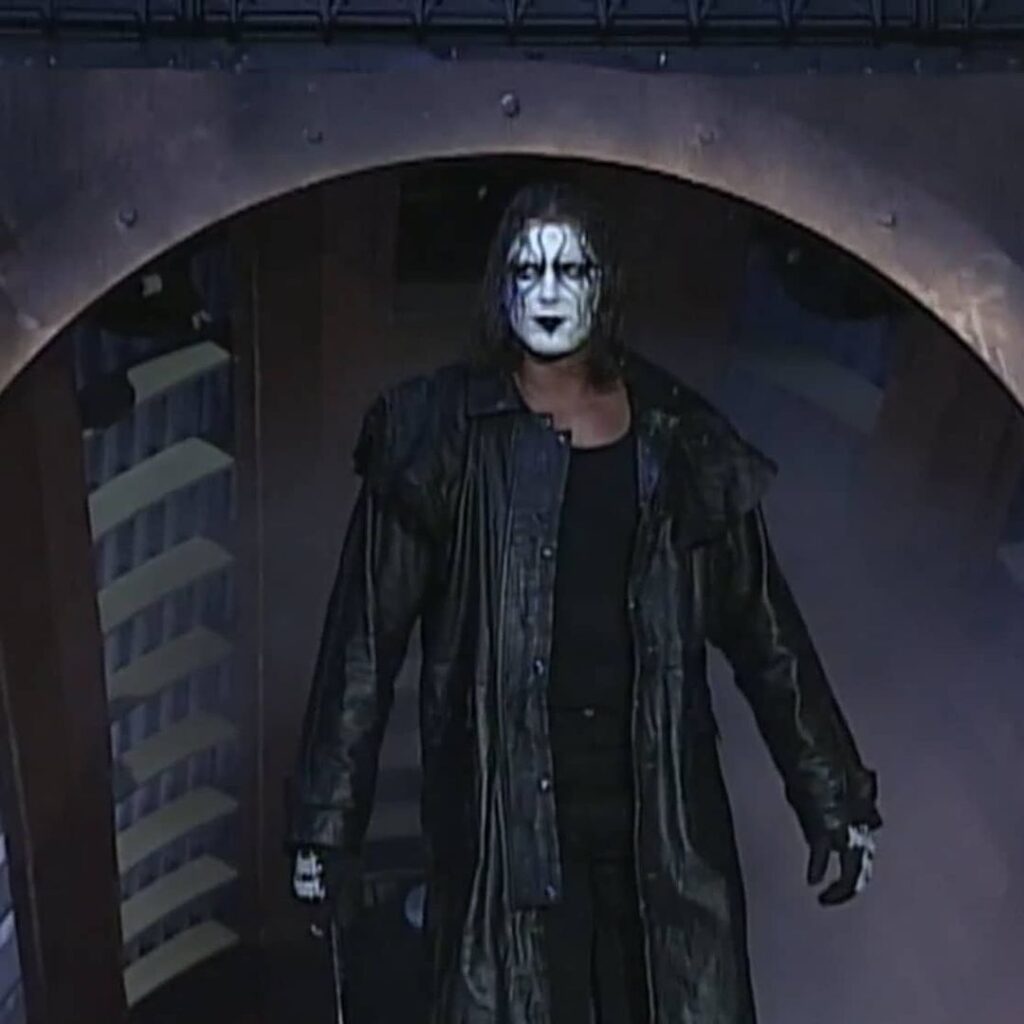
Karen Jarrett Says Jeff Jarrett Is STILL The Best Heel In Wrestling, Her Thoughts On Ric Flair’s Last Match

Karen Jarrett (@karenjarrett) is a wrestling personality and the wife of WWE Hall of Famer Jeff Jarrett. She joins Chris Van Vliet to talk about how she got started in the wrestling industry, working as a heel, how Vince Russo convinced her and Jeff Jarrett to use their real life situation with Kurt Angle as a storyline in TNA Wrestling, working a match against Chyna, her thoughts on being involved in Ric Flair’s last match and much more!

On Starrcast weekend:

“We didn’t really have 5 minutes free all weekend. We were free for a little bit on Friday, but obviously we were stressed out because we couldn’t go to the roast. It was so fun, just the way that everyone bought into it and was on the ride with us, it reminded me of when I was younger. Those storylines where people hated someone, people really hated us!”

On the stiletto spot:

“Jeff came up with it. We had one take and we had to make it good. He [Jeff] wanted to make it look good, and of course Ric wanted blood. Karen wore white, we are doing something with Ric, there is going to be blood. Jeff took it to a whole new level and Ric didn’t have to do anything. If you take a snapshot and zoom in, I can’t watch it. I can watch us walking away, but I can’t watch the beatdown.”

On Karen Jarrett possibly being on WWE TV:

“I don’t know. For about 4 years I had zero desire to do anything wrestling related. I was very happy being a wife, being a mom and being out of the drama. This whole thing, because of the storyline, and it wasn’t just a match, I got sucked so far back in. I hope something comes of it and I want something to come of it, not matter what it is.”

On the term ‘Karen’:

“I have my own shirt saying ‘I am the Karen.’ It doesn’t bother me. It’s better than being Alexa. I think it’s so fun for me, I love going out there and being a heel, I love it when people boo me.”

On first getting involved in wrestling:

“I thought that it was just going to be a short stint. Jeff and Vince Russo had an idea, and then once we got through that storyline, things just kept coming and coming. Then my stay there was cut short, then I came back with blond hair, fake hair, all kinds of stuff. Jeff always says I am a natural, but you are there doing a job. I feel like I always get slack when I speak about it, because I am not a wrestler, but it is a job. I think a lot of the talent take it too serious, I watched those episodes you did with Brad Lea, how can someone so successful be such an asshole? But it is like a movie, there is a villain and a good guy, someone has to be a villain. You are getting a pay check and getting a job, whether you like the storyline or not, it is your role to sell it and become the best that you can for the people that are watching.”

On what made Karen have an onscreen role:

“I don’t know. It was an idea that they came up with at the time, I just thought that it would be a couple of weeks of something and then that would be it. But that didn’t happen, I dove right in! I didn’t realize that I missed it until all of this. Jeff would go and do his thing, he would go to the shows, but I missed it.”

On who helped Karen Jarret be comfortable onscreen:

“Vince Russo, Jeff, and one of the people that helped me the most was Bubba Ray. I would come back from whatever I was doing out in the ring, and he would pull me to one side. Even if I wasn’t wearing the right color, I remember one time I was wearing a lime green skirt, I came back and Bubba said ‘Don’t ever wear that color again.’ Or I had my mouth open for a photoshoot and trying to be hot, he told me ‘Don’t ever do that again.’ But he reminded me where the cameras are, if it was good or bad, what worked… Those 3 people and Bruce Prichard, he was amazing.”

On behind the scenes drama:

“I think because they thought they knew what was going on, but they didn’t. Nobody knew that I had left my previous husband and we had separated twice before, we always kept that under wraps. I don’t think that it’s right to put anybody’s dirty laundry out there if you have kids. Even today, 20 years from now or 40 years from now, I wouldn’t try to defend myself or throw the other side, I don’t think that it is right to do. But I would get upset, but the truth will always come out eventually.”

On Jeff’s reaction to the storylines:

“I don’t know what everyone’s initial reaction was. Even now if something is pitched I am just like whatever Jeff wants us to do. I don’t really know, I am sure that it was shocked and uncomfortable the way that I was. But at the same time, we did the storyline, our kids are backstage and everything is good. Our kids knew that it was not real life and that everything was good. But I am glad that all of that is over.”

On working with Chyna:

“She was really nervous when she showed up that day. I remember her being in her trailer all day, Terry Taylor was working for the company then and kept checking on her. She is one of the sweetest people that I have met in the business. It’s sad, it’s very sad, but I have a great memory that I got to work with her.”

On Jeff Jarrett’s last match:

“So that day [Ric Flair’s last match] I said to him, ‘This could be your last match.’ He’s an executive, you know. It could be his last match, I don’t want to walk with him, he looked f*cking amazing, he can’t walk around here with a shirt on. I wanted him to have his moment and then I will walk out. He said ‘No, this is what we are going to do.’ He had me come out first and then had me call him out. Jeff has got this 30 year career, I am this little blip. So I go to Road Dogg and I say ‘OK Jeff wants me to call him out, it gets heat blah blah blah…’ And he’s like ‘I can see his side of things.’ I wanted him to have his moment, I wasn’t happy with what Road Dogg said, so I went to Sonjay [Dutt]. He was like ‘I agree with Jeff.’ You’re all assholes. So we ended up doing it his way and it worked out, but I tired to stay away from him and letting him do his thing. Normally I would be in the ring and taunting everyone and acting like a crazy lady. For me, I want those shots of him in that outfit in our house. People think I am crazy, but it could be his last match. It won’t be though.”

On what makes Jeff a great heel:

“That’s a tough question. He grew up in the business, I don’t think it’s about him, but he walks out there and he wants to entertain the fans. He wants to give them what they want to see and he just has a way of turning it on. He is a maniac, I don’t know [how]. He is brilliant at just walking out there and making something happen. He just has a way of feeling the atmosphere and is really good at pressing those buttons. He can literally just flip the switch and turn it on. He also had some good teachers when he was younger too.”

On what Karen Jarrett is grateful for:

“Jeff’s sobriety, my family and a roof over our heads.”

Featured image: IMPACT Wrestling

How To Avoid Burnout & Achieve Balance With Cary Jack Of The Happy Hustle

Cary Jack (@cary__Jack) is a lifestyle entrepreneur, author, podcast host, professional actor/model, biohacker, eco-warrior, martial artist, and humanitarian striving to make a positive impact on this planet. He split time growing up on the beaches of Sarasota, Florida, and in the mountains of Red Lodge, Montana where he first learned the art of a balanced lifestyle. He joins Chris Van Vliet to talk about the importance of achieving balance, how you can start living a life of passion and purpose, what it means to be a “Happy Hustler”, a quick test you can do to see how aligned you are in your life and much more!

On what Happy Hustle is all about:

“Happy Hustle is all about infusing your passion and your purpose to make an impact. I know that those are all buzzwords, but if I break it down, it is doing something that is your inner calling from the divine, that’s the passion. The purpose is who are you serving? Then you make a positive impact while being blissfully balanced in the process.”

On people needing to have a bad job to pay the bills:

“I’ve had to do things that I didn’t want to do either, I wore a banana suit outside of 2 smoothie shops! This was to get the foot traffic as opposed to the car traffic in Florida, it was so hot! But I have done all sorts of things in exchange for money, legal and illegal. The first thing I will tell people is that I have been there, I have done things that I do not enjoy for money. But now I get to do things that I do enjoy, and I am so grateful that I get paid to do it. I truly believe you have to earn the right to do what you love, and you are not going to love everything. Wherever you are now in your journey, that’s ok, but want more and dream bigger, that is the important piece. Then find out where you want to be and reverse engineer it to get to where you want to be.”

On what is Cary Jack’s dream:

“The biggest dream for me right now is I want these 10 alignments of being a happy hustler fridge magnet that has my framework on it, I want that on every fridge in America and then on every fridge in the world. The reason is because I want people off their devices and focus on things that will increase their happiness.”

On the 10 alignments of being a happy hustler:

“So the 10 alignments, they didn’t start as this fully flushed out framework, but it makes up this acronym, soul mappin’, I want you to rank these from 1 to 5, where 5 is where you are crushing it. In the past 30 days, where are you at in these areas:

  • Selfless service – Are you living for yourself?
  • Optimised health – Are you mentally and physically optimised, or are you eating junk?
  • Unplugged digitally – How reliant are you on technology?
  • Loving relationships – Do you have love in your life?
  • Mindful spirituality – Are you tapping into a higher power?
  • Abundance financially – Are you living paycheck to paycheck?
  • Personal development – Are you growing and evolving?
  • Passionate hobbies – Are you scheduling the things that fill you with joy?
  • Impactful work – Are you infusing passion and purpose to make a positive impact?
  • Nature connection – Are you getting outside and connecting with nature?

Add up those scores, if you are a 37 or above, you are a happy hustler! But you must give equal importance to each of these, but focus on each one at a time.

On how to connect with Cary Jack:

“I actually have the book; 10 habits to achieve the happy hustle and avoid burnout. It’s got pictures, cheesy jokes, and all that stuff. The book is actually free, all you have to do is help out with shipping costs. You can also get the magnet to have the habits in your home.”

On how Cary Jack crushes every day:

“So every day I wake up and I drink my green juice, I hyper hydrate in the morning. I actually suffered from a brain injury where I almost died from carbon monoxide poisoning. Now I take brain supplements to help optimize my cognitive power, but I have always been into biohacking. I also have a rule of every day before I shower I do naked push ups or pull ups. I do as many as I feel like doing, but that rule is non-negotiable.”  

On what Cary Jack is grateful for:

“God, my fiancée and the opportunity of life.”

Featured image: Brand Builders Group

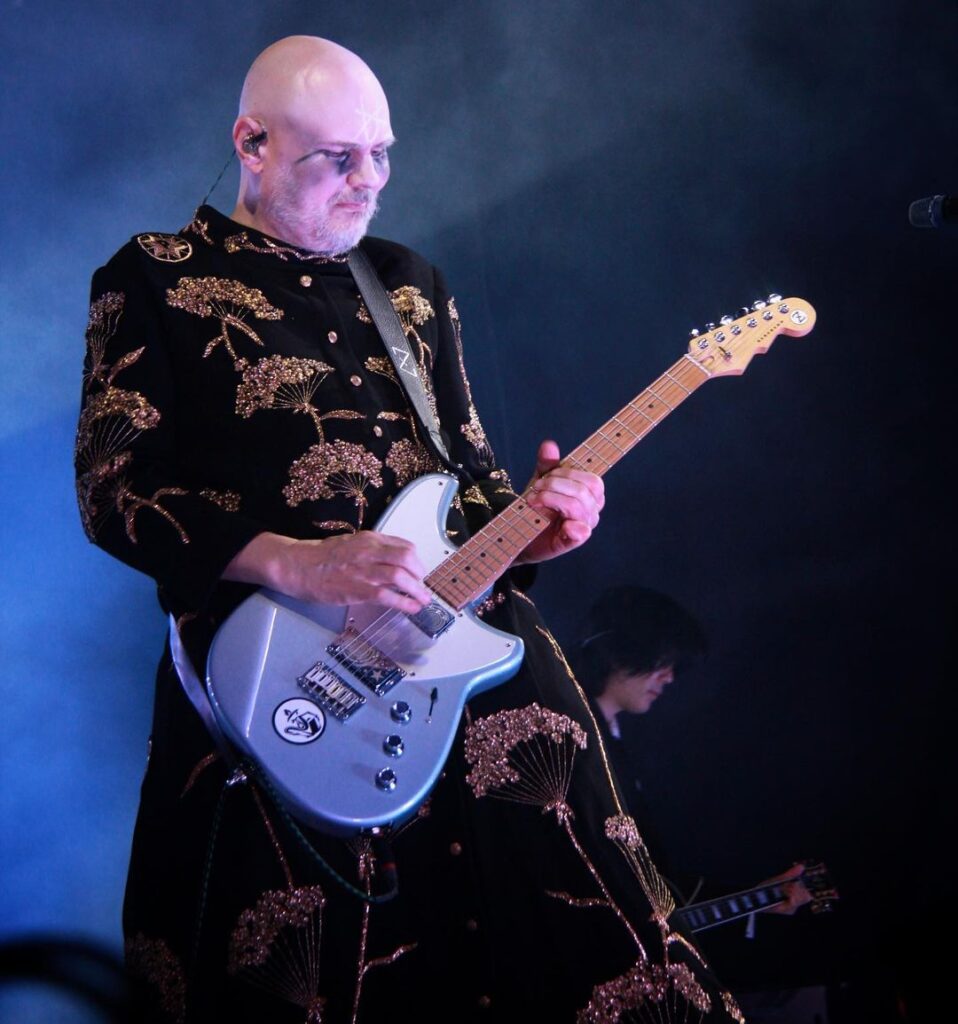
Billy Corgan On Balancing A Pro Wrestling Company And The Smashing Pumpkins

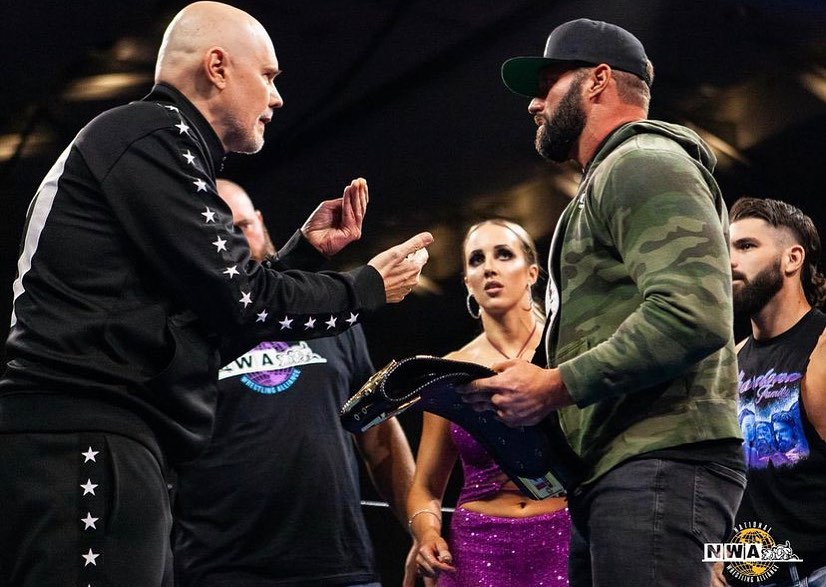
Billy Corgan (@billycorgan) is the lead singer of The Smashing Pumpkins and also the owner and promoter of the National Wrestling Alliance (NWA). He joins Chris Van Vliet to talk about the upcoming NWA 74 event in St. Louis, how wrestling is both similar and different to the wrestling industry, his thoughts on whether NWA can compete with WWE and AEW, what he learning from his time working at IMPACT Wrestling, being referenced on Family Guy and much more!

On owning the NWA:

“Yes this is not a dream, I do own the National Wrestling Alliance. It’s been a great commitment and a great honor, but I feel now at the 4 or 5 year mark it is going the way that I want it to go, so I am happy about it.”

On what is going Billy Corgan’s way:

“The best analogy is that you can buy your way to the World Series, or you can build a culture and a system. I chose to not try and buy my way to the World Series but to build the system. I think now you can start to see the system that I built with the consistency of the talent, the consistency of the narrative and the consistency to put on a high quality show every time that we go out there. I think that took time and required a lot of patience, having been through a brand build with The Smashing Pumpkins, I know what that feels like. I know what victory looks like and I know what fake victory looks like, so I have been able to build something that will live on past me.” 

On how many Smashing Pumpkins fans are wrestling fans:

“Very few. I would love it if 100,000 Smashing Pumpkins fans would come over to see the NWA, it would make my job easier and enthuse the talent. But it just doesn’t translate that way, so it is what it is. It does help when you are dealing with media and the corporate side of things. If they don’t know the NWA but they know me, that opens up certain doors. But the job of building and rebuilding the NWA has to stand on its own two feet, and I am proud of that in a way. I wish it was easier, but knowing it is not makes me proud.”

On trying to get NWA to the level of WWE and AEW:

“It’s proportional. I’m not running 4 to 5 hours of content a week, I am running an hour to an hour and a half. You have to look at things to scale, if you look at what the big companies spend and the oxygen they get from the media vs. what I spend and what I get, you can see that I am outpacing my costs, so we are ahead of the curve as opposed to behind it. It does feel frustrating when you feel like you are behind the curve but we are ahead of the curve. For example I was talking to someone who is in the television business. He looked at all of my expenses and said ‘How the hell are you doing what you are doing. How are you producing over 100 hours of television a year at these numbers with this level of quality?’ I said that it’s culture, it’s building a team and finding the right talent. It is building an atmosphere where the talent feel that they can take chances and if they go off the beaten path for a second then someone is not going to knock them with a club. That takes time and people don’t necessarily believe you. I do deal with people who have had promises made to them and then have the rug pulled out from underneath them. So it takes time for the NWA to be a safe space to work both physically and emotionally. These are high strung, talented people who want to feel that their efforts in the gym and the ring being rewarded.”

On wanting to have a weekly NWA show on TV:

“It is on TV, it’s just on a different TV. I don’t think anybody would argue that if a major digital platform came along and gave me money that it wasn’t TV. We are still in this schism of is YouTube TV and is Peacock TV? I think it is all about economic reach. With the YouTube model you can reach everybody. The hard thing about that is you don’t know with their AI systems what is being recommended. You can have one video go crazy and everything is going well, but the next week you will have 1/10th of the numbers and it has nothing to do with what you did or didn’t do, it’s weird how the AI works. It’s frustrating because you can’t really get a real read. Access, marketing and economics always go together, we are still in a medium where the economics are my own, I still want to drive my vision. The reason why there are no partners is because no one has made me an offer to make me want to give up equity in the company or give up control on some level of the business. But we are now right on the level where some serious numbers are being discussed. But entertainment is cyclical and the Pumpkins have had the biggest period we have had in 20 years, we are about to do another arena tour this fall. Those things go together, when I go into a boardroom to talk about my vision and they see that I am headlining Madison Square Garden, it doesn’t hurt, those pieces start to get put together.”

On having talent disputes:

“There hasn’t been a lot of that honestly. I think I am blessed that I have worked on the indies for long enough that I start to understand the mentality of what is important to a wrestler. Then I started to work in TNA, not only in booking but also as a producer. I got to see how people translated their characters through the screen and how it translated into the wrestling ring. As you work from the independent talent to the higher up talent in TNA, you start to see that this is important, this is what will draw money, this is not as important. Once you have those experiences and a company like NWA where it is my world, things are a little different. It’s not like I bought the NWA with no experience in wrestling, I have been working in it long enough that I can appreciate it.”

On shaving his head:

“That’s the stupid part of my life, you make headlines for doing anything. Look at me being sad at Disneyland, it was on Family Guy. I just didn’t like the way my hair was looking, decided to shave it and that was it. When you shave your head you get some really weird compliments like ‘Oh you have a nicely shaped head.’ I’m like ok, thanks. What do you do with that kind of complement?”

On what Billy Corgan is the most proud of while owning NWA:

“I just think that being still here. I wish there was some magic, you turn the key and the NWA is back and tens of thousands of people care and Pumpkins fans are into wrestling. I wish it was magical but it is really hard. It is a complicated market and there has never been more independent talent and have never been valued more, it is a lot to navigate. The fact that we are doing a 2 night pay-per-view coming out of a pandemic, working at The Chase, there is so much cool stuff. I think that is the best part. Secondly the quality, raising the stakes and putting talent in high pressure situations, which they should want to be in as talent. I want to be in high pressure situations as the president of the NWA, as it comes up then so does the pressure. We are seeing who is going to be the next star, that is all just the best part of it.”

On giving Matt Cardona his first major championship:

“I didn’t think about it until it happened and he started to talk about it. In my mind he was this big star, and I’m not a person who usually correlates being a star to championships, but that’s just the way that it goes. There is no question in his previous life that he was certainly undervalued. He was a guy who got continually over no matter what was put in front of him. I was certainly impressed by what he was able to do with seemingly not a lot. And there a lot of people I have worked with, Aaron Stevens comes to mind, where they were just able to get over with whatever they were given because they are just super talented people. So it was not a question in my mind of putting the belt onto Matt. But now putting the belt on Matt, I think what distinguishes this is not only has he done a great job and brought an audience to the NWA that maybe wouldn’t have been interested in the programming. But in his darkest hour when he is injured and there is a pay-per-view named after him, he is facing a 5 to 6 month rehab, but the freak that he is he is pretty much already rehabbed in 3 and a half months. The day he has the surgery, he holds up the 10 pounds of gold and says he will be at the pay-per-view. He doesn’t have to come, and I thanked him for that. I said thank you for everything you do and he said that it wasn’t a problem, he likes being here. That to me is why he is a champion. Yes he is a champion because he is a star, a draw and a top level wrestler, but to me he is a champion because he is a great person to work with. He represents the company on every level behind the scenes and in front of the camera and to the public. Someone asked me how I felt that he got hurt on someone else’s show. Well that’s his life, I support that. By extension I support the effort of the other independent companies including Game Changer. Matt Cardona is an independent wrestler in an era where he should be an independent wrestler. Unless I am going to come in and break the bank to sign him to an exclusive contract, he should go out to do what is best for him and Chelsea. So yeah I have no problem.”

On Triple H taking over WWE creative:

“I’m looking forward to seeing what he does. Somebody asked me if I saw any changes and I said that you don’t turn a battleship around quickly. That’s a big institutional culture with a lot of pieces. As someone who runs a big organisation with The Smashing Pumpkins world, you don’t flip switches and see what happens. You are going to poke around and put some people in places, but I don’t think we will know until about 18 to 24 months what the vision of Triple H is. I do know, well this is speculation, I do know as AEW has gone out of their way to pick fights with the WWE world and the WWE world has not responded, I don’t think that will continue under Triple H. I don’t feel that he is the type of personality that will let people sock him in the chops over and over again and he’s not going to respond. He was in D-Generation X and I think he was a big part of the sass that they had. I think there is business there as well, it is blow for blow and competitive. Now the position from WWE corporately, from what I see from a public observation, is we are not going to sweat it publicly even if we are sweating it privately. I think those dynamics are definitely changing.”

On TNA taping out of sequence:

“I might have been part of some of that. We used to purposely try to confuse people occasionally because we didn’t want the spoilers to make sense even if you read them, so we would shoot things out of sequence sometimes. There were times where we had to shoot out of sequence, and that was mind numbing. Somebody would win and the next night they would cut the promo of ‘I’m gonna beat you.’ It was so confusing.”

On NWA possibly not coming back:

“During the pandemic I had days where I thought that this is not going to work. It wasn’t that it wasn’t going to work based on my plan, it was do I have the commitment level to make this work on the highest levels. It’s like the joke I tell where you take an 8 mile walk but after 4 miles you turn around and go back instead of reaching your destination. You have that thing where I could turn back and I haven’t gone too far or I can go to my destination, I had that conversation daily in my head. I talked to people privately in meetings about what would happen when the NWA came back, and people were surprised that I had reservations about restarting again. I think some people ran and went ‘Oh he’s going to sell, he’s going to get rid of it.’ I was never going to sell, it was do I have a deep enough commitment level. Now I see what I need, do I want to take this journey. The good part is that I went all in and it has benefited from my commitment. That is not to put myself over, but the talent has seen my commitment and that will reward them for years to come.” 

On what Billy Corgan is grateful for:

“My family, The Smashing Pumpkins has continued and to be the proprietor of the NWA.”

Featured image: Metro

How To Thrive During A Recession – Chris Naugle On What You Weren’t Taught About Money

Chris Naugle (@thechrisnaugle) is an entrepreneur, former pro snowboarder and has dedicated his life to being America’s #1 Money Mentor. He has built and owned 19 companies, with his businesses being featured in Forbes, ABC, House Hunters, and his very own HGTV pilot in 2018. He is currently founder of The Money School, and Money Mentor for The Money Multiplier. He joins Chris Van Vliet at the Blue Wire Studios at the Wynn Las Vegas to talk about how to thrive during this recession, what school didn’t teach you about money, how to be your own bank and much more!

On transitioning from snowboarder to entrepreneur:

“It was hard. I started my first company at 16, which was a clothing company in my mom’s garage. But that soon transitioned into the idea of wanting my own skateboarding and snowboarding shop. I saw all these other guys with shops and I am like I want to have that. When I first started taking my clothing to shops, the guy asked me if I wanted to go snowboarding with him. I’m like ‘Don’t you have to work?’ He’s like ‘They’ll run it.’ I’m like you can just leave? So from there I knew I had to have my own store. I went around trying to raise $70,000 at 17 years old, you can only imagine how that went. Everyone said no to me apart from one person, that was my mom. She put her house on the line for me, we didn’t have much. So I opened the store in 1994 and that was a dream. From 1994 to 2000 I was a pro snowboarder and running my shop, it couldn’t get any better. When the plane hit the tower in 2001, I was driving to my shop that day. I am like what just happened? Then the recession came and that was the first one that I ever saw. It hit my business hard, I needed a job. I went to Little Caesars where my friend worked and asked if they needed any delivery drivers, they said no. So I put my resume out everywhere, and the only people who said yes were Wall St.”

On the first job interview:

“I put on a suit for the interview and it was the first time in my life that I wore a suit. I am a punk snowboarder, what business do I have in a suit? My grandma got me a tie and I went to the interview. The guy slid the keys across the desk to me for his Porsche and was like ‘If you work here, you could have one of these.’ I’m like sign me up! It was only a temporary thing, but I never thought that Wall St. would be where I would spend 16 years. The only way that I could bridge the gap between snowboarder and entrepreneur is I was wearing a suit by a brand called Volcom, which is a snowboarding brand. It may be a jump but that is the way that I did it.”

On the signs of a recession:

“Well look what the feds are doing. They are raising the interest rates to combat the inflation that they created. They are doing it aggressively, but that is not what will tank the economy. What they are doing is unravelling $8.9 million in treasury bonds and mortgage security. They have begun the process of selling these on the market. They are sucking up the money that they have printed out, and every time apart from one it resulted in a recession.”

On advice for someone who has bought a house:

“Even in Buffalo we have had some appreciation. It is just supply and demand. Mortgage rates have been raised again, so someone who could afford $500,000 can now only afford $350,000. This means that there is not enough supply, so either the prices drop or people go into rentals.”

On advice for saving money:

“Once you save money, don’t give up your control on it. Your money has to work for you. When I take money and I work for it, the time was the most valuable thing used to earn that money. So then I take that money to the bank, what does the bank do with that money? They make it go to work for them. They didn’t have to do anything, you gave it to them. Once you learn how to do it, it’s easy to take back control. What we are talking about is taking one change so your money is in control. You want the access and control of the money, but what if the money I took out didn’t stop earning interest? If I have $100 and I give you 50, how much is left in my account $50? Wrong, it’s $100. This is where people get confused. What if I never had to pay tax on the money in the account, it is the same place where all the wealthy people keep it, which is this life insurance policy. Most people think that it is the worst place to put it, but you are wrong, you are thinking of life insurance the way you have been taught. Whole life insurance is not the number one profit insurance for insurance companies. Insurance companies make the most in term insurance, it is their number one product.”

On whole life insurance:

“Banks keep their most valuable capitol in BOLI [Bank Owned Life Insurance]. It is well over a trillion dollars. Why are the banks putting their money where people are telling you not to? It is because the banks know how to design the contract. It requires me to design the policy so I take a 90% cut in my commission. If I paid in ten grand, it would pay you a commission of 5,500. If I did it with my design, the commission is $387. So if we take $387 from $5,500, that is how much more money you would have as the client, someone has to give for someone to get.”

On why this is not readily available:

“Because every advisor would have to take a massive cut in their commission to do this, why would they do that? I worked for a big financial insurance company, when I went back to them I asked them why they never taught me this, they said to me ‘Do you remember how hard it was for us to keep the agents and advisors?’ I said I remembered that it started out with 50 people and a year later went to 5. It is because this is a commission based job, they barely make it on what we paid them. If we tell them about this product, all of the advisors need to take a pay cut of 60 to 90%. How many will we have left? Probably 0.”

On this sounding like an infomercial:

“It does sound like one, but now everyone is fixated on a prodigy they have bad feelings about. What if I tell you that it is not about the product? What if I tell you that this is the only product in the world that I can put money in, take money out immediately and not stop earning interest?”

On still earning interest when you take money out:

“When you graduate, as the insurance companies put it, it means when you die, the insurance will pay a death benefit to my family. But there is nothing saying I can’t use that benefit while I live. The insurance company will always be willing to give me my death benefit in the form of a loan, they collatorize it. I can take ten grand out and my death benefit will go down ten grand. The loan never needs to be paid back, I will die no matter what, the insurance company will be paid.”

On how you can be the bank:

“Banks don’t just lend out money to anyone. You are making a monthly payment irrespective of the bank. If I own the bank, the same with any business, I won’t steal from the business because then it will go out of business. If I am the bank, I am not going to not make deposits because then someone else will get my money. If I take money out of my bank, will I pay the money back? Sure.”

On what Chris Naugle is grateful for:

“Every day I wake up, my daughter and the ability to change people.”    

Featured image: Entrepreneur

Drew McIntyre On Clash At The Castle, How He Reinvented Himself After 3MB

Drew McIntyre (@dmcintyrewwe) is a professional wrestler signed to WWE. He joins Chris Van Vliet to talk about WrestleMania 39 tickets being on sale now, winning the title at WrestleMania 36 with no crowd, why he wants another WrestleMania moment, his excitement for Clash At The Castle, why Vince McMahon told him to lose his Scottish accent, his thoughts on Karrion Kross returning to WWE and much more!

On building to WrestleMania 39:

“It’s wild, but the machine never stops with WWE. 52 weeks a year, no reruns, no off seasons and it all peaks at WrestleMania. Even though we just finished WrestleMania not too long ago, and I am still on a high from it. The AT&T Stadium was unbelievable and the crowd were unbelievable. I managed to cut the top two ropes, maybe it was only supposed to be one rope, but it could have been a disaster and I could have cut no ropes. Everyone thinks that the ropes were rigged and they were going to split apart on command, they weren’t. It was real ropes and it was a sword that was extremely sharp, I had to hit it perfectly and thank God it worked out in the end. So next year I am looking forward to making a big WrestleMania moment once again when WrestleMania goes Hollywood.”

On the sword being real:

“It is super sharp. I don’t know if I could technically take it into battle if I was living back in the old Scottish days. If I was side by side with William Wallace it might end up getting bent, as we saw one time when I swung it too hard. I technically had a bend in it, but it is extremely sharp and it does do some damage. I try to reiterate that whenever I can when fans are reaching out to slap hands with me. They are not just reaching for my hand, they are reaching out to touch the sword. I am like did you see what happened at Mania? Did you see when I cut the rope with Sheamus? I want to show you that this thing is sharp for real and you are going to lose a finger.”

On the WrestleMania match that Drew McIntyre loved:

“There was countless for me. Like yourself I watched everything that I could get my hands on, and WrestleMania was such an important event every single year. My brother and I would stay awake until 1 or 2 o’clock in the morning on a school night and be very tired at school the next day, it was always a big thing for us. Some of the big memories for me as a kid, as a Bret Hart fan, my goodness, it seems like Bret was on the losing side of a really big one. One my earliest memories was Bret Hart vs. Shawn Michaels at WrestleMania 12, my good friend at school was a Shawn guy and I was a Bret guy. The next day he rubbed it in about the result and I might have beat him up at school. Bret Hart vs. “Stone Cold” Steve Austin, great match, one of the best matches of all time in terms of storytelling perspective, physicality perspective, and the double turn at the end, just unbelievable. I remember how much I loved the theatrics at WrestleMania 14 of Kane and The Undertaker. The build, Undertaker’s entrance, just Kane’s presentation and story overall, these two monsters going at it. I could go on and on. But just off the top of my head, those are 3 of the big ones that pop in there.”

On if the WrestleMania 36 win still felt like a WrestleMania moment:

“It was for sure. And people will remember the WrestleMania where the world stood still. Sadly they will probably not be in a hurry to watch it back on the network and Peacock, but they are going to remember it. That was a scary time for the world, we had a lot of questions and a lot of fear going on. WWE pushed ahead and gave everyone that escape, and as upset and angry as I was initially, once I understood the gravity of the situation I was very proud of WWE for putting on WrestleMania over 2 days for the first time ever. More specifically, myself being in the main event, my first ever title match and the feelgood story going in, I knew me winning the title would make a lot of people happy, which it did. The social media interaction was up 60% on the year prior, which is unbelievable viewing numbers for that. It did take people’s mind off of what was going on in the world at the time. So I am proud of it, but at the same time I am still looking for that  big moment of winning the title in front of a live audience. Because I am a two time WWE Champion, but I have not held the title in front of fans yet, which I don’t think anyone else can claim. As proud as I am of that, I want that title in front of fans.”

On WWE going back to the UK for Clash at the Castle:

“When I say that I dreamt of moments when I was a kid, I dreamt of main eventing WrestleMania and all these big moments that seemed attainable. In my mind they were attainable but nobody else believed that I could do it, coming from Scotland to the WWE. But the idea of main eventing a UK stadium show the level of SummerSlam 1992 didn’t seem possible because they didn’t run UK stadium shows. This is something I actively talked about, actively pursued and actively asked questions about for years, especially when I became WWE Champion. I had a lot more media going around at the time, especially high profile media, and I mentioned it all the frigging time. Thankfully I guess that there were some talks going on behind closed doors that I didn’t know about. It got to a point where I talked about it so much that someone had to say to me ‘Do you know something you shouldn’t know?’ I said ‘Nope, I know nothing. I have just got certain goals that I have been pushing for a while. You do what you are doing and I will do what I am doing and hopefully this will work out.’ Thankfully it did work out, I got involved in the process eventually and it is happening now. I would love to take the credit for it but it’s the unsung heroes behind closed doors that work in WWE that make these things happen. The problem with it being that if it did happen and nobody cared and nobody bought tickets for it, they kind of needed a public scapegoat. The fans would go ‘McIntyre you were wrong you idiot!’ The blame would fall here so I am happy that it worked out and happier, proud that I am main eventing and fighting for the title in the first stadium show in the UK in 30 years.”

On a future WrestleMania happening in the UK:

“Yeah, I can’t see why not. I’m not going to talk about numbers that I have heard at the moment until they are official, but we have seen the numbers that have been released, just the demand for the tickets broke records initially. Right now we are on course for some big, big numbers from a business perspective. But people watching and tuning into Clash at the Castle and seeing the live audience, how loud and rowdy and crazy they are with the chants we have seen in the past with Raw and SmackDown that have come from the UK. I know a lot of people are going to go ‘Why don’t we do a WrestleMania here?’ It’s gonna be crazy, imagine those wild UK fans and people coming from all across the world joining in the passion, the atmosphere and the inanity of the UK fans.”

On Drew McIntyre losing his Scottish accent:

“Everyone else on earth has heard Scottish accents in the past or has heard what Scotland tends to say when I talk. Every single person in Scotland has the thickest accent on planet earth, even though we only speak English. Even though people have said to me multiple times when I first got here ‘You speak really good English.’ Well I fricking hope so, it is the only language that I talk. We have these extremely thick accents, we mumble, most of us, and we use a lot of slang. I had to really work on it to the point where Vince McMahon told me when I was 24 ‘We are going to have to get you elocution lessons Drew.’ After I gave him this passionate speech about my ideas and what I want to do for the company. That was the retort ‘I think we are going to have to get you elocution lessons.’ So I worked on it and I spent a lot of time learning to slow down, especially my time away from WWE. I learned how to make myself understood in these kind interviews and on the microphone, get comfortable in those situations, because I know how important it is. When I finally honed it and I finally felt good about myself and the world was saying ‘Man, Drew is a really confident talker and has improved that area of his game.’ I had Scotland to bring me back down to earth [Thick Scottish accent] ‘Why are you talking like that? Why are you talking like this now?’ That’s why, because you can’t understand us! I’m so proud to be from Scotland, but nobody understands us, so I have to soften the accent to make it a little less harsh.”

On the first step of the reinvention process of Drew McIntyre:

“Oh there are a lot of steps. Thankfully I have a book available called Chosen Destiny, which is out now. Step one, as my wife reminded me, wasn’t just ‘I’m going to take over the wrestling world outside of WWE and redefine what it means to be an independent wrestler. ‘ I’d like to say that, and I did say that, but my wife reminded me that I was full of anxiety and uncertainty. I had been in WWE for a long time, but never had any significant matches, significant interviews, because I always read from the script line by line. I was very nervous, but I did believe that this is something that I was meant to do. I did believe that I could go out there and make a name for myself and reinvent Drew McIntyre/Drew Galloway. Right away I knew I had to go back to Scotland to get my mission statement out to ICW, Insane Championship Wrestling, where all my friends were that I started with. Business was on the upswing there, they had their biggest show in the UK. It was 1,500 people there and it was 3 weeks after I got released. I told the promoter Mark Dallas that everyone is contacting me, why are you not contacting me? He said I thought my friend would be upset that he was fired so I wanted to give him a moment before I tried to book him on a wrestling show.’ I said that I appreciated that, but I want to be on the show in 3 weeks and I want to keep it a secret. So you know, he sorted out the travel and we kept it a secret between 3 people. I showed up in Scotland, there is a famous clip online where I spoke for 20 full minutes unscripted and said everything that I was feeling at the time. It got such an insane response afterwards, it felt so good to get it out, it felt so good to be myself and I said some bold comments in there. ‘I’m going to show you the real Drew Galloway, take over the world as far as I’m concerned and put ICW on the map. This little company is going to take over the world.’ A lot of people watched it and went ‘Oh my God look at this guy. This is incredible, he is going to do some big things.’ Including Mick Foley, who went on Stone Cold’s podcast and talked about me, he texted Triple H and said ‘You need to keep an eye on Drew.’. Then there were the other people who watched me in 3MB and said ‘This guy is out of his mind. He’s not going to do anything.’ But that was phase 1, I have literally looked myself in the mirror and said that was a tough past few years in WWE professionally and especially personally, in the end it is on you for not getting the help you needed personally but also working as hard as you could professionally. You would have been happy to be the water boy at one point, you forgot why you came here, you lost perspective, never let that happen again. I worked as hard as I could, left no stone unturned and only being accountable to one person and one person only, social media. I’m kidding, I don’t listen to fricking social media, ever. Everyone out there, don’t listen to social media. The person in the mirror is the only person I listened to, aside from the wife. There were other areas that I still had to work on, the partying wasn’t gone yet and I was still burning the candle at both ends. But I took every booking that I could and was lucky enough that people believed me and gave me a platform to apply my craft and learn to become a leader, get confident in the ring, get confident on the microphone and build myself to a place where I was ready. The guy that was faking it and until he made it in the beginning everybody believed in, finally believed in himself and became what Vince and Triple H saw all those years ago. I finally became the Drew that I could be. Once, I’m not talking about professionally, I broke my neck that one time, I had to sit at home for the first time in my life for 8 weeks. I had the come to Jesus talk with my wife and we talked about partying and going out and how I am giving it my all but I’m not giving it my all. I said you know what, you are right. As successful as I am right now, my brother referred to me as a verb. ‘Do a Drew. Leave WWE and become more successful.’ Which was very cool. I still had a way to go, I looked in the mirror and looked at my body and said ‘You could step into the ring with Brock Lesnar right now. The biggest attraction at the time and people would go “He could bet Brock”’ You got to work on the body, you got to cut out the negative stuff. So I cut out the partying that I was doing all the time. Within a few months of changing my diet up and changing my training up, my body changed dramatically. I then saw myself in the mirror and I went ‘That’s the guy who is ready to take on the world.’ I figured it would be Japan, but I took the phone call from Triple H, and then I knew it was time to go back to WWE.”

On seeing Karrion Kross on SmackDown:

“I was very surprised to see him. I didn’t know until the very last second. We can say a little more here than we can say in general, but let’s just say that someone who has worked hard for that opportunity deserves that opportunity and he is getting the biggest opportunity of his career. Unfortunately for him, it’s not going to come at Drew McIntyre’s expense.”      

Featured image: WWE

Jamie Foxx & Dave Franco Talk About Their New Netflix Movie DAY SHIFT

Jamie Foxx (@iamjamiefoxx) is an actor, musician, and comedian known for his films like Ray, Collateral, Any Given Sunday, Spider-Man: No Way Home, Django Unchained, and many others. Dave Franco is an actor known for his films like 21 Jump Street, Neighbors, Now You See Me, and The Disaster Artist. Their new movie called Day Shift is streaming now on Netflix. They sit down with Chris Van Vliet in Dallas, TX to talk about balancing action and comedy in this film, their favorite Snoop Dogg song, the roles that changed their career (Any Given Sunday for Jamie and 21 Jump Street for Dave), and Jamie Foxx ends the interview with a spot-on impression of Donald Trump.

On Jamie Foxx not ageing:

Jamie Foxx: “I’m gonna tell you something that it interesting about our business. In the arts, you look a lot of people that have been doing this, there is something about we never grow up in our eyes. I think it sort of takes over our body and I don’t feel it. I know the age that I am at and hanging with young guys, it keeps you on your toes.”

On balancing the action and comedy:

Dave Franco: “I remember that we were shooting a kind of intense scene on the very first day. I am like this is an intense scene and he [Jamie Foxx] was like ‘OK, let’s add some real weight to this scene, it’s intense. But also, let’s add some comedy here and wherever we can.’ That is what adds that extra layer. So in ever scene the director let us add whatever we wanted and it was easy.”

Jamie Foxx: “He is being very honest. I watched Robin Williams work in the same fashion, where he would show up and have a bag of all these different things that he wanted to try, and he killed it. I think that is what makes the movie jump, I said to J.J. [Perry – director] ‘If Dave Franco is not in it, then I don’t want to do the movie.’ One, I have ben trying to work with the dude for a long time and he has something special. We have been watching everything.”

On what role changed their lives:

Jamie Foxx:Any Given Sunday. I was trying to do comedy movies and everything did either looked like a Martin Lawrence movie or sounded like an Eddie Murphy pitch. So Oliver Stone, who wasn’t as familiar with me, aid that he needed someone to play this quarterback. I said that I played quarterback in high school, that changed the trajectory of my art. It went from trying to find the joke to having this incredible arc.”

Dave Franco: “I love that a lot of your roles are you growing playing football and then being in Any Given Sunday. And then with Django, you grew up riding horses. It’s amazing. The thing that set me on a different trajectory was 21 Jump Street. That movie I fought really hard for, I went in 7 times for that movie. Leading up to that, I had been working on stuff but I wasn’t proud of it. I started telling friends and family to not go and see what I was in. I started making comedy videos with one of my best friends and we put them on Funny or Die. Even though they were on a small scale, it was an accurate representation of my sense of humour. The director of 21 Jump Street told me that one of the reasons that I got the job was because they saw these videos.”

Featured image: Just Jared

TJP’s Newborn Baby Crashes Our Interview!

TJ Perkins (@megatjp) is better known as simply TJP. He is a professional wrestler who has worked for WWE, IMPACT Wrestling and he is currently signed to New Japan Pro Wrestling where is one half of the current IWGP Junior Heavyweight Tag Team Champions. He joins Chris Van Vliet inside the Blue Wire Studios at the Wynn Las Vegas with his 1-year-old son James to talk about what has changed since the last time he was on the show in 2019, his fiancée Aria Blake, working with NJPW, his favorite memories from Impact Wrestling, he tells a great story about Hulk Hogan on a Southwest flight, how William Regal convinced him to be part of the first ever WWE Cruiserweight Classic and much more!

On becoming a father:

“Everything that I kind of expected is all of the big changes. I obviously want to spend all of my time with the family. I have always been a bit of a homebody but just without the family. I think people have the outside perception that I love socialising, a lot of people think that I am an asshole. But honestly I have always been, what is it called when you leave a party without announcing it? The Irish goodbye? I am the king of that. If I go out with everybody, I am usually the first to get back to the room. I just want to pick up a video game controller or call my family.” 

On wrestling with New Japan:

“So it is tough being away, but I will tell the younger guys on tour, especially when it is their first tour. I would tell them that when I first started, and this going to age me real bad, but when I first started touring on these long tours in 2002, I couldn’t Facetime the kid and stuff. Now I can do that and it’s great. But there was no wi-fi, you had to go to an internet café and reserve an hour or buy a phone card from a Seven Eleven and walk to a strange payphone on the street in the middle of the night. There is a 100% chance you will get yelled at by your girlfriend on the 15 minutes you bought, so you have to buy another one and get yelled at for another 15 minutes.”   

On being away from his family:

“It is like being a military dad in that it feels like I am being deployed. It’s not like if I was in WWE, but on that note I prefer it because when I am home I am home. If I get 2 months off, I can work if I want to, but otherwise I am home. It’s not like I leave every Friday and am not back until Tuesday, that sucks.”

On making more money after leaving WWE:

“I remember us talking about that. And fans, give them any bit of information and they will fight over anything. I was talking with some of the guys this past week at Starrcast, New Japan had a show there. When I see that, I didn’t look at it as a validation for me, I don’t look at a lot of the stuff and how I am connected to it. But what I got out of that experience, what people can do in and out of WWE, AEW or anywhere, just the importance of people to understands business 101 and the basic building blocks of capitalism, how to be a responsible adult. A lot of people, and you hear it mostly in a critical way, and I hate to say it this way as I don’t want it to take it as critical, but there is validity in the statement of people playing wrestler. People play a lot of things in life, people play doctor and play a lot of professions in life where they don’t maximize it to what it is meant to be. They are just happy to call themselves whatever that is, an architect, anything. No you don’t just have to be an architect, you can be an architect that creates other things, and then you become an entrepreneur. I would tell guys now having experienced it making more money than before is that you have to find ways to create that business, you have to become a businessperson. It is kind of sad but a lot of wrestling companies don’t know what to do with their business, which is why you see a lot of companies rise and fall and die out of nowhere, because they don’t know what they are doing. I tell guys to keep themselves valuable and to be valuable to those around them is to find the little things that create money generation for everybody, it’s not just a personal thing. I saw it as me going back to school, it wasn’t ‘Look at how much money I am making.’ It was ‘Look at how much I have figured out about life.’”

On beginning to wrestle at 13 years old:

“I remember because I was starting high school, I thought I would try to join the amateur wrestling team, but the school didn’t have one, so that accelerated me to go ‘Well I guess I will see.’ [what happens]. There was a kid there that had a local wrestling school’s shirt, you have to remember that there was no real internet then unless you were really savvy. A lot of people didn’t know, so when I saw that I was like what is that? He explained that it was a local gym that you can go to and I was like I can’t amateur wrestle so I will try that [professional wrestling].”   

On TJP wrestling longer than John Cena:

“I think someone tweeted about this. I think somebody said ‘You know he has been wrestling longer than Cena?’ I don’t reply to a lot of people but in my head it was ‘That’s not the flex that you think it is.’ They said fun fact, I said it’s not that fun. He is so successful and I am nowhere near John Cena.”    

On the Cruiserweight Classic:

“The Cruiserweight tournament was interesting for me. I remember telling some of the guys, for a lot of those guys it was their first wrestling job. Some were personal trainers, some worked at Best Buy, [Mustafa] Ali was a cop. Some of these guys have no experience, are nervous and don’t know how to fit in. I was telling those guys that I am so old that I could have been in the first Cruiserweight division [in WCW]. That was my goal, I wanted to be like Jericho and Malenko and Guerrero, all these guys that were putting these building blocks down. That is what I wanted to be, I wanted to wrestle Chavo on Nitro.”

On TJP being interested in acting:

“Not especially. I was an actor when I was a kid, I still have my headshot. My mom got Hulk Hogan to sign it, she would keep some of them [spare]. She is a flight attendant and she sometimes likes to brag about her son. She had Hulk Hogan on her flight and she went into first class and asked him to sign it. So I have a Hulk Hogan signed headshot, of my own headshot.”

On William Regal repeatedly asking TJP to compete in The Cruiserweight Classic:

“He just kept asking me to do it [laughs]. I was doing motion capture for the WWE video game at the time. [Chris asks if LA Knight was also there] I don’t know if he was there that day, but I have done it a lot with him, I might have got him on the crew there. Low Ki got me on, and from that point whenever they asked I would try to get other guys on. They look for certain body types or movements, so I try to spread the wealth. So I was doing the motion capture and he [Regal] had left me a voicemail, then he called me back again and I answered it. I didn’t turn it down, I didn’t have a reason to not necessarily want to do it. But what I didn’t think was that I was going to sign and stay with the company. But when he asked me I was liek this could be a generational thing, this could be like the new J Cup. I don’t care about legacies, I don’t care about my own legacy at all. If I retired today and my Wiki disappeared I wouldn’t care. I enjoy it and I love it, but with flagpole moments I don’t really care about that. But this is something in history that 20 years from now some kid will go ‘Man that Cruiserweight Classic.’ WWE were not doing these types of things at the time, it was still at the tail end of the FCW era. I thought that this company only likes big dudes and models, so that’s it. But things were changing, so I decided to do this one thing but I didn’t think that I would stay. But he [Regal] called me a couple of times and then he called me a couple more times, and then a few more times. It was then that he needed help to fill out the rest of the field. He said to me ‘Do you know guys from different parts of the world? What are we missing?’ I don’t know who I got on board, a lot of guys may have already been on their radar, but I did recommend people like Lince Dorado and Gran Metalik. But I did it and it was after that second round match with [Johnny] Gargano that they put us all in a room and giving us offers one by one. I kept turning them down, I turned them down three times.”

On competing in WWE without a contract:

“I didn’t sign until Clash of the Champions. I had some time between the final and Clash agreed to sign, but I didn’t sign. So I could have left.”

On what TJP is grateful for:

“I just usually say Aryia and James 3 times.”

Anthony Ogogo On AEW, Cody Rhodes, His WWE Tryout, Winning Olympic Bronze

Anthony Ogogo (@anthonyogogo) is a professional wrestling and former boxer signed to All Elite Wrestling. He joins Chris Van Vliet to talk about how he got discovered by AEW and signed as their first developmental talent, working with Cody Rhodes, his path to the 2012 Olympic Games in London and winning bronze as a middleweight boxer, the eye injury that ended his boxing career and forced him to retire at age 30, his thoughts about living in the United States and much more.

On boxing aspirations:

“So my only goal in my entire life was to win a gold medal in boxing at the Olympics, that was all I ever wanted to do. If I had done that, I would have probably retired from boxing and went into acting. [Chris asks about turning professional] Never wanted to turn pro, was never bothered about turning pro. Most kids want to become the world champion, I wanted to be like Ali and win the gold at the Olympic games. I was never fussed about turning pro, didn’t want to turn pro, there’s loads around that. But yeah, I just wanted to win the gold medal. I almost did it, I had a lot of adversity that year, which has been a common thing in my life.”

On the most unbelievable thing about Anthony Ogogo’s life:

“The eye injury that ended my boxing career and was the reason that got me into wrestling was 3 years of hell. I was 78% blind in my left eye, still to this day, my eye is f*cked. Every single day life is [a struggle]. I was clever at school and found it really easy, good at sport. I was that kid that never picked up a tennis racket but was then beating Mr. Marshall at tennis, I was always just good at stuff. But there are a million things that I can’t do. I did Dancing With The Stars in the UK in 2015, we call it Strictly Come Dancing, and I went out in week 3. Luckily growing up I was good at sport and good at school.”

On transitioning from boxing to wrestling:

“So I am just going to be me. I rub people the wrong way sometimes, but that is because people don’t get me. I found it quite easy to be honest. I have been a wrestling fan for my whole life, I didn’t miss a Raw for 15 years. So I would go to Azerbaijan and Kazakhstan boxing in 2011, I would have my big laptop, a big laptop, I had a whole suitcase to carry it because it was bog. I would go and be in Azerbaijan and find these illegal streaming sites so I could watch raw, because that was my guilty pleasure and my escape. In Azerbaijan, it was 8 hours ahead of eastern time, not necessarily live but next day. My thing was to have my laptop to solely watch wrestling.”

On who Anthony Ogogo was a fan of in wrestling:

“My 3 guys were Rock, Taker and Angle growing up. Now being in the business, it hasn’t totally changed, but I can now appreciate things. I signed with AEW in the beginning and didn’t get here until a year later because of COVID and Visa stuff. The wrestling fan that I was, I used to watch Raw and SmackDown back then. For those 2 hours, I would immerse myself in it. I didn’t want to know the wrestler’s real names, who they were dating, their ages… The curtain was there and I didn’t want to peek behind it. I go to the cinema and I know it is Daniel Craig, but for those 2 hours he is James Bond to me. It’s the same thing with wrestling. I don’t look at YouTube things and see how the magician does the tricks. So I loved wrestling, when I had to retire from boxing, it was what I wanted to do. I didn’t get it from a business side, I just loved wrestling. So when I first turned pro, from 2019 to 2020 I watched your [Chris Van Vliet] interviews religiously. I watched Shawn Spears smack the sh*t out of you. Around that period I watched everything, and I learned so much about behind the curtain, because I didn’t know it. When Cody brought me in I said ‘Cody, I am so reluctant to make a faux pas, because I just don’t get how the business works.’ I never wanted to know, because I wanted to believe that it was real. That may sound silly and childish, but that is how it was.”   

On how Anthony Ogogo became friends with DDP:

“So I retired from boxing and I was friends with DDP. He is like my mentor in this game, what an unbelievable dude, I can’t put him over enough. So I was injured, I just hurt my eye, I had 9 surgeries on my eye in 3 years. It was a very difficult time. I was training so hard, making and losing weight, and I got a back injury. I thought that I needed to do something, and being a wrestling fan I listened to podcasts, and Jericho was always putting over DDPY. So I reached out to him [DDP] and he got back to me and we became best mates. I had 9 surgeries on my eye in 3 years, 4 in America. Every surgery I had in the USA I would come over early and stay over in Atlanta and we would hang out together. We would do yoga together and hang out together, and he said ‘Have you ever thought of being a wrestler.’ I said ‘Dallas I am honored.’ He said ‘You can talk, you got the look, you are athletic. I think you can do this.’ I was really humbled but I told him that boxing is my thing, he got it, he is someone who is all about work ethic and achieving your dreams. So I had a surgery, and one of the maddest things happened to me. I woke up from the 3rd surgery and I knew the protocol, 5th on my eye altogether, but then my heart stopped altogether. They resuscitated me back to life, and it was scary as you can imagine. I stayed in hospital overnight to have some regular checks, and Dallas called me. He asked how did it go and I said not well, all the doctors were panicking, big thing. He said ‘Listen, when are you going to give this dream up? It’s not happening for you. I can make one phone call and make you a wrestler today.’ That was the only argument that me and Dallas ever had. I snapped at him and said ‘F*cking hell! I need everyone that everyone that I love and respect to be on my f*cking side now. I can not have you dangling the carrot over here. I have got the blinders on.’ We had an argument and I said to him ‘Don’t mention this to me ever again.’ He said ‘I get it.’ That was March 2018 and I retired in March 2019. I Facetimed Dallas and said that I was retiring from boxing and to thank him. He said ‘I’m sorry. I know how much this meant to you.’ He took a beat, then the next thing he said was ‘So now do you want to be a wrestler?’ I said ‘F*ck Dallas, let me mourn my career! 18 years of unfulfilled dreams and pain and bitterness.’ I wanted to sulk, I was still writing my retirement speech. He goes ‘When you are finished sulking then give me a call.’ So I retired the next day, and I went to WrestleMania with some friends from school for my 30th birthday, we all went to WrestleMania in New York. I met Dallas there and he said to me ‘You gotta meet Cody, I’ve been telling Cody about you.’ So I met Cody and told him my story and all of the ins and outs, glossing over how my heart stopped on the operating table and having the insane belief that I was going to fight again. Incidentally at this time, I did an interview after I retired with the BBC. I had tears in my eyes, I was boxing since I was 12. The journalist asked me what was next, purely to pop myself I said ‘I like wrestling, I might become a wrestler.’ It was purely to pop myself, I wasn’t thinking about the future at the time. So word got out, BBC and it all goes around the world, WWE offers me a try-out. I ask Dallas what to do and he says to go and do the try-out, then meet Cody. So I did the try-out and they were impressed with me, I did promo class with Road Dogg and I killed it. I was asked to just watch while they did a 2 minute promo where you had to have a turn. I asked to have a go and I was the second to last person, everyone did the usual ‘Duh duh duh and now I am a bad guy….’ So I switched it. I came out and being really cocky and arrogant saying that wrestling is beneath me, then I said that I took a bump and realized how hard it was. Road Dogg loved it and asked me to come back next week with the scenario that I am fighting Finn Balor for the Intercontinental Title at Battleground. Madly enough I took my leather jacket with me to Orlando, did the promo in my jacket and sunglasses and they loved it. They basically offered me a contract, and then AEW offered me a contract. Two weeks ago I was a boxer, two weeks later the two biggest companies wanted to sign me. I met Tony Khan at a Fulham game in London and as soon as I met him and heard his vision for AEW, how charismatic and nice he was, I fell in love with his vision of AEW.”

On leaning towards AEW over WWE:

“To a degree. They [WWE] never actually got to a point where they offered me money. But they did speak to my agent and they were talking numbers and the numbers were better than the AEW numbers. I was going to be the first developmental talent that they [AEW] signed. Reading between the lines, I don’t think that they were that fussed about signing somebody from scratch, because we had no real school where we trained, we had to figure it out. QT [Marshall] was going to train me but QT at the time was also Cody’s assistant, doing the behind the scenes stuff and being an on-screen talent, so he was also really busy. I think they [AEW] actually offered me a contract because they were like ‘He might not accept this because it is not the best contract. But if he does accept it, then let’s see how much he wants it.’ That was quite an attractive offer, but meeting Cody and Tony and the vision, I wanted to be a part of that. Also when I retired from boxing I felt like my life had ended. I was extremely depressed, suicidal at points. I have got a whole mental health talk I do where I talk about the things that I experienced at the time. I was in a bad place and boxing was my everything. So I said to myself that in this chapter of my life I have got a lot of lessons to learn, life is about learning lessons, and I can’t make the same mistakes in this next chapter as I did with boxing. I love wrestling, I’m over here away from my family, I am busting my arse every day. I mentioned earlier that wrestling is easy, it is very hard, it is not easy. But it came naturally to me because I watched it for so long and I am very athletic. Also I am a bit older and I have got no time to waste. I started at 31 and I am on it, I can’t dawdle for 4 years like an 18 year old can. Lee Johnson is 24 years old, he has got all the time in the world, I haven’t. That is why I train so hard and study so much, time is against me.” 

On being trained by QT Marshall:

“I got to put over QT Marshall. Unbelievable coach, unbelievable talent, one of the best wrestlers in the world. He is so good at what he does, I say it on commentary all of the time, there is not a move he cannot do, and not just cannot do, the only person who can do a better 450 than him is PAC, it’s so good. He is so good that when he does a move bad, he does it bad on purpose. How good must you be to do a good move bad just to get heat. He is just so good and unbelievable. Bit shout out to Cody too, going to bat for me.” 

On facing Cody Rhodes in Anthony Ogogo’s debut match:

“We had 16 minutes, we lost 6. So having your first match on a massive scale like that, literally my first match. I had been training for, I got in September 2020 and then we were doing the Jacksonville loops. So Jacksonville for a week and then back in Atlanta for a week. So I was training every other week September to May, so 9 months. I had 4 and a half months of training under my belt to then a 16 minute match with Cody. And I had seen people on TV like wrestling [and are told] you gotta cut a minute, and then they start to panic and make mistakes. We lost 6 minutes in that match, like 6 minutes in my first ever match, which was annoying because we had some cool sh*t planned and were going to hype up the big moments, but you have got to be a team player in this business. I very much am a team player, I want to be successful of course, but I really want AEW to be successful as well, and I want to be a team player.”  

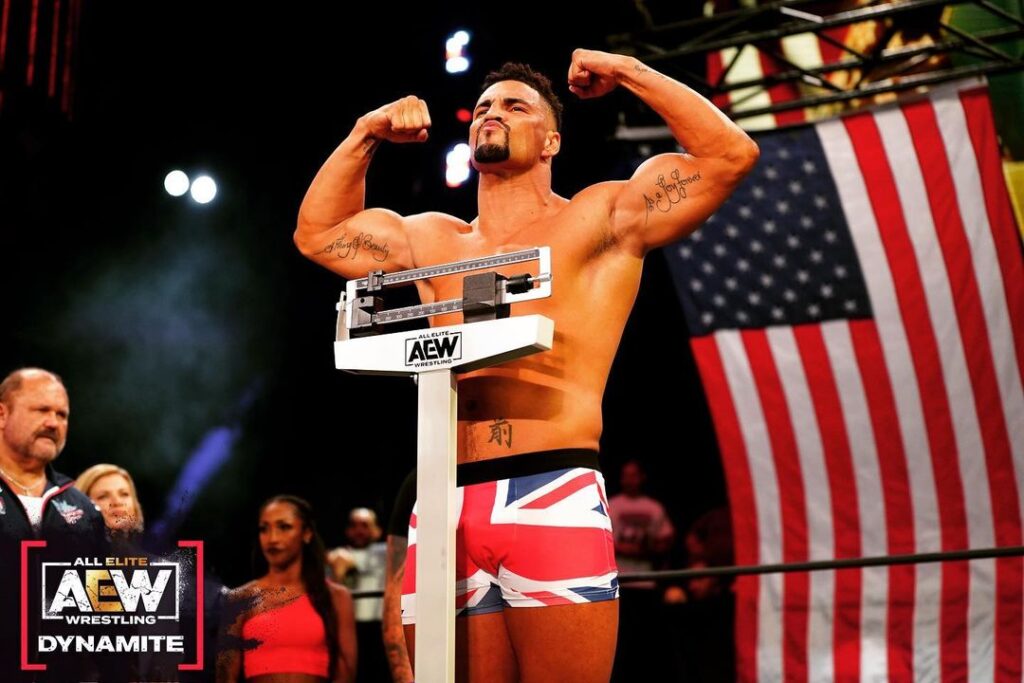
On the infamous weigh-in segment:

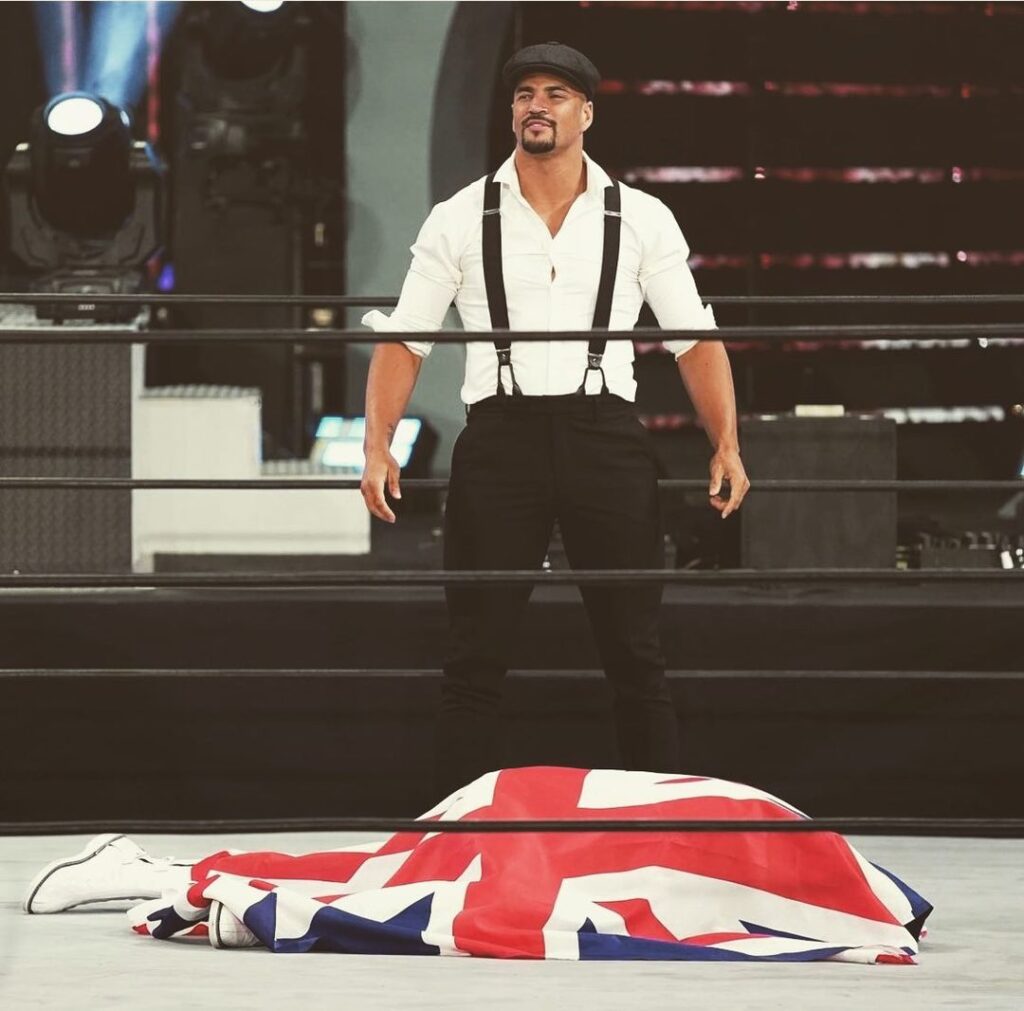
“F*cking dogsh*t mate, f*cking dogsh*t! So Cody said to me that we were going to do a weigh-in. I’m like ‘Cool, so what’s going to happen?’ And Cody is brilliant, he is brilliant at what he does and he has got a great mind for it, he is a really good coach, great promo coach. QT is a great wrestling coach, any move he can teach you how to do it, how to get out of it, the reversals. QT is the f*cking man. However, [Cody] was like ‘We are going to do a  weigh-in.’ I’m like ‘Cool, who is getting knocked out? What are we going to do.’ [Cody responds] ‘It’s a weigh-in, we are not going to touch.’ I’m like oh, I have watched enough wrestling to know that that’s a bit drab, a bit of sh*t. [Cody says] ‘Nah it’s gonna be cool.’ It’s my third week on TV, I am going to turn up, work hard and do what I am told. Mate, I am in it and I am thinking this is crap. You got Big Show there sweating his tits off and getting really hot. So I said to him [Big Show], I’m just being a heel and I thought that he hated me for ages. I said to him ‘Can’t you count you dumb yank?’ And then after the segment has happened, no one was happy. I was just doing my job, there was nothing that I could do. I get my phone and my friend texted me, he said ‘I can’t believe you called Big Show a c*nt.’ I went [makes confused face] did I? When I go out there and the red light goes on I am in the zone and what I do is real. That is my favorite word and I say it all the time, but even I wouldn’t have said that. I do get lost in the moment, because it becomes real to me. If I have a problem with someone, I will call them every name under the sun before knocking them out, so like possibly I did. So I watched it back and I said ‘You can’t count’ And when I said count it looks like I said [c*nt], but I didn’t. So I’m like agh, I saw him next week but he didn’t speak to me, he was busy not because of that. Mate the whole thing was disastrous, but I feel like I’m the victim. It was my first kind of entry, and I am in this really weird segment that wasn’t my idea. I would have rather knocked out Goldust, knocked out Dustin. We get out the ring, we bicker, maybe Aaron Solo gets beaten up and me and QT get away Scott free. At least then something happens. But I have this weird thing where I am wearing Union Jack pants, I get up on the turnbuckle and get a yay/boo thing, which is so childish. I like the Bryan Danielson and William Regals that are so in your face and smash, Jon Moxley [as well]. They get stuck in, that’s what I like about wrestling, I like blurring the lines between real and not real. I don’t like standing in my pants going ‘Boo! Yay! Boo!’ So I was embarrassed. I had never stood on the turnbuckle before with no shoes on, and those metal struts are very hard. So my poor little feet are getting dug into by these metal struts. I wanted the ground to swallow me up, but you got to do your job.”

On the segment starting strong but ending poorly:

“It didn’t start that strong [laughs]. Big Show couldn’t work out the thingy [on the scales]. And because the ring moves the thing wobbles. I think he said I weigh 219, and I weigh 235, so he did me in like 15 pounds. I’m like you’ve done me mate. Again, hindsight was a wonderful thing. I wasn’t and still am not at the stage to do pitches, Cody has been there for 15 years I can’t tell him how to do this. I would have rather stuck the nut in on Dustin [headbutt], he had all his posse out, his students. Chuck Aaron Solo, me and QT get out there laughing.” 

On future plans in AEW:

“I had this program with Cody and then I had to go back to the UK because I had some Visa stuff going on. I had to get a new Visa and I had to leave America to get a new Visa, that took 4 or 5 months. Regardless of the Cody storyline I had to leave anyway, and that was really sh*t because I wanted to build on that. And I have come back and when I was gone we have signed the best wrestler that has ever lived, Bryan Danielson. We have signed CM Punk, Malakai Black, some amazing stars, it is a really rammed roster. It is great, unbelievable, but I don’t see it as competition. I know me, I know what I can do, I back myself and I want people to do well. Because the better they do, the harder I have got to work to get that opportunity. So I know what I have got to do and no one can be me, so I back myself to the hill. But I would like more opportunity to show what I can do, but I am working hard and I am learning a lot.”  

On what Anthony Ogogo is grateful for:

“Life after boxing, my mum is still alive and getting to share my story.”

Featured image: DAZN

Jo Koy On How Stand-Up Comedy Has Changed & His New Movie EASTER SUNDAY

Jo Koy (@Jokoy) is a stand-up comedian and actor. His new movie “Easter Sunday” is in theaters now. He talks about the difference between comedy on stage and comedy in a film, what his family thinks of the impressions he does of them, how comedy has changed since he started in 1989, the best advice he ever received and much more!

On if Jo Koy knows if something is funny while on set:

“You know what, you don’t. You got to really trust your gut and really trust the director. Everything is in the director’s hands you got to trust him. If he says ‘I got it.’ Then you got to trust that he has it. There were several times where I didn’t feel like I gave it to him, but he was right. Big shout out to Jay Chandrasekhar.”

On the movie being based on Jo Koy’s life:

“The whole movie was based on me so it was the stand up comic aspect. We didn’t want to go up as Koy becasue it wouldn’t make it fun to watch. It wasn’t a documentary, we wanted to make a movie so we had to change my name.”

On what Jo Koy’s family thinks of his impressions of them:

“I’m always going to get that. Even my son says ‘I don’t talk like that dad.’ But it’s like yeah you do, this is an embellished version of you, but that is what I hear. So that is what I am going to give.”

On what fans say when they meet Jo Koy:

“They say ‘Jo say it.’ It’s non-stop, and it will be from far away too, so I have to look around and see who said it. I just acknowledge it, I get it, they just want to find an ice breaker. I just got to realize that it is a phrase that people love.”

On what is the biggest difference in comedy now compared to 1989:

“I see that there is a bigger push for stand-up comedy now. When I started, no one was doing stand-up. It was like you could name the comics and that was it, the guys that were working in the comedy clubs, you didn’t know them because of social media. But now there is Instagram, Tik Tok, everyone has a winning shot at stand-up, I love that.”

On the best piece of advice received by Jo Koy:

“Man there is so much. Corey Holcomb, I used to open for him all the time, he would say ‘I don’t know who you are, so you need to tell me more stuff about you.’ I was already telling stories, but I got to be more specific and creative with my stories. Another one was Joe Torry, who told me to never be scared of silence and always go for the big applause breaks. And then Cedric The Entertainer, who said that whoever is smashing before you, you go out there and smash harder.”

Featured image: People

More episodes of INSIGHT can be found here.

Chris Harris on TNA, America’s Most Wanted & Elix Skipper’s CRAZY Cagewalk

Chris Harris (@amwwildcatchrisharris) is a professional wrestler known for his time in TNA as part of the tag team America’s Most Wanted with James Storm. He joins Chris Van Vliet to talk about working for WCW until it was purchased by Vince McMahon, being part of the early days of TNA Wrestling, how he was teamed up with James Storm, the success of AMW, becoming the 6-time tag team champions, taking the crazy cagewalk hurricanrana from Elix Skipper and Turning Point 2004, his time in WWE as Braden Walker, what he is up to now and much more!

On TNA changing their name to IMPACT:

“It does [feel different] but in a lot of the ways it feels the same. I am so happy that we got 20 years with this company and I am so happy that it is still going strong. But there are a lot of differences where it was on top as TNA, I am hopeful that IMPACT Wrestling can get back to that top again.”

On why not many people watch IMPACT:

“It could be something to do with the name change but a lot of people are not aware that it is still around. They knew about TNA, but as I remind them, a lot of people ask me ‘Well where can I see it?’ But you are right there is some phenomenal talent out there. I tell them that it is on AXS TV on Thursday night and people just don’t get AXS, it is just a matter of the availability. When I was around we were on Spike TV, it was one of the prime channels you could tune into and it was like the guys channel, they could tune into the UFC and things like that. I think that the availability is big with that, maybe if we could give IMPACT a bit more of a push, we could maybe get a better channel and some better visibility.”

On if Chris Harris stayed in WCW and it was not bought by WWE:

“In my time growing up it was the big two, it was WCW and WWE, and that was what you really wanted to strive for. That was the goal. I had my connections with WCW, of course I started out as a security kind of thing, they were bringing in groups for security. But they had their WCW Worldwide programme, they had their WCW Saturday night programme, and those were programming for talent like myself to wrestle the big stars. And I was doing that almost every week. I kind of figured that they were happy with my work, all the guys that I worked with, it was a pure honor. But to continue down that road for most of the year 2000, that was what I was doing. I was performing in a lot of these matches and getting to perform with guys like Booker T, Shane Douglas, Curt Hennig, just a list of guys that I got to step in the ring with. It was just a privilege. It’s amazing how they ran that into the ground with so much talent over there.”

On if there was a meeting when WCW was bought by WWE:

“I’ve heard that there was a meeting. I don’t remember when my last date was but there was a meeting and I wasn’t a part of it. They stopped bringing us in, it was extra money to bring in extra guys. I would say somethwe in early 2001 they stopped bringing me in. I think they made it to March or April. They had their pick of everybody, so the guys at my level, they didn’t have a chance.”

On Chris Harris being put in a tag team in TNA:

“There may have been something to that because all my career at that point had been in singles, [James] Storm was the same. At that point we were just happy to be signed, and I don’t think they knew what to do with us. They were interested in our talent and they wanted us to be a part of the company, but they just didn’t know what to do with us. I always tell people that there was a lot of moving parts, they were just starting to really focus on their top stars, but also really building up some of the newer stars. So they put us in a tag team, and Storm and I had the attitude of if this is what they are giving us, then we will take it and run with it. That was just how we were trained and how we were brought up in the business. Sometimes you are given something that you are not very happy with, but it could have been a lot worse. When I look at it and they say ‘You are going to team up with this cowboy.’ Which I have nothing in common with. He goes up to the ring and he shoots his guns off, I’m like you have gotta be kidding me. The truth is that there were a lot of similarities, but I think that the differences is what a lot of people were attracted to. It was two separate guys but we gelled as one. We had the attitude of if we are going to be a tag team, we are going to be the best damn tag team out there.”

On TNA being a weekly pay-per-view at first:

“During that short time between WCW and TNA, it was about a year, there were a few startup companies. I say a few, there is probably a lot more than I realize, but nothing was really catching on. When I first heard about TNA, it probably wasn’t long before the first ppv, early 2002, I heard about another company starting out. I was already wrestling in Nashville and I heard that was where it was going to be based, so I heard a lot of rumbling about it. There was a part of me that was like ok, here’s another one. But when you are hungry and eager at that stage of your career, you are ready to jump on anything. Everyone just wanted to be a part of it no matter where it went. I heard that Jeff Jarrett was involved and I knew Jeff from WCW. A lot of things were adding up to where this really is a chance to make it. When I thought about the weekly pay-per-views I was open to it. It had never been done before but that doesn’t mean that it can’t work. Of course as we later learned, it is always better to have a tv deal. But that’s the thing, a lot of people say that it was going to try and compete with WWE but it was never about that, it was just there to be an alternate. So it had to be different, we were not going to do a monthly pay-per-view, we were going to do one every week at an affordable amount. Yeah I was very open to it and hungry and eager to be a part of it.”

On comparing AEW to TNA:

“There’s a lot, especially when they [AEW] first started. I was looking for that because it did remind me of that. The big difference that I see from the outside is that they have the big money backers, whereas TNA being funded by [talent]. I know that there were some guys that threw their own money in, and then they had to go out and get the investors. We were really struggling to make it, and when that happens, you have to keep the budget down. With AEW, it is almost like they have an unlimited budget. If they get a hold of a WWE talent, they’ll sign them. That has been a lot of the talk in the past year is that they keep taking the WWE talent and they can afford it. Well TNA couldn’t, we had a select few that was helping us grow the company with the credibility, but we really had to focus on building the new talent. And that’s what we did, we mentioned it earlier, The X Division, AJ Styles, tag team America’s Most Wanted, we were building new stars. There are a lot of similarities, but I think the big difference is the funding.”

On Kurt Angle signing with TNA:

“That was huge man, that was huge, and they kept that quiet. I didn’t know until I saw that video. We were doing our tapings in Orlando then at Universal Studios. A side note, if Storm and I were finished with what we had to do on the show, there was a scaffolding by the hard cam where they would put a camera on top, but it was a scaffolding. We found our own little pedestal halfway up and we would just watch the show from there, and we really enjoyed that. Any time we didn’t have anything to do, we would watch. That particular night, it might have been a pay-per-view, we were sat there on our little perch. And at the end of the night they ended it with that video package, I looked at Storm and I was like holy sh*t. We got Kurt Angle man, that is huge! That was a big win for us.”

On taking the Elix Skipper cage hurricanrana:

“It is [insane] and it’s crazy that people still talk about it to this day. That was our second cage match, a lot of people don’t remember the first one. Our first cage match had got a lot of attention, but when we were talking about the second one, we wanted to top the first one, which is incredible if we could do that. Elix had this idea and I thought that it was completely absurd. What a lot of people don’t remember is that part of Elix’s arsenal was that he would walk the top rope and do a hurricanrana off of that, on the ropes. It wasn’t a complete out of the blue idea, he had done it in is matches previously. When he brought that idea up, I was like that takes it to a whole different level, that is dangerous. A lot of people don’t know this, but I told him no for most of the [day], it wasn’t talked about until that day. Most of the day I was telling him no, there is no way. I don’t know if I want to take something like that and it is dangerous for him. It couldn’t have been more than a few hours before the event, he came and he tried it one more time. I looked at him and I said ‘Can you really do this?’ What convinced me was his confidence, he said to me ‘Yes. I can do this.’ When I saw that he had no wavering, I said ‘Ok, let’s do it.’ You have to take your chances man. A lot of people still think there is a lot of practice and going over everything, that is a one and done thing, you don’t practise that. I don’t know if they had a cage up that day. I don’t think we walked through anything. But we were all professionals and confident in our abilities. So yeah, I said let’s do it and it just was a switch. I can remember, if you look back at that, he is stumbling at first to get his footing. I am over on the other side with Christopher Daniels and already he is taking a while. I am looking at Chris and I’m like what is plan B, because he is not going to make it. By the time I looked back he was on me, so you saw once he got his footing he was gone man. Next thing you know his legs are around my head and here we go. He gets props for that and I am glad he does, but a lot of people forget who took that bump. But it couldn’t have been any better, I am very fortunate, it’s a long way down.”

On the breakup of America’s Most Wanted:

“To be honest with you, it had been talked about within the first year. Crazy to think about that now. But when you are trying to build weekly episodic television, and you got a good thing going, sometimes you have the writers who are just looking to go ‘This will be exciting if we do this…’ There was talk after the first year of splitting us up and there was talk a few times after that. But we were new there, and once we knew that we had something special and really strong, we felt like we really had to speak up. We told them ‘Look, we think that we have something here and there is a lot of life left in America’s Most Wanted.’ They listened to us and I am very thankful that they did, we ended up together for 5 years or 6 years. But there was talk about it, we won the titles 6 times and we had a little heel run. But when there was talk me and Storm were ready to see what we could do as singles. We did our tag team and we did it well, let’s see what happens when we go on our own. Of course we knew, the first step was to go at each other.”

On James Storm joining Beer Money:

“A lot of people asked me at that time ‘What do you think of Beer Money?’ They thought that I would trash it, but I was the number one fan of Beer Money, I thought that they were great. I loved Bobby Roode, I travelled with him, good friend of mine. So when Strom and him hooked up, I think for similar reasons, they [TNA] didn’t have anything for them at the time, and they wanted to make it work. But yeah, they became very successful and it doesn’t surprise me that Storm was a part of that. He knew what to do and he knew what not to do in that department. The thing is, a lot of people have compared us to Beer Money, and I know nowadays a lot of people, Beer Money gets the nod. But it brings me back to as the company was building, they were getting more fans watching every week. As America’s Most Wanted was gone, they were still increasing viewers. So I think more eyes were on Beer Money, so that would be their favorite.”

On Chris Harris being the fake Sting:

“It’s crazy, some of the most exciting moments of my life are me being someone else. I was one of the many in WCW that was doing the security, but some of the higher ups knew who I was. I think I was picked back then just because of the look. I had the long hair, even though Sting’s hair wasn’t as long anymore, I fit more of the crow Sting. I got Sting’s outfit, he’s the one that painted my face up, it’s crazy. They could have had their makeup artist do it but Sting was the one that did it. Even Sting looked at me as he was painting and said ‘This is like looking in a mirror.’  I guess he saw that crow Sting with the hair, but it was very cool. I think I am most remembered for the Halloween Havoc where I came out of the ring, which was the most fun I had being Sting, because I had a part in that match. But they got clips of me in the rafters, and you couldn’t tell who it was. There were times where I was in a coffin, and they had me bust out of a coffin and beat somebody up. But a lot of times they would get out of that because they would have the strobe flashing, so you couldn’t tell who it was. But there was a lot of times where I was doing the fake Sting whether he was there or not.”

On Chris Harris going to WWE as Braden Walker:

“It was unfortunate that they would do that but I can’t say that I was surprised. Going in there, they just want to erase your past, which is unfortunate because you try so hard to build up a reputation for yourself and not that they would ever talk about TNA, but they don’t want them to talk about you like you are a rookie. Going in there, I tried to keep a positive attitude. The Wildcat is gone, I’m going to be a whole new character. They gave me the name, and a lot of people have trashed that for years, but it wasn’t a surprise. They gave me the name, if I was still able to be myself, I could take any name that they throw at me. I could make Braden Walker work if they had given me an opportunity. There was no preparation and no thought behind it. I think I was doomed from the start.”

On his time in WWE:

“I was there for close to a year, and I just from the get go, I just saw different things. When I first went, people were excited to see me and they didn’t want news getting out, it felt like a big deal. ‘We’ve got plans for you.’ Things like that. I felt like maybe I made the right decision. But within weeks, I was seeing that there was no background to this and no thought and I was just going to be one of the ones that are just thrown out there, and I was. I was just thrown out there, there was no story or background to Braden Walker anything like that. I had generic music, gear, name, there was no reason for people to get behind me. I still feel like I could have made that work if they let me wrestle, but they were even taking that away from me. Seconds and minutes before I went out, I had a producer change my match. ‘You can’t do this and you can’t do that, so why don’t you try…’ You’re messing with me man, I couldn’t go out and be myself in the ring. It was very unfortunate and I felt like I could make it work, but the opportunity was never presented to me.”

On what Chris Harris is grateful for:

“My career, my family and sobriety.”

Featured image: Wrestling Attitude

Embedded images: Instagram

Make The Impossible Possible! Colin O’Brady On Being The First Ever To Cross Antarctica Unassisted And Climbing Mount Everest TWICE!

Colin O’Brady (@colinobrady) is a professional endurance athlete, adventurer, motivational speaker and bestseller author of the books “The Impossible First” and “The 12 Hour Walk”. Some of his most impressive conquests include a world-first solo crossing of Antarctica, a world-first ocean row across Drake Passage (from South America to Antarctica), and summiting Mt. Everest twice. He joins Chris Van Vliet to talk about the transformative power of talking a 12 Hour Walk, breaking your limiting beliefs, what climbing Mount Everest is really like, what motivates him and much more!

On what Colin O’Brady’s goal is now:

“It’s funny. I humbly sit here with 10 world records and have explored many places. My new book is called the 12 hour walk, I answer that at the end of it. The book is a prescription for people to get out there and to explore, and at the end I answer the question what is my new Everest? My answer right now is to inspire 10 million people to take this 12 hour walk. This book is a challenge for you to take one day, put the phone on airplane mode and to walk for 12 hours in silence. It might sound ridiculous, but I have seen it change people’s lives and unlock their true potential. It sounds hard if you are not in great shape, but take as many breaks as you need to. My 77 year old mother in law completed her 12 hour walk, she walked around the block and sat on her porch while maintaining the silence, then she did another walk around the block. The 12 hour walk is more of an exercise of the mind and the grit, and it can unlock the limitless possibilities. My goal now is for people to unlock their potential to really reach the summit of their dreams.”

On Colin O’Brady’s experience of the 12 hour walk in Antartica:

“It starts there, but it gets to a point that is way more accessible than going to Antarctica. I set myself this massive goal a few years ago to become the first person to cross Antarctica alone and unsupported. Whatever you get dropped off with, that’s what you get. For me, that meant a 375lb sled pulling behind me full of food and fuel. I couldn’t pull my sled a mile at first, how could I do it for 1,000? Also I was not propelled, so no kites and no dogs. People have tried this in the past, one guy tried it for 71 days and died 100 miles from the goal line. I attempted it and I realized that I would run out of food and fuel if I took one day off. If I walked any less than 12 hours a day I would also run out of food and fuel. It also turned out that I wasn’t just racing history, I was also racing this other guy who was a badass military dude.”

On if they both knew it was the same mission at the same time:

“Strangely no up until right before. So what happened, and it’s not uncommon in the world of adventure, especially with a world first. You don’t broadcast what you are doing a year before, because other people will try it and try it earlier. There are a lot of logistics in going to these remote places in the world, and it turns out that there is only really one guy and one company who has a bush plane that can land you on the edge of the continent. Obviously we both called the same guy, he didn’t tell each of us about the other one. And then there is only one season where you can actually do this crossing, which is the Atlantic summer, our winter in the northern hemisphere. It’s only -25 with a wind chill that gives it -70. It is still freezing cold. But there is one guy, one plane and a week before we find out about the other guy. And then we find out that the guy has double booked the plane. He is like ‘Yeah you will sit next to each other on the plane, I will drop you off at the start line, and there you go.’ And this guy is a total badass, he is a special forces military, highly respected. He looks at me and goes ‘You know. It should be a Brit that cracks this first.’ I get out of the plane and it doesn’t even take off, it drives for like a minute, drops him off and we wave at each other. That then starts a 1,000 mile, 2 month head to head battle.”

On possibly giving up:

“A couple of times. I called my wife 2 hours in when I couldn’t pull my shed. I said that we called it the impossible thing and that sounded about right. I had a lot of doubts and a lot of fear. I was burning 10,000 calories a day and lost a lot of weight, but as my body got weaker my mind got stronger. Near the end I did this one continuous 33 hour, 77 mile push and I got there first and set the record. But what I found in this silence in Antarctica was this deep connection, deep bliss and deep purpose. I had all of this high vibe resonance of life, and I thought that I could take it with me forever. Then a lot of positive thing happened, I wrote a bestseller and did another expedition. And then COVID hits. There were a lot of people worse off than me, but it was a scary time.”  

On the impact of the 12 hour walk:

“When people take this walk, the shift in one day is huge. The things that people sort out in their brain by creating that silence and taking that space, it is hugely impactful and I just want to spread the word. The power of the 12 hour walk proves the inner strength. I don’t consider myself a Tom Brady, but I have had some success. What the book breaks down is I bring you this rich storytelling of the edge of K2 in winter in Pakistan where I unfortunately lost some friends in a climbing accident. Or this row boat in the middle of Drake Passage or Antarctica solo, various other things. But it also shows you that I was afraid, being afraid of failing. The book comes from a  place of vulnerability, but we can rewrite that. You can make this change today by taking those 12 hours.”

On the 12 hour walk being a mental challenge:

“That is what I say at the end of the book. People think that they have to train for this like a marathon. But if you are in ultra marathon shape, you may clock up more miles than the next person, but this is a mental exercise. I am fond of saying that the most important muscle that we have is the 6 inches between our ears. I use the word muscle for the mind intentionally, because even if we are not into fitness, we hear ‘Oh you want that summer body? Go and hit the gym.’ We understand that concept, but it is the same for the mind, we just don’t understand that. If you want to do the same for the mind, you have to do the bench press for the mind, and that is what this is. It is scary and hard, but it is supposed to be a step outside of the comfort zone.”

On what it is actually like to climb Mount Everest:

“So a friend of mine took a photo and it went viral on the internet. It was a picture of basically a bunch of people towards the summit lined up. What happened on that day was a real anomaly and weird edge case scenario. Basically Everest can only be climbed in weeks 3 and 4 of May, because 50 weeks of the year it is being battered by rain and 100mph winds. People sit there for a month before and they acclimatise and wait for this weather window, which lasts about a week or 10 days. The typical Everest season will now have 500 or 600 climbers on the mountain throughout those months and people will summit within 10 to 12 days, so maybe there is 30 to 40 people on any given day. But on this given day in 2019, the good weather never came, it was a perfect storm. There was one good day of weather, so everyone went at the same time and it caused a traffic jam at the summit. First of all, it has become more commercialised. Are there people on that mountain that shouldn’t be there? Yes unfortunately there is some of that. But the other 364 days of that year, there was literally nobody on that summit. It is unfortunate that the narrative has been passed down. But it still is a very worthy challenge.”

On his morning routine:

“My morning routine has really evolved over the past few years. I am not a coffee guy so I don’t do any caffeine. I try to move my body first thing, some sort of workout or just walking my dog. I am guilty of not doing this, but I try to not look at my phone. I also have a smoothie and some greens to get some hydration. Meditation is also a big part of my day, a buddy of mine’s wife came to one of my races, she watched the triathlon and she says to me ‘That was cool, you swim, bike and run. But what do you do to train your mind?’ I was embarrassed. I asked her what she would suggest, and she has done these 10 day silent meditation retreats. You are basically in solitude and meditate for 12 hours a day. So I signed up and I went, but the hardest thing was for me to sit still.”

On how else people can get out of their limiting beliefs:

“The reason I love that terminology is the word belief. these are not limiting facts, they are beliefs, and beliefs can be re-written. I am a firm believe that we are the stories that we tell ourselves. I had those demons in Antarctica, but you got to battle against them. The 12 hour work is one way, but it all comes back to committing to something outside of that range. Something that will push you outside if the comfort one, that is where you have to dare to take that risk and be uncomfortable. It is a personal thing, what is in my comfort zone might not be in yours and vice versa.”

On what Colin O’Brady is grateful for:

“My wife, health and community.”

The 12 Hour Walk is out now.

Embedded images: Instagram

Featured image: The New Yorker

Ric Flair On His Legendary Career And Why He Wants One Last Match

“The Nature Boy” Ric Flair (@ricflairnatureboy) is an iconic professional wrestler and 2-time WWE Hall of Famer. He joins Chris Van Vliet to talk about his last match that is taking place on Sunday, July 31 at the Nashville Municipal Auditorium, why he decided to wrestle again after his retirement match at WrestleMania 24 against Shawn Michaels, his thoughts on Vince McMahon’s recent retirement from WWE, who is on his pro wrestling Mount Rushmore, the catch phrase he is most proud of, his goals when he first entered the wrestling business in 1972, his thoughts on whether John Cena or Randy Orton will break record as the 16-time World Champion, the story behind his famous WOOOOO Off with Jay Lethal in TNA Wrestling and much more!

On Ric Flair’s goal when he first entered the business:

“Well I don’t know, because I didn’t know what to expect. From the day I started it was totally different to what I thought it would be. When I started it was very difficult to get into the business, extremely tough. It was gruelling and the old timers didn’t like the young guys coming up. It was just a whole different world, every step was about learning the respect, trying to get the respect from the guys that had been in it for a while. That was an every day challenge.”

On who is on Ric Flair’s Mount Rushmore:

“Austin, Hogan, Taker and Shawn Michaels. [Chris mentions that Ric Flair doesn’t put himself on there] I would, but I think those 4 guys had a huge [impact]. You could put The Rock on there too, it’s interchangeable. The best worker of all time is Shawn Michaels, the biggest personality of all time would be The Rock. The biggest draw of all time would be Steve [Austin], and you can’t leave Hulk off because he drew a ton of money. Different timeframe but it was sold out every night. Even though I was NWA World Champion and I think that my job was a lot harder than everybody else’s, because being the NWA Champion you are gone 6 months at a time, sometimes longer. And I was wrestling everyone all over the world, that’s the difference, you are not just wrestling the same guy, which I had done with Steamboat and Sting and Dusty. That was all while I was travelling around the world, especially with Dusty and Steamboat.”

On WrestleMania 24 being the perfect retirement for Ric Flair:

“It was but then I got divorced for the 3rd time. It was hard paying the attorneys and paying alimony, so you know, I probably didn’t need to, but I kind of missed it too. I sure could have worked around it, but I never considered bankruptcy as an option. Then when I got sick in 2017, I got behind with the IRS because the hospital bills were $1.3 [million] Medicare A, I didn’t have Medicare B at the time, I had to pay them $800,000. So not only did I have to go back in, I had to pay them back and then I had to pay the IRS another million dollars, just because I was late on what they call an offering compromise.”

On what the final match means to Ric Flair:

“Well it’s not about money at all, I’m great moneywise. When I saw Steve [Austin] and Vince at WrestleMania, people have been asking me to do it. Some people actually offered me $100,000 to do it and I’m just like nah, because I didn’t want to go into it half assed, I really had to get into shape. So I have taken 3 months to really get into shape and I feel great. I’ve had some ups and downs, I had plantar fasciitis, I still have it but it is 90% healed. But I have that under control and I feel great. I don’t hurt and I don’t ache so why not? And who doesn’t like the glory? If I pull it off, I’ll be bigger than ever.”  

On the positive reaction to the training videos with Jay Lethal:

“I didn’t know whether I could take a slam or not with the pacemaker, but the doctor told me that, the one I like the best, that I have enough scar tissue around the pacemaker that it won’t budge, and it didn’t. Unless it moves on the day of the match I’ll be fine, even then just plug me back in. I don’t have a defibrillator, when you have a defibrillator it is really hard to take bumps. I had that blood clot issue a couple of times in the past 10 years, but I take half a blood thinner. I plan to entertain them man!”

On the family’s reaction to Ric Flair’s last match:

“They are saying this is awesome, they are very supportive. They know that I want to be a part of it and that I want to be rocking and rolling. I wouldn’t have it any other way. But one thing that I didn’t anticipate is that this has captured the hearts of America. Everywhere I go, I do a lot of travelling for a living with autograph signings and I made a commercial with Car Shield. No one is talking about SummerSlam or AEW, they all know about my last match, it has got a lot of national publicity.”   

On possibly pushing the match back so it would be 50 years of Ric Flair wrestling:

“Conrad is a smart guy. We’ve got 70,000 people in town for the week of SummerSlam, and they are having it on a Saturday, which is unusual. But it worked out great, the roast is sold out and I think we have 200 tickets left for a 9,000 seat sell out in the auditorium. WCW never sold out the auditorium, WWE had a hard time doing it and AEW didn’t do it, so it is a big accomplishment.”  

On if this really will be the final match for Ric Flair:

“It has to be. I get that question asked a lot, but it has to be. Even if I do well, I can’t go back on my word to the people that have given me all this respect, time and bought tickets. I have been offered 10 matches at 50 grand a piece, and I think in Europe someone offered me 100 grand. But this will be the last one. I can manage somebody and be in the ring, but it will be my last match.”   

On being nervous for the last match:

“[I’m nervous about] pulling it off. It’s a lot of pressure, people don’t realize it, you lose your self confidence a couple of times. Two weeks ago I thought I had pneumonia, because I was training so hard and going back and forth. I was doing 50 mile round trips with the air conditioning and sweating, so that happened. Then there was what happened with my foot, but now it is all coming together, 5 more days.”   

On deciding who the opponents would be for Ric Flair’s last match:

“Conrad and I put it together initially. We were going to go outside and use some people from AEW, but then it all became a little political with Tony [Khan]. I’m not sure why he changed things around but we worked around it and we are sold out. That’s all that matters.”

On possibly having a legendary opponent like Hulk Hogan or Ricky Steamboat as the last match:

“Well neither one of them are physically able to do it. I talked with Steamboat for a long time and he’s got issues with his back and his shoulder. I think that if Ricky wanted to go out, he had that great run with Jericho back in 2011 I think. I think Ricky wanted to go out with that memory, because he was as good back then as he was in his prime. He had some great matches and he liked the ‘You still got it.’ Why put that on the line again? And Hulk, he has had so many back surgeries, a double hip replacement, double knee replacement, why take a chance? For me, everything is still hooked up still, thank God!”

On the origin of the ‘Limousine riding…’ catchphrase:

“It just came out one day. That’s the way I roll.”

On Vince McMahon retiring:

“I wasn’t happy about it at all, I love Vince McMahon. I don’t know what he is doing right now but I feel like he will have a hard time. He will adjust obviously, but he loved the business and he made us all who we are, from Hulk to everybody. I don’t care what everybody else thinks, he made us, and I have nothing but respect for him. He is a majority stockholder, I don’t know if he will [stay away] or not. He’s a genius.”

On the biggest thing that Vince McMahon has taught Ric Flair:

“For me personally, he said that I needed to get my sh*t straightened out, because I was pretty wild, as people are well aware of. I could be remembered for 2 things, either the greatest wrestler of all time, or the guy that p*ssed it away and got married too many times. He is such a hands on guy, nothing went around at the company that he didn’t know. To me, I guess he had a very difficult time delegating authority. He has to really trust somebody to put them in a position to make the big decisions. He hates lawyers, he likes to talk to you man to man. He would always tell me ‘Before you say a word, hear me out…’ Of course I can’t do that ‘Let me finish.’ He is not bullsh*tting you, he is the real deal.”

On how Ric Flair wants to be remembered:

“Well if I pull this off then I will have to be remembered as the greatest of all time. If it’s even remotely good. [I am] 73 and I got it down, I’m not kidding you. Unless something bad happens, and I don’t know what it will be. I am minding my p’s and my q’s, saying my prayers, taking my vitamins, I am ready, it will be fun. What else is really important to me is that my whole family will be there. My grandchildren, my kids, a couple of my ex-wives [laughs]. One of my ex-wives and my wife, all my kids, that will be spectacular to do it one more time.”

On if the match is planned out:

“No I’m one of these guys that [call it in the ring], but the guys in the ring know me, I got to hear the crowd, then I will know where to go. I’m not a plan a and plan b, but these guys are all excellent performers. I mean Andrade, who gets to wrestle with their son in law? How cool is that? It’s kind of like Rey [Mysterio] with his son, how cool is that?” 

On John Cena possibly becoming a 17 time world champion:

“I don’t think so. I don’t think they will ever give it to a part time performer. I think that Randy Orton has a better shot at it, Randy will come back, he has to have surgery. But I certainly wouldn’t be offended because the real number is 21. They all have a way to go. But I love John Cena, he is a such a credible performer and just one of the great guys in the business. About 10 years ago they told John that he couldn’t hang around with me. No, like 2008, I would go out drinking with John, and John could drink some beers back then. But then they said ‘Hey, we would like you to hang around a bit less with Flair on those European tours. I didn’t take it personally.”       

On what Ric Flair is grateful for:

“My health, my family and the world of friends that I have.”    

Featured image: New York Post      

Don’t Keep Your Day Job – Cathy Heller On Turning Your Passion Into Profit

Cathy Heller (@cathy.heller) is a bestselling author, business coach and host of the podcast called “Don’t Keep Your Day Job”. She joins Chris Van Vliet to talk about how to turn your passion into a full time job, what she learned from interviewing people like Matthew McConaughey and Tony Robbins, how to overcome imposter syndrome and much more!

On where the journey begins of someone to live in their passion:

“It’s such a great question isn’t it? I once heard from my rabbi that the opposite of unhappiness is not happiness, but it is in fact purpose and meaning. A friend of mine Emily Esfahani Smith did a Ted Talk called There’s more to life than being happy. It was all about how she went to Harvard and asked them about the most wonderful moments in their life. It turned out that is wasn’t when they were in Disney World, but moments of tremendous meaning and purpose. The reason why I started the show Don’t Keep Your Day Job is because I believe that if you are hare then you are needed. It is like a puzzle and we are all like a piece, if you don’t do your assignment, then a piece is missing. If just one piece is missing, it doesn’t feel good. I think on some level, each of us has always known that.”

The meaning behind the show’s title:

“I called the show Don’t Keep Your Day Job because it is not about having a job, it’s about having your life’s work. So what is that about and what does that mean? I think we all have this incredible amount of purpose and potential, but we stop ourselves with these two lies, I’m not enough and it’s not possible. If Elon Musk thought it was not possible, we wouldn’t be going to space. If John F. Kennedy thought it was not enough, then man wouldn’t have landed on the moon. We are not supposed to make decisions with our eyes, but instead with our imaginations. So I often say to people that if you want to wake up to a sense of purpose, then make a list of 5 things that would feel so fun. If you secretly could do whatever and not be responsible for how it is done, it comes so fast. People say ‘Oh I want to be a travel writer.’ Or ‘I want to open up a bed and breakfast in the south of France.’ Then I will say to circle the one that gives you goose bumps, and then we start from there. What if we allowed ourselves to do that? What is stopping us?”

On where to start:

“If you want to start a business, there’s 3 steps. You’re gonna test it, sell it and scale it. So test it, you need to give a sample of this. Whether you will teach a class or make granola or paint cars, you need a beta. You need a focus group and you need to test it. You might say that your sister in law needs her car painting, so you will do that in exchange for a testimonial or for feedback. Everything that has been sold, whether it’s an iPad or peanut butter, they love data. We want the feedback, that is the answer key. So if you have a job you can’t stand, you don’t need to quit right now while you are testing. The job right now is the investor for my dreams, and after work I will find 5 people I can offer this to and get the feedback.”

On the selling steps:

“Once we test it, we can see if people are satisfied with the cheesecake or the work that we have done on their car. Now you say ‘Can I sell one of these? Can I sell one cheesecake?’ If you can sell one. You can look at the market and decide where you want to be. You can get a bangle from Cartier for thousands of dollars or go to Target and get one for $18. So decide where you want to start out and work towards the lower middle if you need some confidence. But there is already a market and you are not making it up. You see if you can sell it one time, and here is what is cool, and when you sell it to one person and they are satisfied, you are done! Here is how we know. When you go to Target or Starbucks and they ask you to fill out a survey, they are looking for the 9’s and 10’s. Anyone who says a 1 2 or 3, they are not interested. If you are a satisfied customer, you will be compelled to sell someone else.”

On being a niche and scaling it:

“I also want people to hear this thing that Seth Godin shared with me. He asked me ‘Would you rather have the popularity of Taylor Swift or The Grateful Dead?’ The Grateful Dead never had a number one single, they were not radio songs. Most people say they are building this business and they have to be vanilla ice cream, they have to be Taylor Swift, they have to be the thing that people talk about. But here is what people don’t realise, Taylor Swift fans will say ‘I’ve seen her 3 times, she is so good.’ Grateful Dead fans will say ‘Are you joking? I have seen every show. I’ve seen them 49 times and have 65 records, all the b sides.’ One really likes it, and one is obsessed with it. People are shooting for vanilla, but if you make gluten free, kosher, vegan ice cream, and only a small portion of the world loved it, you would quickly be a phenomenon. It’s the depth and the intimacy, you don’t have to worry about the width. If you establish that, you can keep scaling.” 

On not quitting your job right now:

“There’s so much cool stuff you could get started with right now and work on for 90 days. At the end of the 90 days you could sit down and find go ‘OK, I had this many people in my yoga class. How many yoga classes at 15 a piece would I have to do to quit my job?’ People say that they have no time, but we know that people are spending several hours a day on their phones. So there is no excuse, you do have the hours.”

On growing the podcast:

“I love podcasting so much, it is so much fun. There is a line that words from the heart enter the heart immediately. I think that we are so highly refined that we can do something from a  genuine place. People crave intimacy, and intimacy is velocity, and advertisers have noticed that. There used to be a Colgate commercial in the middle of a Thursday night episode of Friends, but that model doesn’t work anymore, no one is watching through the ads. We see that people have a connection with people too. If someone hears Joe Rogan and they are like ‘This is my dude.’ Then he says ‘Oh Casper Mattresses…’ Then there are loads of sales, because they trust that person, the intimacy is unreal. With podcasts, people are self-selecting that they want to hear you while you are at the gym or on a commute, it is part of your day. It is so big for your business, because if people like and trust you, they have the connection, so they are in. When I started, I tell people that if you want to start a podcast, you will want to batch record 10 episodes so you won’t have to scramble. I would do one a week, and before that just put up a 3 minute trailer. One thing that is really important with a podcast, you are doing it for the audience. I would bring them in by thinking that I am their ambassador, what is their greatest pain point? This audience has that pain point, and quite often, their audience is you before you had that breakthrough.”

On what Cathy Heller is grateful for:

“The people in my life, health and the opportunity to do this.”

Featured image: Don’t Keep Your Day Job

What Do You Want To Do Before You Die? Ben Nemtin On The Importance Of Living Your Purpose

Ben Nemtin (@bennemtin) is a bestselling author, entrepreneur and co-creator of the hit MTV series “The Buried Life”. He joins Chris Van Vliet from his home in Marina del Rey, CA to talk about the importance of living without regret, how he and 3 of his friends started The Buried Life movement, how to find your purpose, his new Bucket List Journal, how he played basketball with President Obama, had a beer with Prince Harry and more!

Check out Ben’s Bucket List Journal here: https://bucketlistjournal.co/

On going all in:

“If I find something that I love then I can’t not do it as much as I can. With tennis, I feel like it is meditative. You are in the sun, with friends, get that aerobic exercise and it’s good. It is a good old person sport that you can play until you are like 60 or 70.”

On his first mental health crisis:

“I think that when I started to surround myself with people that inspired me, it made me want to do more. I has this moment in university where I had a real low moment. I had dropped out because I had put so much pressure on myself to succeed. So I was on the national rugby team and had a scholarship, and we were training for the World Cup. I was so worried about missing a kick, because I played at fly half, I would lose sleep at night thinking about it. So I got anxious, stopped going anywhere and was just shut inside my parents’ house. This was my first mental health crisis. When you go through your first mental health crisis, you think you are totally screwed up. You don’t realize that this is a normal part of life and that other people are going through these struggles too. But when you are 19 or 20, you don’t want to talk about it. You think you are losing everything, so I just felt like I was spiralling. What brought me out of it was my friends literally dragged me out of the house and brought me to a new town to work in the summer. I started meeting people who had started new businesses or they had travelled, it was really inspiring. So I realized that I was not the only one going through this, and these kids gave me energy. I needed to be around people that gave me energy. So I made that decision to be around people whom inspire me, called my friend Johnny and decided that I wanted to make a movie. The more that I did things like that, when you see your friends achieve great things, you feel via osmosis that you can do great things.”  

On how people around you can affect you:

“100%. I have now started to realize that in terms of success. Can you continually be energized by your days, and I think that is purpose. Instead of thinking what is your purpose like this big mountain that we have to climb, I think that we have multiple purposes. It could be spending time with your kids or it could be climbing Everest. I just think that as long as you are fuelled by this thing then that is part of your purpose. If you can do that without the day to day getting in your way, because that can get the purposes swept away. Paying attention to the energy, if you can find those people in your life, you can lean into those friendships and they will fuel you and make you believe what is possible.”

On someone finding their purpose:

“I think it’s looking at the energy. What fuels you, what are you curious about? I think it then important to write this down, because then you make it real, it reminds you that it exists. As you get buried by the day to day and you come back to your list, it reminds you of what is important to you. Then it forces you to slow down and see what is important to you.”

On the barriers people face:

“The first thing that stops us is that there is no deadlines, so we have got to create the accountability. So write down the goals and get an accountability buddy, you are 77% more likely to achieve your goals then. If you can find that accountability buddy, that is huge. The second thing is that people need to be inspired. I got a guitar at the start of the pandemic and have just been waiting to feel inspired, but I haven’t. But you have to create your own inspiration through action. It is like we are overpreparing for the right time, but action is part of the plan. I think that you create that momentum, and that fulfils you. The third thing is the fear of failure, but you can flip that if you share your goals. Because then, you share the goals, you don’t want to look bad, so you can use that as a driver.”

On having specific goals:

“Now that I have looked at the science behind goal achievement, it is important to have a goal that is measurable, the SMART goals, because you want to know when you will achieve it. It is not “be healthier” it is “Run 5 miles 3 times a week.” So I think it is important when you look at your list, looking at a blank page can be daunting. I would traditionally look at the cliché things for a bucket list like skydive or go travelling. Those are obviously great things for a bucket list but I think that my definition of a bucket list reflects on who you truly are. So you are looking at your travelling goals, but you also want to give back, what are your giving goals? What are the physical goals, mental health goals, relationship goals, because 1 in people’s regrets is not keeping in touch with someone. Those don’t cost any money, it’s picking up the phone and meeting up with someone. You have to invest in those and those take energy. When you think about your list as a whole reflection on what is true to you, then you start to have this picture of things in your life that you need to priortize and how to not forget about these things.”

On people not starting:

“That is where the fear stops you. So we were young, dumb and broke enough to prove that these things were possible. I think the young naivety is so important to keep. Because you are young so you don’t have much to lose. You are dumb so you don’t really know how hard it will be. And again you are broke, so you are just scraping together what you can. If you can keep that youthful energy, and of course when you get older there is more risk. But if it doesn’t work, what do you have to really lose? I think that is what is really important.”

On the most ridiculous thing on the list:

“That was the reaction when Obama was elected president and we said ‘Let’s put play basketball with Obama on the list.’ I laughed because it was the most ridiculous thing on so many levels, but we were like ‘OK, let’s put it down.’ 3 years later we were at The White House shooting hoops with Obama.” 

How Ben Nemtin got to play basketball with Obama:

“So the first step was driving down to DC and asking people on the street if they knew anyone. It was a dumb step, but what we learned was that we could contact politicians through the publicly listed websites. We sent the email saying that we want to play basketball with Obama to prove that anyone could do anything. Most people ignored us, but a few low level officials agreed to meet us. We just stayed long enough until we would meet with their boss and their boss. We then got to meet with the secretary of transportation, who called The White House while we were in the room. Then we got an email saying it can’t happen. We were not ready to give up, then we heard about these secret basketball games that the president did with a couple of senior officials. The man that set it up was Reggie Love, who was Obama’s personal aide, the kind of gatekeeper. We tracked him down and would just send emails challenging them. Then we would show up to the YMCA every day for a week and no one would show up. Finally I get a number from a blocked call saying ‘What’s this I hear about you challenging the president to a game of basketball?’ I explained the mission and he said that he might be able to make this happen. He called me back 2 weeks later, not going to happen. We came back to DC and he gave us the tour of the White House, show us the basketball court. Then next thing we know, we hear the president. He said ‘Hey guys. I heard about what you are doing. The least I can do is shoot a basket with you.’ He was there in town and we were floored. There was no fiber in my being when we wrote this down that this would be possible. And here I was, seeing him walk on the court. From that my whole belief system changed. I guess now anything is possible.”

On where to start:

“Step one is to write your list. Next, think of the list as a magic lamp. You know, the rum the lamp and a genie comes out saying ‘Congratulations you wrote your list. I’m going to make one of them come true, but there is a catch. If I make it come true, you will never be able to achieve anything else on your list.’ So what do you choose? That is the most important list item. Move towards that most important item, which probably won’t even involve a lot of money. Then, write 48 things that you could do in the next 48 hours. Ask someone for help, make a phone call, book the trip. Now you have the accountability.”

On drinking a beer with Prince Harry:

“That was actually pretty straightforward. We found somebody that knew a friend of his, and they said the best way was to write a letter and we could send it to his office. We wrote a letter saying that we were going to be in London. So we met him at a secret bar in London, had dinner with him, he’s very cool and philanthropic. That was how it happened.” 

On what’s left on the list:

“So there are 4 things left on the list. Go to space, being on the cover of Rolling Stone, I’ve always wanted to go to India and host another TV show.”

On what Ben Nemtim is grateful for:

“This conversation and to feel like I am finally following my true self.”

Featured image: Ben Nemtin

Embedded images: Instagram